Ancient Greek Statues of Gods: Quick Attribute Guide
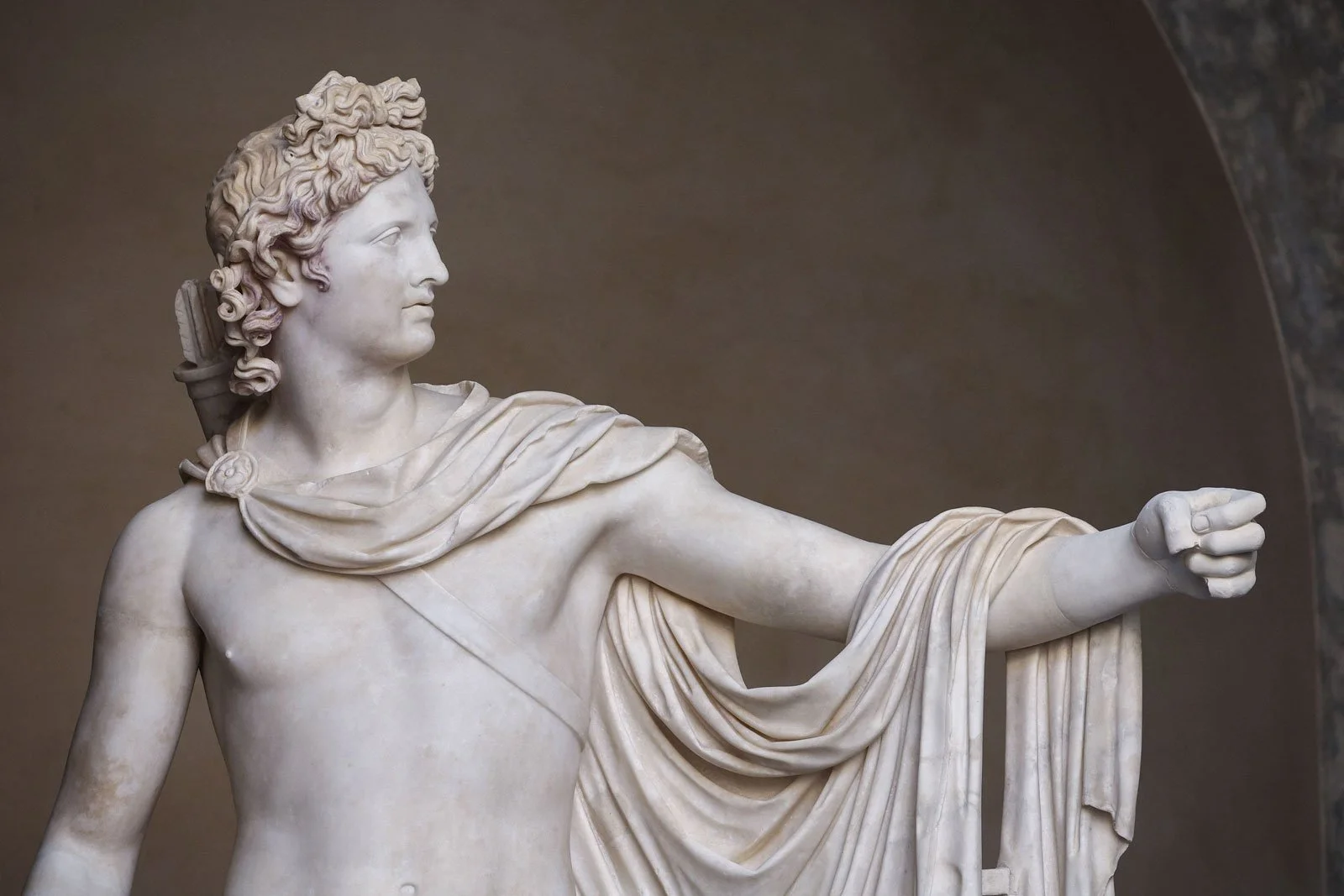
Apollo’s pose feels like a command gesture—calm face, confident reach, and controlled drapery. It’s a great example of how Classical bodies can look both relaxed and powerful at the same time.
You know that feeling in a museum when you’re staring at a beautiful, slightly damaged marble body and thinking: Okay… but which god is this supposed to be? You’re not alone. Ancient Greek gods can look surprisingly similar at first glance, especially when the statue is missing its hands, its head, or the very object that would have made the identity obvious.
This guide is our “spot-the-clue” walkthrough. We’ll learn how artists signaled divinity, how attributes work, and how to read a statue even when the giveaway is gone. By the end, you’ll have a practical checklist you can use in front of almost any Greek divine figure.
Definition: An attribute is a repeated symbol that identifies a deity.
Greek gods were meant to be recognized quickly
Here’s the first mindset shift: many ancient statues weren’t made for quiet, close-up looking. They lived in sanctuaries and civic spaces, framed by architecture, ritual, and distance. In that world, a god’s image needed to be legible.
That’s why Greek divine sculpture leans on a visual language of repeating signs. A helmet plus a shield does not just mean “war vibes.” In Greek art, it often means Athena. A lyre is not random decoration. It’s a claim: this is Apollo. A mature bearded man seated like a king is not just “older male.” It’s a familiar pathway to Zeus.
And the setting mattered. In a temple, the statue could function almost like a focus point for belief, offering, and civic identity, the kind of structure we unpack in Greek Temples: How the Ancient Greeks Built for Their Gods. If you want to go even wider, Ancient Greek Religion: Temples, Sacrifices and Belief helps explain why images and rituals were so tightly connected.
One more thing that helps us read gods: many “white marble” statues were once painted. Color could separate materials, patterns, and symbolic details that are hard to see today, which is why Painted Greek Statues: The Originals Were Not All White changes how we imagine divine images.
So when we’re identifying a deity, we’re not guessing wildly. We’re decoding a visual system that ancient viewers were trained to understand.
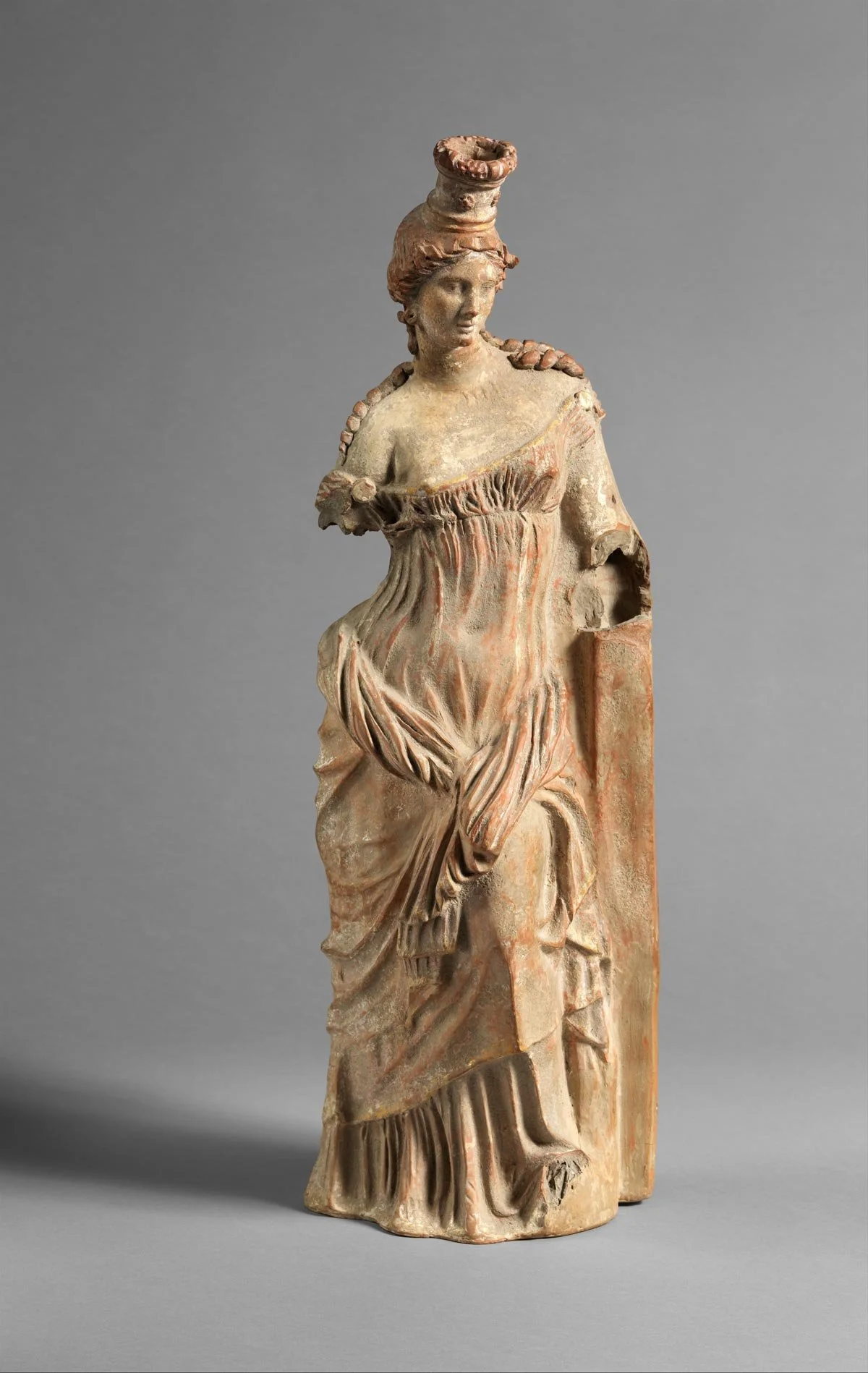
Terracotta figures were a big part of everyday ancient visual culture—small, portable, and often connected to worship or domestic spaces. The clay also preserves different textures than marble, so you get another “material voice” of antiquity.
Start with three signal zones: hands, head, and outfit
If I could give you just one method, it’s this: don’t start with the face. Start with what the sculptor wanted you to notice first.
1) Hands and what they hold
Hands are the “label” area. If a statue has a broken hand, picture what might have been attached. Many divine attributes were added separately in bronze or stone, so they could disappear over time.
2) Headgear and hair
A helmet, a wreath, horns, or a distinctive hairstyle can carry identity. Even the way a god looks outward, calm, commanding, inviting, can hint at role.
3) Outfit and body type
Some gods are defined by clothing. Some by nudity. Some by a mix, like a powerful body wrapped in a heavy cloak that reads as authority.
If you’re new to reading bodies and poses in Greek art, it helps to build a baseline with Greek Statue 101: 6 Visual Clues for Classical Style. The point is not “be an expert.” It’s to notice what repeats.
A practical tip I use in museums: look for repeated pairings. Athena appears with shield motifs again and again. Apollo returns with music or archery. Zeus returns with signs of kingship and sky power. Even when the statue is damaged, the pattern is often still there.
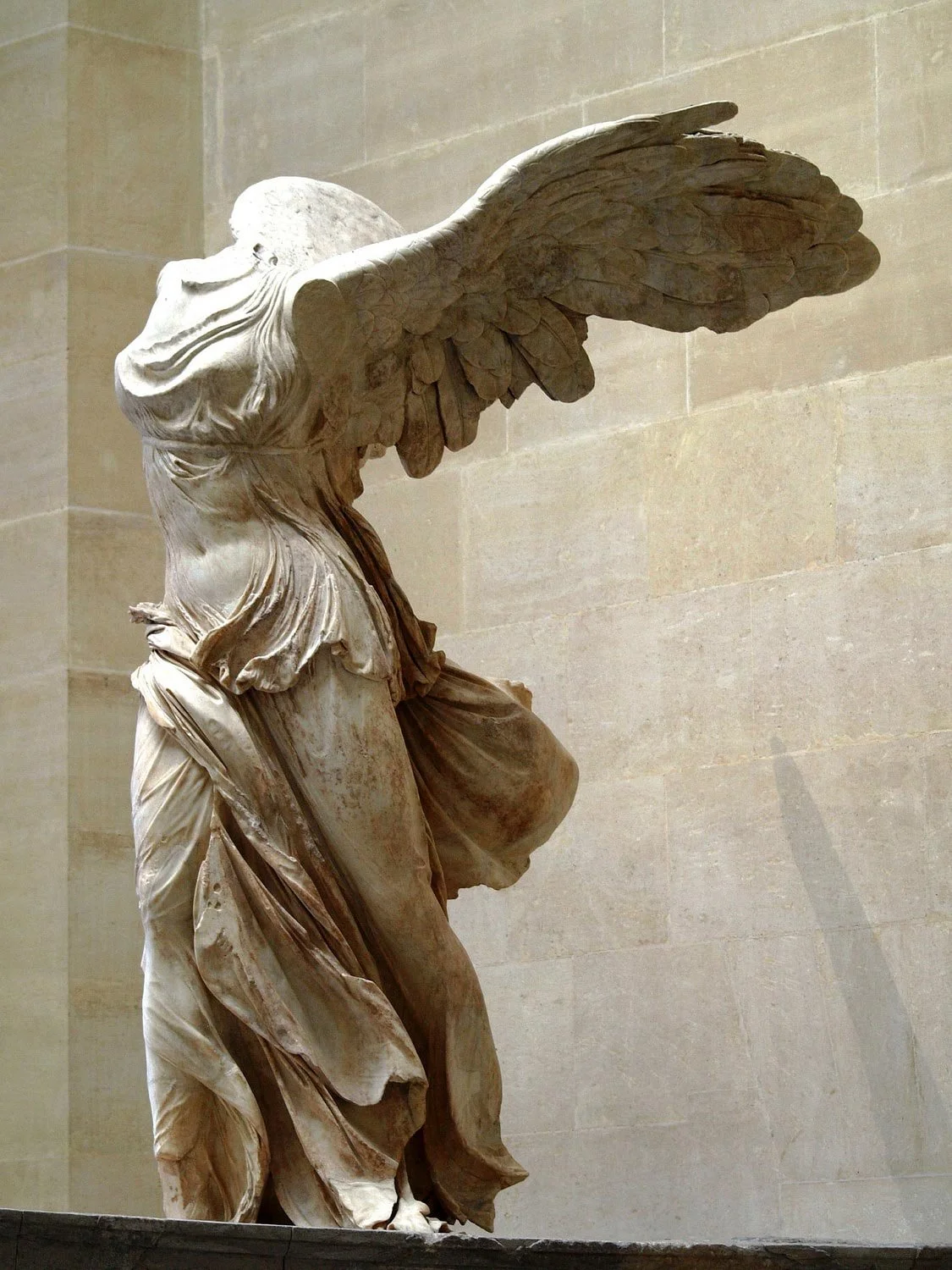
Nike looks like she just touched down on a ship’s prow—cloth whipping, body leaning forward, energy everywhere. It’s a masterclass in turning stone into weather, motion, and drama.
Quick attribute guide to the major gods
Let’s do the fast, usable version, the one you can keep in your head while walking.
Athena: helmet, shield, spear, aegis (protective mantle), owl, olive. If you want a deeper read, start with how to spot Athena and then zoom into Athena Symbols in Art: Owls, Olive Trees and the Aegis.
Apollo: lyre (music), laurel wreath, bow, youthful calm face. Here’s how to spot Apollo when you want the full checklist.
Zeus: thunderbolt, eagle, scepter, mature beard, “kingly” posture. This is how to spot Zeus in the simplest terms.
Poseidon: trident, sea associations, sometimes very similar to Zeus if the attribute is missing. When in doubt, ask: do we have a trident, or a thunderbolt?
Artemis: bow, quiver, short hunting tunic, deer. She often reads as “in motion,” like a god who belongs outdoors.
Hermes: winged sandals or cap, traveler vibe, messenger staff (kerykeion). Even without the staff, his youthful athletic look can signal speed and mobility.
Aphrodite: beauty cues, sensual body language, sometimes partial drapery, sometimes a mirror or apple. She is often identified by the type of pose as much as by a single object.
Dionysos: grapevine, ivy, wine associations, sometimes a relaxed posture, sometimes paired with satyrs.
Hera: queenly drapery, diadem, scepter. Harder to identify alone, often clearer in narrative scenes with Zeus.
Demeter: grain, torch, maternal presence. Like Hera, context helps a lot.
A key caution: attributes are not always present. A statue can be a “divine type” without the full kit. That’s why the next section matters.
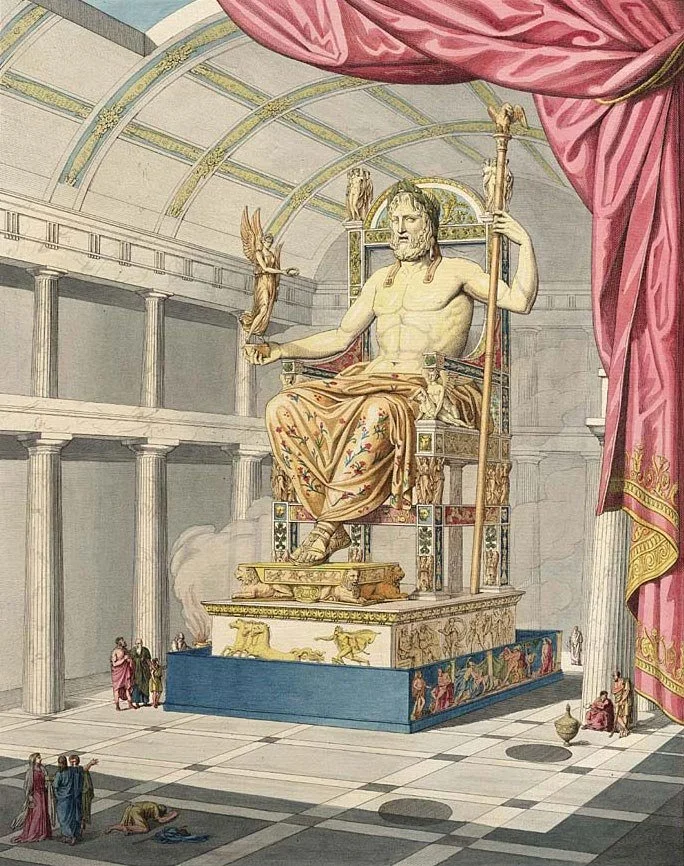
Reconstructions help us imagine scale: Zeus wasn’t “big,” he was room-defining. Even if details vary by artist, the key takeaway is how ancient cult statues were designed to overwhelm you—in the most intentional way.
When the attribute is missing, read the story around the body
Sometimes we meet a statue that’s clearly “a god,” but the clue is gone. The hand is broken. The staff is missing. The head is lost. What then?
This is where narrative context becomes your best friend.
Greek sculpture often works in programs, groups of figures designed to be read together. The Parthenon is the classic example, and How to Read Parthenon Sculptures as One Visual Program is basically a masterclass in how gods are identified through relationships, not just objects.
Look at the Parthenon’s sculptural zones:
myth scenes in sculpture often show gods interacting, competing, or claiming space. A figure’s role in the scene can reveal identity even if the object is gone.
Metopes of the Parthenon: The Four Mythical Battles Explained show conflicts where divine and heroic types repeat in recognizable ways.
Parthenon Frieze: How to Read the Procession Scene shifts from myth into civic ritual, and that contrast teaches us how Greeks used imagery to connect gods and society.
In other words, the question is not only “What is this statue holding?” It’s also “What is this statue doing?” Who is it facing? Who is it paired with? Does the body language signal authority, protection, seduction, speed, hunt, or kingship?
If we treat sculpture like a frozen sentence, the attribute is one word. The whole composition is the full meaning.
Greek gods don’t stay visually fixed forever
Here’s the part that feels surprisingly modern: Greek gods have “branding,” but the brand evolves.
Across centuries, divine images absorb new artistic styles, new political needs, and new local traditions. A regional sanctuary might emphasize a specific aspect of a god. Later viewers might reshape an older image to match new tastes. And once we get into Roman collecting culture, Greek originals are copied, adapted, and sometimes hybridized.
That’s why it’s helpful to think historically: the same god can look different depending on date, place, and purpose. how Greek god statues evolved digs into that longer arc, which makes the “spot the god” game feel less like trivia and more like visual history.
Athena is a great example. In a city-defining context like the Acropolis, she can appear as a symbol of protection and civic identity, which is why Athena Parthenos: What We Know About the Lost Colossal Statue matters. We’re not just identifying her. We’re seeing what a city wanted her to mean.
So yes, we’re learning attributes. But we’re also learning how images carry ideology, belief, and power across time.

Conclusion
Once you start looking for attributes, Greek gods stop being “mysterious perfect bodies” and start becoming readable characters in a shared visual language. The fun part is that we don’t need to memorize everything. We just need a method: check the hands, check the head, check the outfit, then read the story around the body.
And when the statue still refuses to be identified, that’s not failure. That’s the real museum experience. You’re standing in front of an object that survived two thousand years, missing parts, carrying clues, asking you to look closer.
FAQ
How do you identify an ancient Greek god statue quickly?
Look for an attribute first, then confirm with outfit, posture, and context.
What if the statue is missing its hands or object?
Use headgear, clothing, and narrative setting, especially if it was part of a group.
Which gods are easiest to confuse?
Zeus and Poseidon are commonly confused when the thunderbolt or trident is missing.
Were Greek god statues originally painted?
Many were colored, and paint helped clarify details that are subtle today.
Sources and Further Reading
You may also like