Greek Temples: How the Ancient Greeks Built for Their Gods
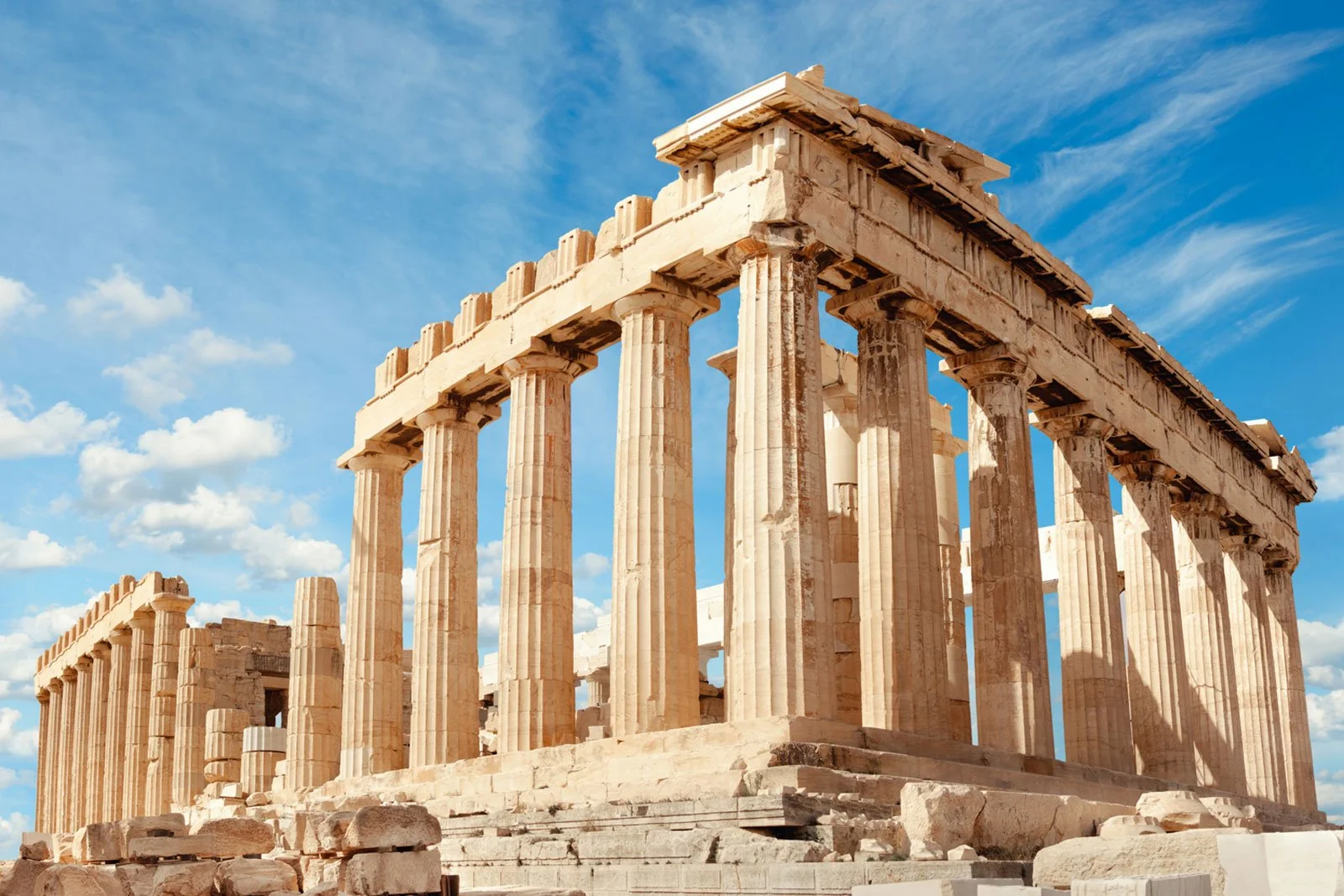
The Parthenon crowns the Athenian Acropolis as a monumental Doric temple dedicated to Athena and a symbol of classical Greece.
Picture yourself walking up a hill toward a Greek temple. The columns rise in front of you, pale against the sky. There is no door to knock on, no pews inside waiting for you. Instead, the life of the temple is happening all around it: smoke from a sacrifice rising on an outdoor altar, worshippers circling the building, offerings glittering in the sun. The temple looks simple, almost like a stone box with a fancy porch. Yet every step, every column, every carved block is carefully placed to manage the relationship between humans and the divine.
In this article we turn a Greek temple into a walking tour. We will start with what a temple actually is, then move through its origins, its parts, its columns and its rituals. By the end, you will be able to look at almost any ruined temple and mentally rebuild how it worked, not just how it looked. If you feel like keeping a wider context open, you can pair this read with our overview of Greek architecture as a whole or our map of ancient Greek structures beyond temples.
A Greek temple is a rectangular sacred building that housed a god’s cult statue and offerings, surrounded by columns and used as the architectural focus of outdoor worship.

What Is a Greek Temple, Really?
A Greek temple is first of all a house for the god, not a church for the community. That single idea explains a lot of what we see in the ruins.
At its core, the building is organized around the naos or cella, the inner room where the cult statue stood. This is usually a long, narrow space with thick walls and a single entrance on the short side. Common visitors rarely walked into this room. Access was controlled by priests and specific rituals, and in some cases the door may have stayed closed most of the time. From the god’s point of view, though, the naos is home: a stable, richly decorated place to “reside” in image form.
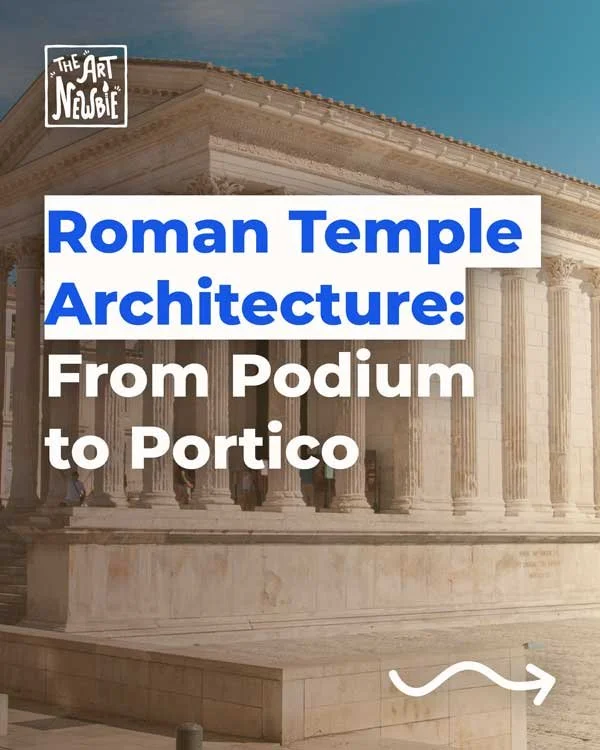
Around this core room the temple builds a public face. A front porch, the pronaos, lets you pass through a threshold zone between outside and inside. Sometimes there is a matching rear room, the opisthodomos, used as a treasury to store offerings and valuable dedications. All of these spaces sit on a stepped platform, the krepidoma, which lifts the building above ground level and signals that you are entering a different kind of space.
From far away, however, what we usually see are the columns and the triangular pediments. The familiar “temple shape” is mostly the outer shell: an envelope of stone that wraps the inner shrine. This outer shell is where Greek architects play with proportion, rhythm and decoration. It is also what later eras eagerly copied, from Roman temples to modern banks and museums. When we say “Greek temple”, we are often thinking as much about this exterior language as about its cult function.
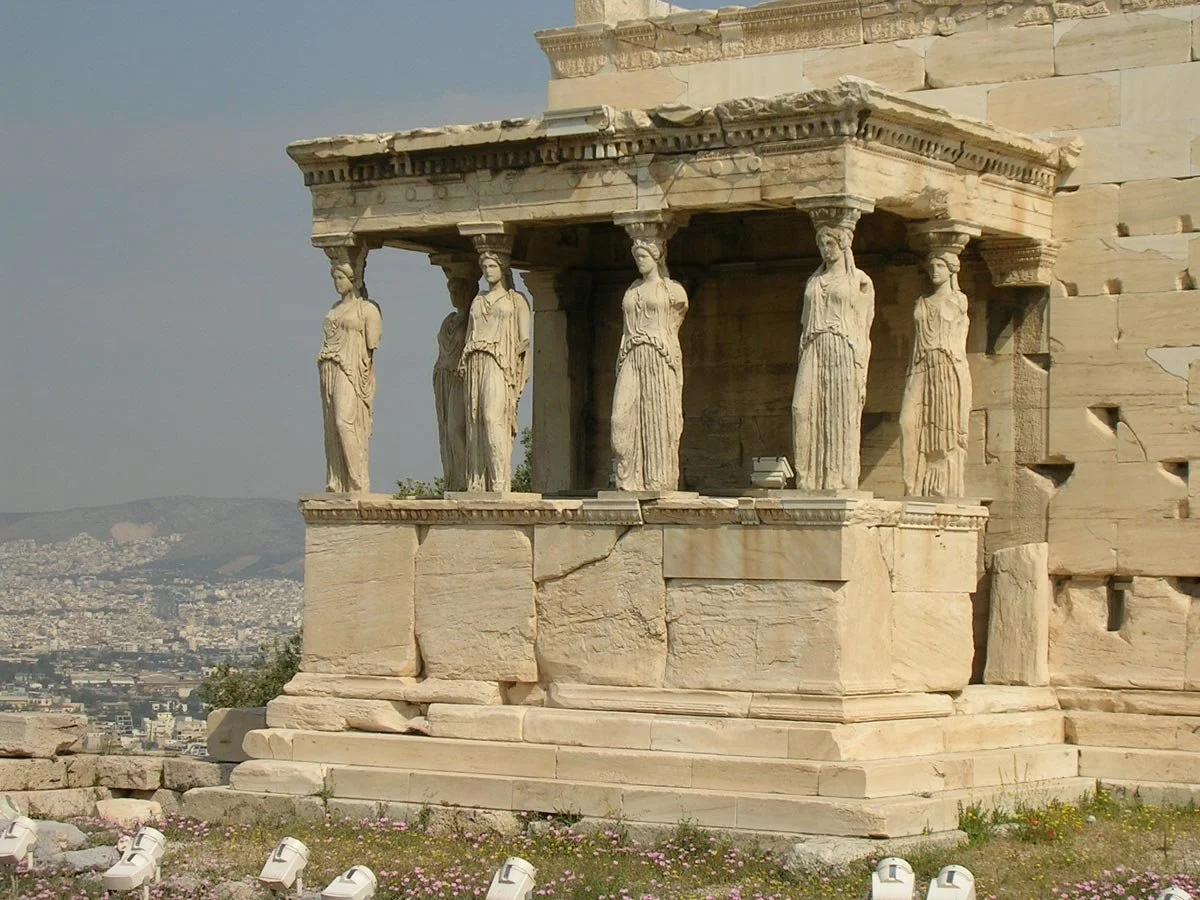
The Caryatids of the Erechtheion support the porch roof, six draped female figures taking over the job of stone columns.
From Megaron to Marble: Where Did the Temple Plan Come From?
Greek temples did not appear out of nowhere. Their plan develops from earlier building types, especially the megaron, a rectangular hall used in Mycenaean palaces, which we explore in more detail in our guide to what a megaron is and how it worked.
A typical megaron was a long room with a central hearth, a front porch, and often a pair of columns and a small vestibule. In Late Bronze Age palaces like Mycenae and Tiryns, the megaron acted as a throne room and ceremonial space. When those palaces collapsed around 1200 BCE, the exact political system vanished, but the basic architectural layout survived in houses and shrines of the Early Iron Age. Over time, some of these shrines grew larger, more formal, and more focused on a cult image rather than on a human king.
Archaeologists see a gradual shift from mudbrick and timber buildings to more permanent stone structures. At early sites, columns are still wooden, walls are light, and roofs might be thatched. Only later are these parts translated into stone and terracotta. This translation is crucial: when a wooden post becomes a stone column, it suddenly allows for more carving, more visual rhythm, and a stronger sense that the building is here to stay.
By the Archaic period, roughly the seventh and sixth centuries BCE, the temple plan we recognize has settled into place. The megaron’s single room and porch become the naos and pronaos. The front columns multiply and march around the building as a peristyle, a ring of columns on all four sides. The hearth disappears from the interior; sacrifice moves outside to an altar in front of the temple. What began as a palace room for a human ruler is reborn as a monumental home for a god, standing free in the sanctuary landscape.
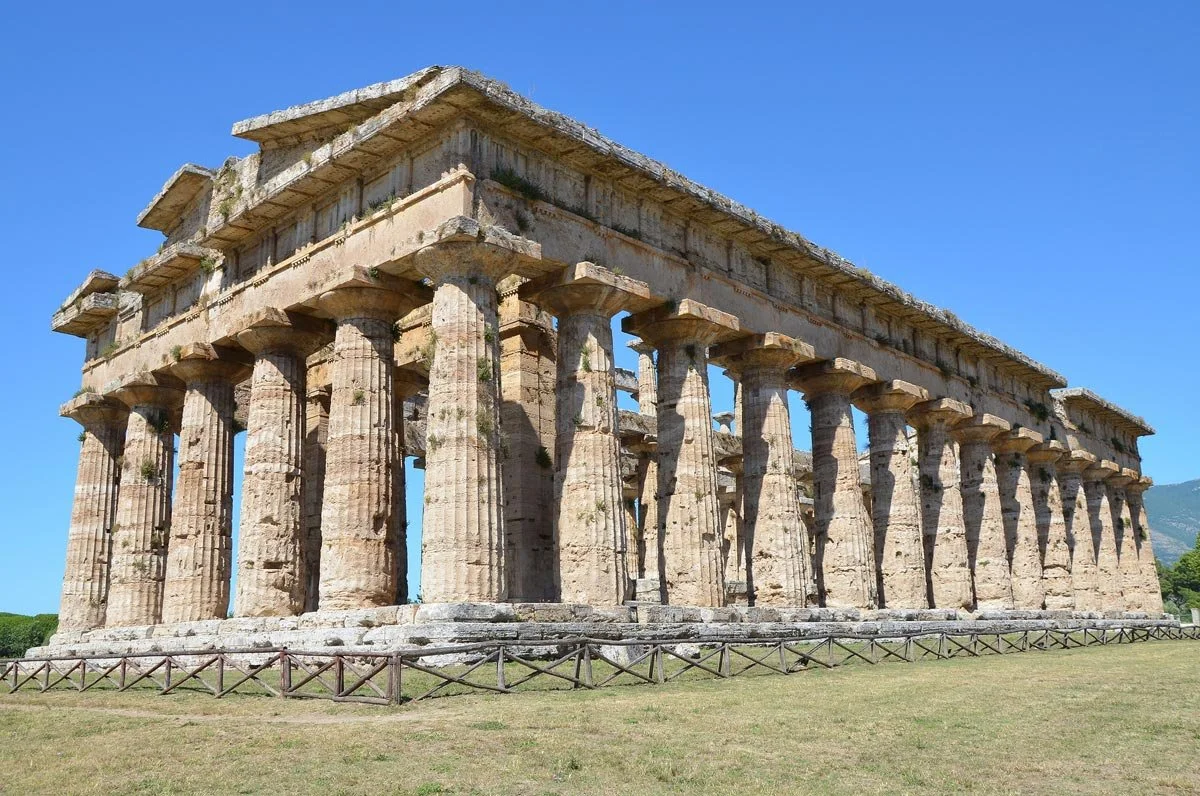
Doric temple at Paestum from the long side, its heavy colonnade and roof blocks stressing the weight of Greek stone.
How the Parts of a Greek Temple Fit Together
If we walk slowly around a Greek temple, each step reveals a different piece of a carefully coordinated system. Understanding these parts of a Greek temple turns a ruin from a random pile of blocks into a legible diagram.
Start at your feet. The temple sits on several low steps, usually three, known collectively as the krepidoma. The top step, the stylobate, is where the columns actually stand. These steps not only lift the building visually; they also help manage small changes in the ground level and create a controlled approach. On famous temples like the Parthenon, the stylobate is not perfectly flat but slightly curved, a subtle correction that keeps the building from looking saggy at a distance.
Looking up, the columns support a horizontal beam system called the entablature. In the Doric order, which we treat in more detail in our dedicated piece on the Doric column, this entablature is divided into the smooth architrave and the frieze with alternating triglyphs and metopes. In the Ionic order, which you can explore further in our guide to Ionic columns and their scroll capitals, the frieze is often a continuous band of sculpture. Above all this sits the pediment, the triangular gable end, usually filled with large sculpted scenes.
Move back toward the center. Behind the forest of columns lies the solid wall of the naos. Inside, a large cult statue would stand on a base, sometimes framed by an inner row of columns. The scale of this statue can be extreme. In the Classical period, some temples housed chryselephantine figures, built from gold and ivory, towering above visitors. Even in more modest buildings, the statue anchored the space, receiving the light from the doorway and sometimes from small roof openings.
Seen from above, the plan looks like an elongated rectangle: outer columns forming a ring, inner walls forming a smaller box, entrance always on the east-facing short side in many cases. This simple geometry is deceptive. Greek architects spend a great deal of effort on near-invisible refinements: slight inward tilts of the columns, varying column thickness at corners, or tiny shifts in spacing. Together, these adjustments make the temple feel balanced, elastic and alive, not stiff and mechanical.
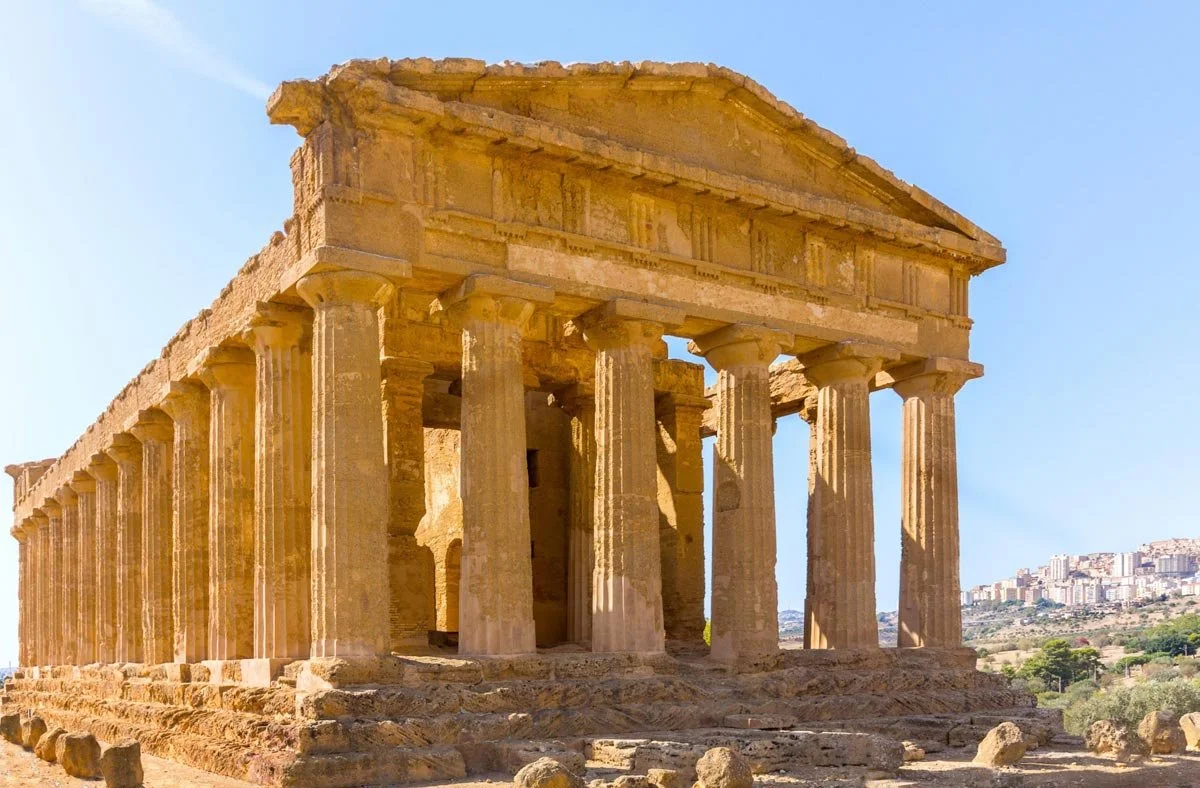
Temple of Concordia at Agrigento in warm light, an intact Doric temple standing high above the Valley of the Temples.
Why Columns and Orders Matter So Much
Greek architects used columns and architectural “orders” as a kind of grammar. The choice between Doric, Ionic or other column types is not only decorative; it signals regional identity, period, and sometimes even the character of the deity.
The Doric order is the oldest widely used system. Its columns sit directly on the stylobate without bases, with fluted shafts that are thicker toward the bottom and capped by a simple round-and-square capital. Doric friezes carry the familiar pattern of triglyphs and metopes. This order dominates temples in mainland Greece and in many western colonies. When you picture the massive temples at Paestum or the Parthenon in Athens, you are seeing Doric in action. Our article on types of columns in Greek architecture unpacks how Doric compares to other styles across different buildings.
The Ionic order is more slender and ornate. Columns rise from bases, the flutes are narrower, and the capital ends in spiral volutes. Ionic temples often feature continuous sculpted friezes that wrap the building like a story band. The order appears frequently in the Aegean islands and along the coast of Asia Minor. In some complexes, Doric and Ionic even mix, creating visual contrast within the same sanctuary.
There is also the Corinthian order, more common later, with capitals covered in acanthus leaves. While fewer Classical temples are purely Corinthian, the style becomes very popular in Hellenistic and Roman times, especially in interiors and small shrines. For a fuller sense of where each order fits within the bigger picture, it helps to zoom out and look at Greek architecture across different building types.
What all these orders share is a deep concern with proportion and rhythm. Columns are spaced according to ratios; the height of the column relates to its diameter; the arrangement of triglyphs ties back to the width of the intercolumniations. Even when you do not know the math, you feel the result as a kind of visual music. That is part of why Greek temples remain so compelling even as ruins. The stone grammar still works on our eyes.
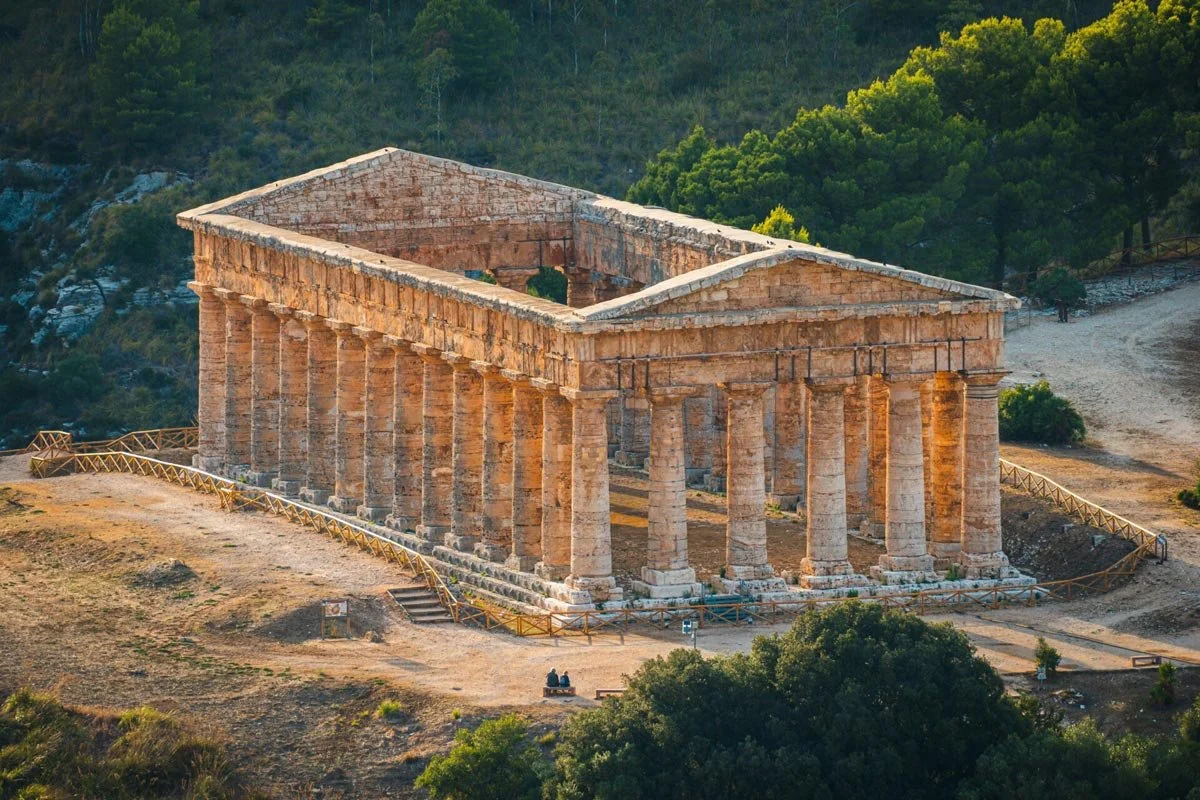
Isolated Doric temple of Segesta from above, ringed by a path and hills that frame its almost untouched colonnade.
What Actually Happened at a Greek Temple?
If the temple is a house for the god, we might ask: where do the humans go? The short answer is mostly outside.
In front of the temple stood an altar for animal sacrifice and other offerings. This is where worshippers gathered during festivals, processions and regular cult days. Priests performed rituals, burned parts of animals, poured libations of wine, and offered incense. The god, understood to reside in or near the cult statue, received the invisible share of the sacrifice. The community shared the cooked meat. The temple building formed a backdrop and storage place for gifts, but the religious “action” unfolded in the open air.
Offerings could range from tiny terracotta figurines to large bronze tripods or weapons captured in war. Many of these dedications were stored inside the temple’s back rooms or displayed around the sanctuary. In this sense, a temple also functioned as a treasury and museum, full of objects that recorded alliances, victories and personal devotions.
Different cities and sanctuaries had different rhythms. At Panhellenic sites like Olympia or Delphi, people from many poleis came together to honor a shared god, creating a politically charged atmosphere. At local rural shrines, the temple might serve a smaller community, marking agricultural cycles or family rites. Our broader article on ancient Greek religion and its everyday practices explores those variations in more detail.
Myth vs Fact:
Myth: Greeks worshipped mainly inside the temple building.
Fact: major rituals and sacrifices usually took place outside at an altar, with the temple serving as the god’s house and visual focus.
This outdoor orientation is one of the biggest differences between Greek temples and many later religious buildings. When we visit a ruined temple today, we often walk straight into the naos area because the roof is missing and the walls are low. In antiquity, that central space would have felt much more restricted. The real “congregation” was the crowd outside, facing the altar and the temple façade under the open sky.
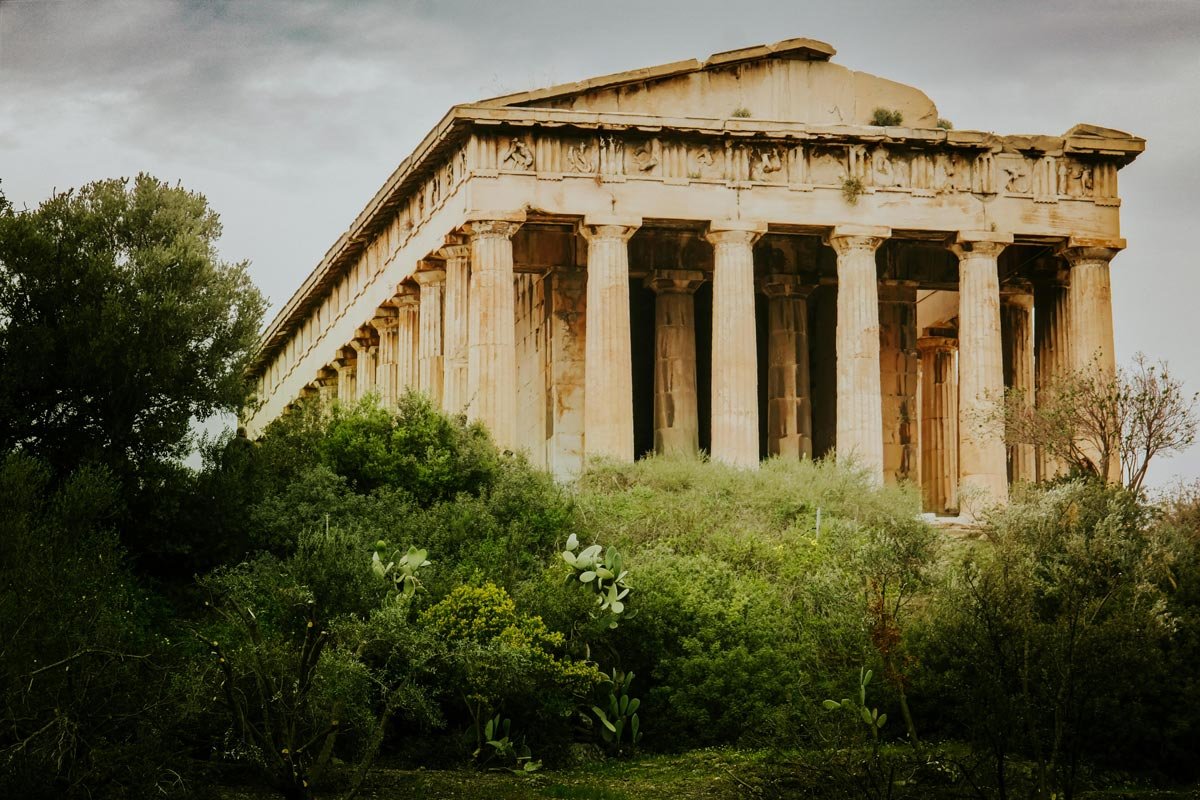
Doric temple emerging from dense hillside greenery, evoking how Greek sanctuaries once sat within real landscapes.
Temples in the City and Across the Landscape
Greek temples were never just isolated objects. They were anchors in the urban fabric and the wider landscape, shaping how people moved, gathered and imagined their cities.
Within a city, a major temple might sit in the agora, the civic center, or on a special height like an acropolis. The Acropolis of Athens is the most famous example: a rocky plateau crowned with several temples, including the Parthenon, which we walk through step by step in our focused article on the Parthenon in Athens within the larger story of Greek design. From such a height, the temple could be seen from far away, constantly reminding citizens of the patron deity and the community’s shared identity.
Temples also marked boundaries and routes. Coastal sanctuaries announced a city’s presence to ships. Rural temples dotted roads and passes, giving travellers places to stop, sacrifice and ask for protection. In Magna Graecia, the Greek cities of southern Italy built large Doric temples at sites like Paestum, which today form some of the best-preserved examples of the type. These buildings communicated power and stability to anyone moving through the region.
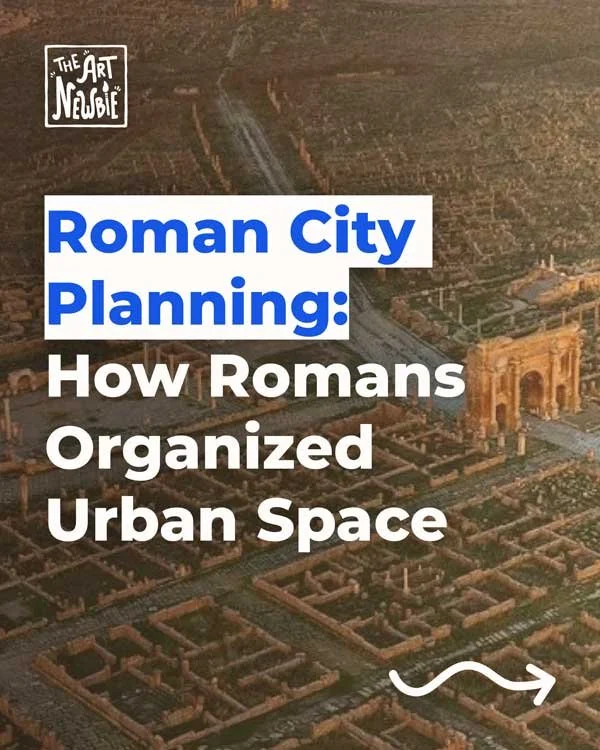
When we compare temples to other ancient Greek structures, like theaters or stoas, we see different models of public space at work. Theaters carve out a hollow in the hillside for collective viewing. Stoas stretch along the edges of agoras as flexible, shaded walkways. Temples, by contrast, tend to stand as self-contained blocks, demanding that you orbit them, read them from multiple sides, and approach them along carefully planned axes. Putting these building types side by side, as we do in our broader guide to ancient Greek structures and their roles, helps clarify what is special about the temple’s way of shaping movement and attention.
Even in ruins, this shaping effect survives. Modern visitors still climb the same slopes, pause at the same terraces, and frame the same views that ancient worshippers did. The columns may be broken, but the way temples choreograph our bodies in space remains remarkably intact.
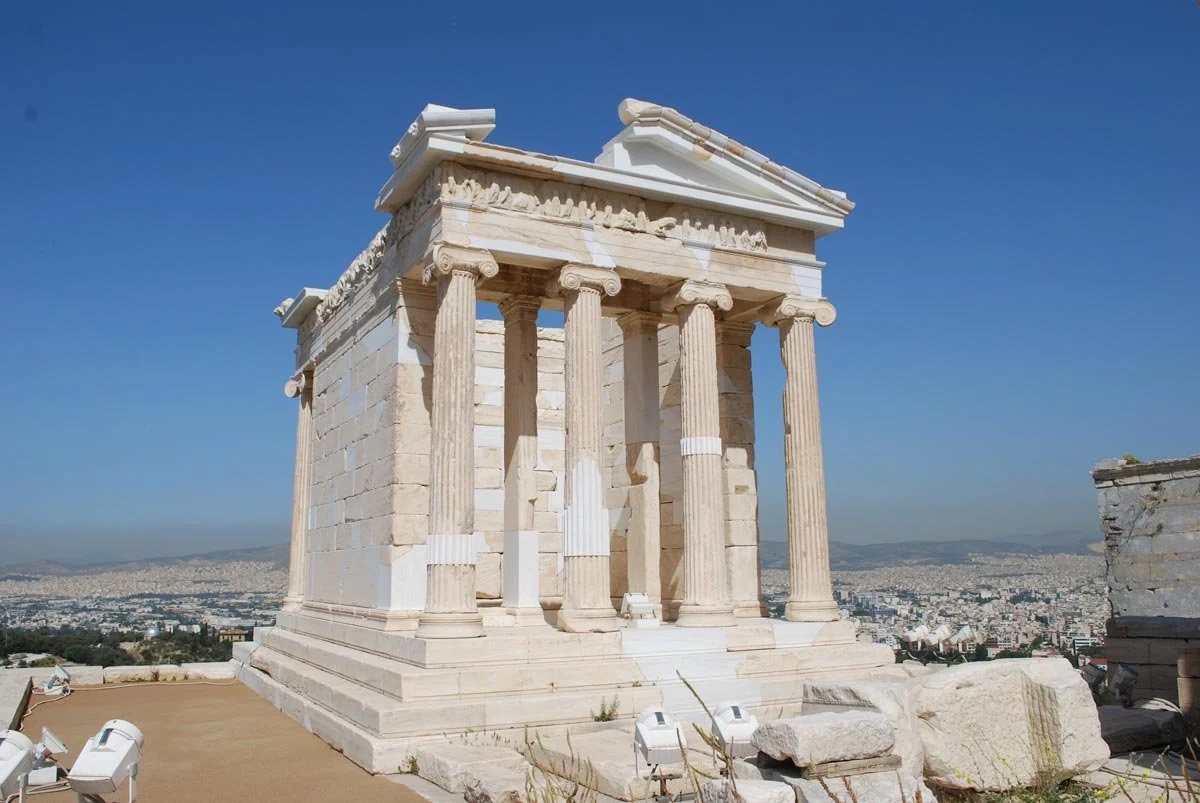
Bright marble Temple of Athena Nike crowns the Acropolis edge, a compact Ionic shrine facing the sprawl of Athens.
Conclusion
Greek temples can feel familiar because we see their echoes everywhere, from neoclassical museums to small-town courthouses. Yet when we slow down and treat them as ancient working buildings, not just pretty prototypes, they become stranger and richer. We discover a type of architecture that is laser-focused on one main task: giving form to the relationship between a community and its god.
We have walked from the megaron’s smoky throne room to the marble peristyle, from the quiet naos to the noisy altar outside, from the precise grammar of Doric and Ionic orders to the way these buildings anchor city skylines and rural horizons. Along the way, Greek temples stop being generic postcard backdrops and start reading like complex negotiations between permanence and change, visibility and restriction, human activity and divine presence.
Next time you visit a ruined temple, try this: imagine the missing roof, the bright paint, the smell of burnt offerings, the crowd pressing forward with animals and garlands. Picture the god’s statue in the inner room, invisible yet central. Then walk the perimeter, feeling how the steps, columns and views guide your body. In that moment, you are not just looking at ancient stone; you are quietly rehearsing the same ritual geometry that shaped Greek religious life for centuries.
You may also like