How Did Etruscans Influence Roman Architecture? Temples, Arches and Ritual Space
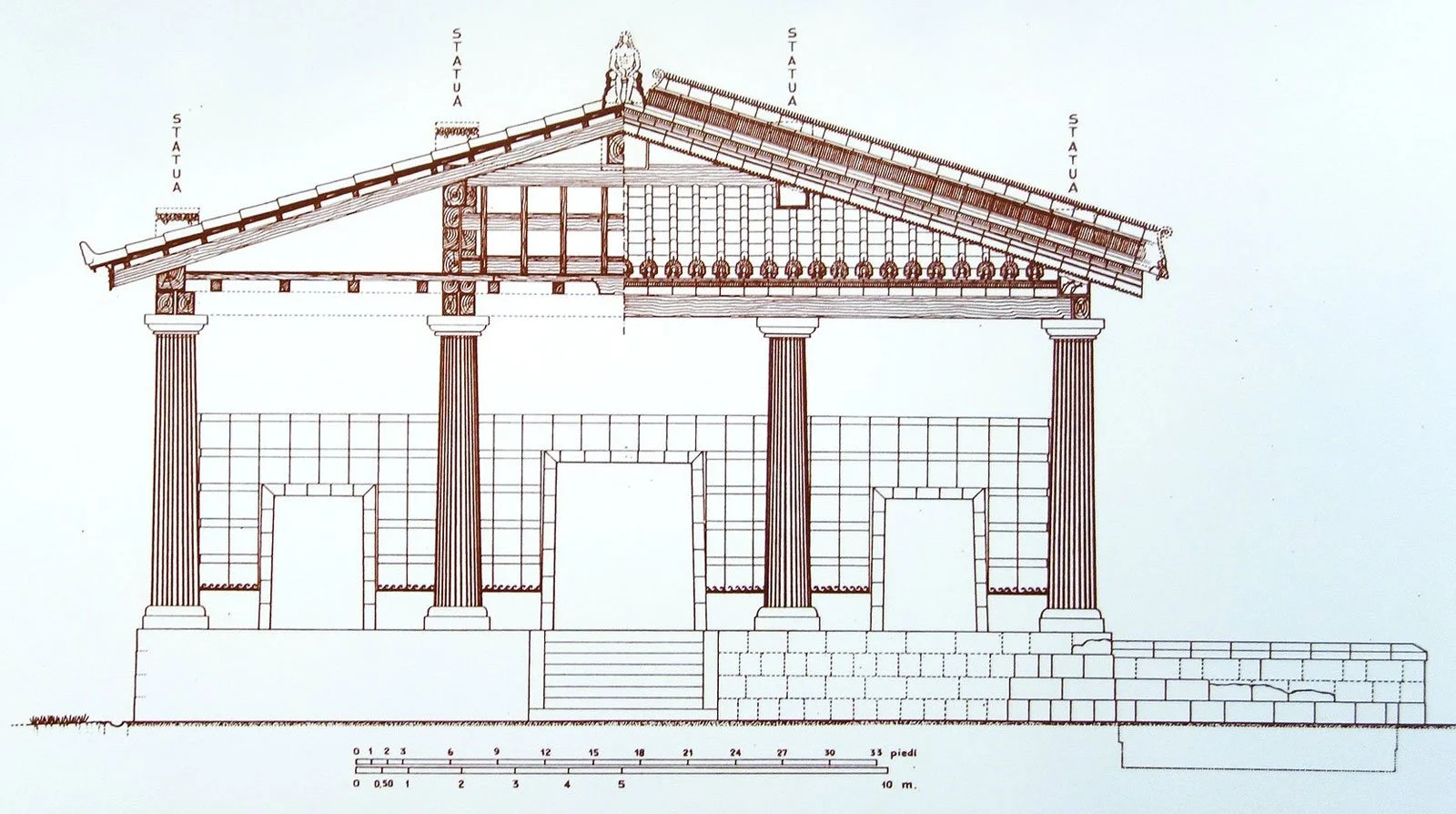
This reconstruction makes the Etruscan roots of early Roman temple design much easier to see.
Roman architecture did not appear fully formed. Before Rome became the great builder of the ancient Mediterranean, it learned from the architectural culture already flourishing in central Italy, and the Etruscans were one of its most important teachers. The clearest Etruscan influences on Roman architecture can be seen in temple design, the use of the arch in Italy, urban ritual space, and early building habits tied to podiums, porches, and strong frontal emphasis.
That does not mean Roman architecture was simply Etruscan with a new name. Rome absorbed ideas from several directions, especially later from Greece. But in its early phases, Roman architecture was shaped by an Italic world in which Etruscan models mattered deeply. If you want to understand how Rome built before it became monumental in the imperial sense, this is one of the best places to start.
The strongest early influence appears in temple design
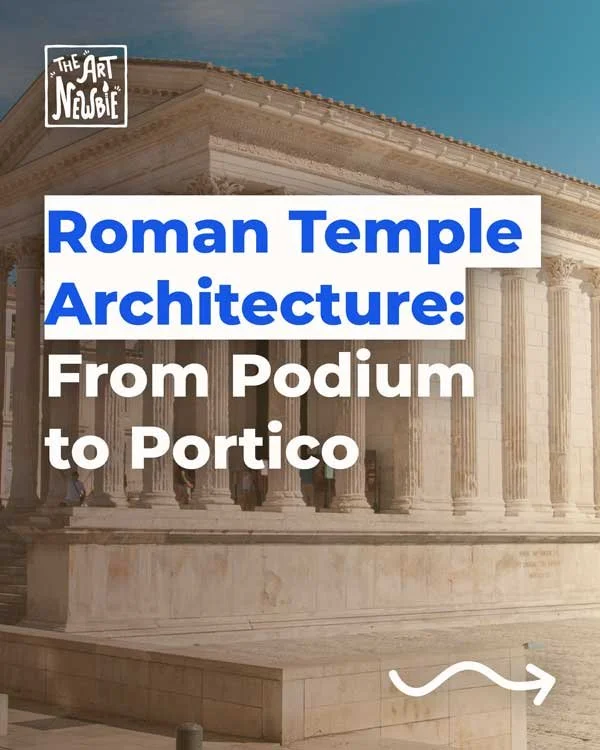
Yes, this is probably the clearest answer. Early Roman temples owe a great deal to Etruscan and broader Italic building traditions. An Etruscan temple was usually set on a high podium, approached mainly from the front, and organized around a deep porch with inner sacred rooms behind it. This produced a building meant to be faced directly, not walked around equally on all sides.
That frontality matters because it shaped the Roman temple for centuries. Even when Roman architecture later adopted more Greek decorative elements, many Roman temples still kept the basic logic of a raised platform, a frontal staircase, and a strong façade. In other words, Rome did not inherit only decorative details from the Etruscans. It inherited a way of organizing sacred architecture around approach, threshold, and visual authority.
The Temple of Jupiter Optimus Maximus on the Capitoline Hill is one of the most famous examples in this story. Although the building itself survives only in fragments and reconstructions, it shows how early Roman temple architecture stood very close to the Etruscan model: monumental podium, broad porch, terracotta-rich decoration, and an urban position tied to state identity.
If you want the background to that architectural language, Etruscan architecture is the broader foundation. This article focuses on the Roman side of the bridge, but the bridge only makes sense if you understand what the Romans were inheriting.
The influence was not only structural. It was also ritual and spatial
Yes, this is where the subject becomes more interesting. Architecture is not just about walls and roofs. It is also about how space organizes action. Etruscan influence on Rome was strong partly because Etruscan sacred architecture already linked building form to ritual behavior.
A high podium, for example, does more than lift a temple physically. It changes how a person approaches it. A deep porch creates a threshold zone between open public space and the sacred interior. A strong frontal axis tells worshippers where the important encounter happens. These are not neutral design choices. They shape ritual.
That ritual logic mattered in Rome. Roman religion was deeply public and strongly tied to the state. Temples were not hidden sanctuaries for private devotion. They were visible civic structures where political authority, divine favor, and public ceremony met. The Etruscan model helped give that relationship architectural form.
This is one reason the topic connects naturally to Etruscan influence on Rome. The Romans did not borrow only architectural shapes. They also absorbed Etruscan habits of organizing sacred and civic life through built space.
The arch mattered, but not in the simple “they invented it” way
Yes, the Etruscan arch is important, but it needs careful explanation. Older summaries often say that the Etruscans invented the arch and gave it to Rome. That is too simple. Arches existed in earlier cultures outside Etruria. What makes the Etruscans significant is that they helped develop and transmit the true stone arch in Italy, especially in gateways, passages, and urban construction.
That is a more precise and more useful claim. It shifts the focus away from invention myths and toward architectural practice. The Etruscans showed how arched construction could become part of urban building in central Italy. The Romans then took that structural idea and pushed it much further, eventually using arches in bridges, aqueducts, amphitheaters, vaults, and triumphal monuments.
So the influence is real, but it works through adaptation. Rome did not receive a finished Roman arch from the Etruscans. It inherited a constructive tradition that it would later scale up and transform dramatically.
If you want to isolate that question, Etruscan arch is the direct follow-up, because the arch deserves to be understood on its own, not only as a footnote in Roman history.
Early Roman architecture stayed closer to Etruscan building than to Greek architecture
Yes, especially at the beginning. When people think of ancient architecture, they often picture Greek columns, marble temples, and perfect exterior symmetry. But early Roman building was not Greek in that sense. It belonged much more closely to an Italic architectural world shaped by Etruscan precedents.
This is why comparison with Greek architecture is useful. Greek temples often emphasize an exterior colonnade and a more even treatment of all sides. Early Roman temples, following Etruscan models, emphasize the front, the stairs, and the elevated base. The viewer is guided toward one main approach rather than encouraged to circle the structure as a fully sculptural object.
That distinction helps explain a lot about early Rome. Before Rome became a master of concrete vaulting and imperial space, it was already building within a visual logic that was more axial, more podium-based, and more strongly tied to civic ritual. The Greek influence would grow later, but the early Roman architectural mindset was already shaped in large part by Etruscan habits.
Urban building habits also passed from Etruria into Rome
Yes, the influence goes beyond temples and arches. The Etruscans also mattered in the broader culture of urban building. Their cities had walls, gates, drainage works, sacred precincts, and carefully structured approaches. They treated architecture as part of organized civic life, not as isolated monuments standing in a vacuum.
Rome developed within that same central Italian world. Early urban works in Rome, especially those tied to drainage, public ground, and monumental sacred space, belong to a context in which Etruscan expertise and precedent mattered. Even when later Roman engineering became much more ambitious, the idea that architecture should organize civic order had already been strongly established.
This is important because architectural influence is often misunderstood as a matter of style alone. In reality, influence can also mean construction habits, planning instincts, and the inherited relationship between religion, politics, and urban form. The Etruscans helped shape that relationship for Rome.
The real legacy is that Rome turned Etruscan forms into something larger
Yes, this is the best way to frame the story. The Romans did not remain Etruscan builders forever. They combined Etruscan traditions with Greek forms, new engineering techniques, and eventually an imperial appetite for scale. But the Etruscan contribution remained foundational.
You can see it in the Roman temple’s frontal monumentality. You can see it in the importance of podiums and porches. You can see it in the architectural role of ritual space. You can see it in the early use of arch-based stone construction in Italy. Most of all, you can see it in the fact that Roman architecture began not from a blank beginning, but from an already sophisticated built culture in central Italy.
That matters because it changes the usual story. Roman architecture did not simply rise after copying Greece. It first developed through an Italic, heavily Etruscan phase, and only later did Greek influence become more dominant in outward form. The Roman achievement is real, but it was built on earlier foundations.

Conclusion
So, how did Etruscans influence Roman architecture? Most clearly through temple design, the architectural shaping of ritual space, early arch-based construction in Italy, and broader urban building habits. The Etruscans gave Rome more than isolated features. They helped give early Rome an architectural language of podiums, porches, frontal emphasis, and civic-sacred order. Rome would later enlarge, mix, and transform that inheritance, but it did not begin without it.
FAQ
How did the Etruscans influence Roman architecture most directly?
Most directly through temple design, especially the high podium, deep porch, and strong frontal approach.
Did the Etruscans invent the Roman arch?
Not exactly. Arches existed earlier elsewhere, but the Etruscans played an important role in developing and transmitting true stone arch construction in Italy.
Were early Roman temples more Etruscan or Greek?
In their basic layout and spatial logic, early Roman temples were closer to Etruscan and broader Italic models than to Greek ones.
Why does ritual space matter in this topic?
Because Etruscan architecture shaped how sacred buildings organized movement, thresholds, and public ceremony, and Rome inherited that logic.
Did Rome only learn architecture from the Etruscans?
No. Rome was influenced by several cultures, especially later by Greece. But Etruscan influence was one of the strongest foundations in the early phase.
Sources and Further Reading
Smarthistory —“Temple of Minerva and the sculpture of Apollo (Veii)” (2015)
Smarthistory —“Temple of Jupiter Optimus Maximus, Rome” (2016)
Encyclopaedia Britannica —“Construction: Roman achievements” (2026)
Encyclopaedia Britannica —“Western architecture: Stylistic development” (2026)
The Metropolitan Museum of Art —“Art of the Roman World” (2023)
World History Encyclopedia —“Etruscan Architecture” (2017)
You may also like