Classical Sculpture: How Greeks Made Bodies Feel Alive
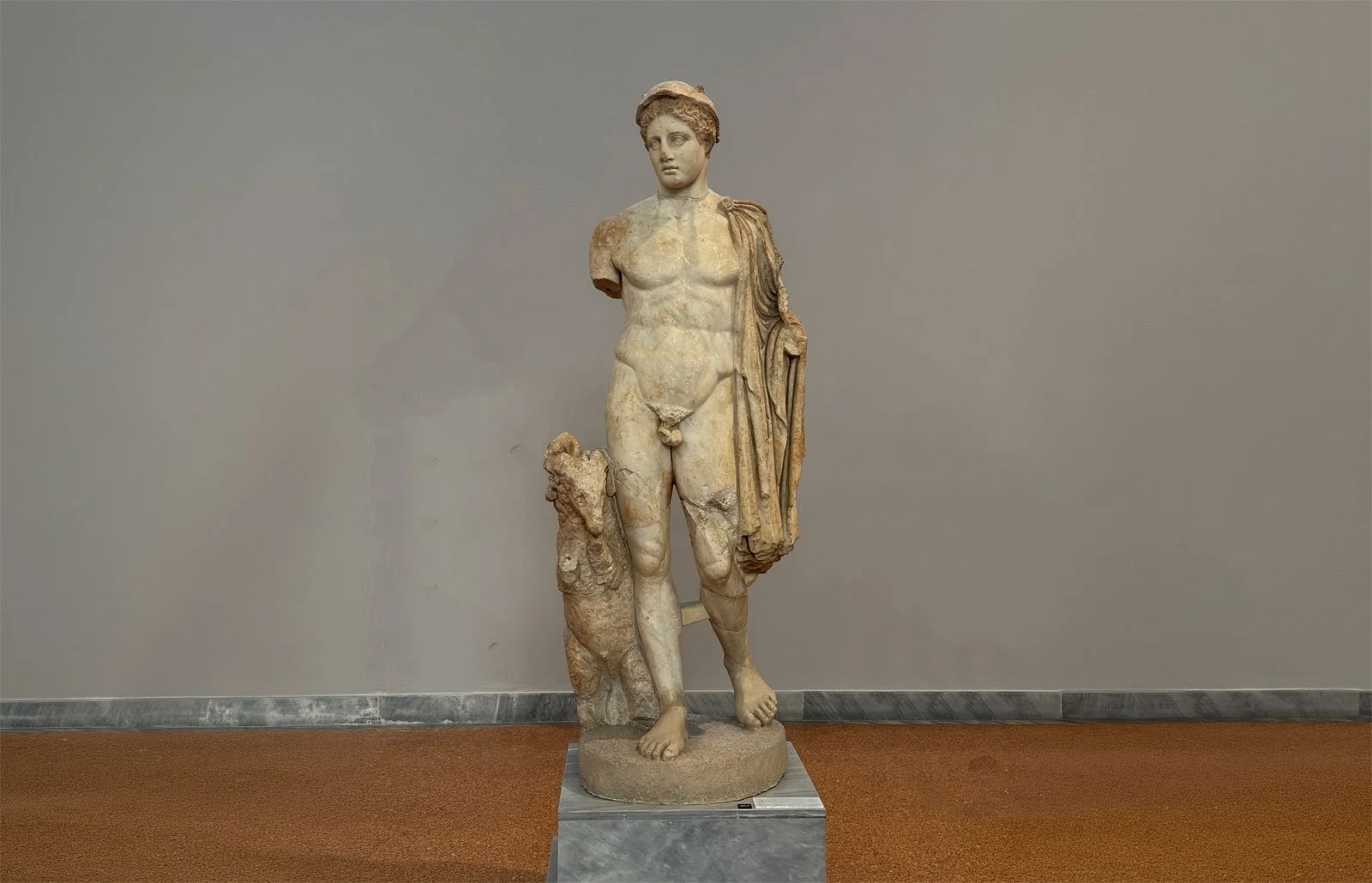
Seeing the statue in a gallery setting helps us notice scale and stance—the quiet shift of weight is the real subject. This is the kind of pose that made Classical bodies look less “posed” and more alive.
Have you ever stood in front of a Classical Greek statue and felt something slightly unfair happen to your brain? The figure is obviously not moving. It’s marble or bronze. It’s been still for centuries. And yet your eye keeps reading a next step, a next breath, a next shift of weight, like the body is about to continue without you.
That “alive” feeling isn’t magic and it isn’t just talent. Classical sculptors built it on purpose, using a handful of repeatable moves: how a body balances, how muscles soften instead of flexing, how skin catches light, how a pose implies the moment before and after.
In this guide, we’re going to learn to spot those moves the same way we’d learn to spot a chord progression in music. Once you see the pattern, Classical sculpture stops being “perfect bodies” and starts being smart visual engineering.
Classical sculpture feels alive because it treats the body as one connected system
It stops posing limbs and starts balancing weight.
If we jump back for a second to Archaic kouroi and korai, a lot of figures feel “front-facing” in a way that’s almost architectural. The stance is stable. The symmetry is strong. The body reads like a sign that says “human,” not like a person caught mid-thought.
Classical sculptors keep the human type, but they change the logic. Instead of building a figure from the outside in, they build it from the inside out. Weight has to go somewhere. Joints react. A ribcage doesn’t stay perfectly centered if a hip drops. A shoulder won’t sit level if the pelvis tilts. You can’t fake that chain reaction and still look convincing.
So the Classical breakthrough isn’t just “more realism.” It’s a new priority: the body as a cause-and-effect machine.
When you’re learning to read this, don’t start with details like fingers or hair. Start with the big structural question: Where is the body’s weight? If you can answer that, everything else becomes easier.
That’s also why it helps to have a baseline for what counts as “Greek statue language.” When you know the recurring clues, you can see when an artist is following the rules or bending them. That’s exactly what how to spot a Greek statue is good for: it gives us the visual alphabet before we start reading sentences.
And once you notice the system-thinking, you start seeing Classical sculpture less as a style and more as a decision: “We want bodies that behave like bodies.”

Torsos are where contrapposto becomes really readable: the abdomen tightens on one side while the other relaxes. That asymmetry is the “living logic” behind so much Classical figure sculpture.
Contrapposto is the simplest trick that makes a statue feel like a person
It works by letting the body relax into an asymmetry that still feels stable.
Let’s define it cleanly the first time: contrapposto is a weight shift onto one leg that tilts the whole body.
That’s it. And it changes everything.
Here’s why it hits so hard. A symmetrical stance feels like a diagram. A contrapposto stance feels like a human who has stopped holding still for you. The moment weight settles onto one leg, the pelvis drops on one side, the spine compensates, the ribcage rotates slightly, and the shoulders answer back. The body becomes a conversation between parts.
Even when the face is calm, the pose is doing subtle storytelling. It suggests:
a moment of pause rather than a permanent pose
a body that can move again at any second
a mind inside the body, choosing how to stand
And notice how Classical sculpture uses restraint here. The shift is often small. It’s not a dance pose. It’s closer to how you stand when you’re listening to someone talk, half relaxed, half ready to respond.
That’s why contrapposto became a core tool for “alive-ness.” It creates potential energy. Nothing dramatic happens, but something could happen.
Once you start looking for it, contrapposto also teaches you how Classical artists thought about time. They weren’t just carving a body. They were carving a moment.
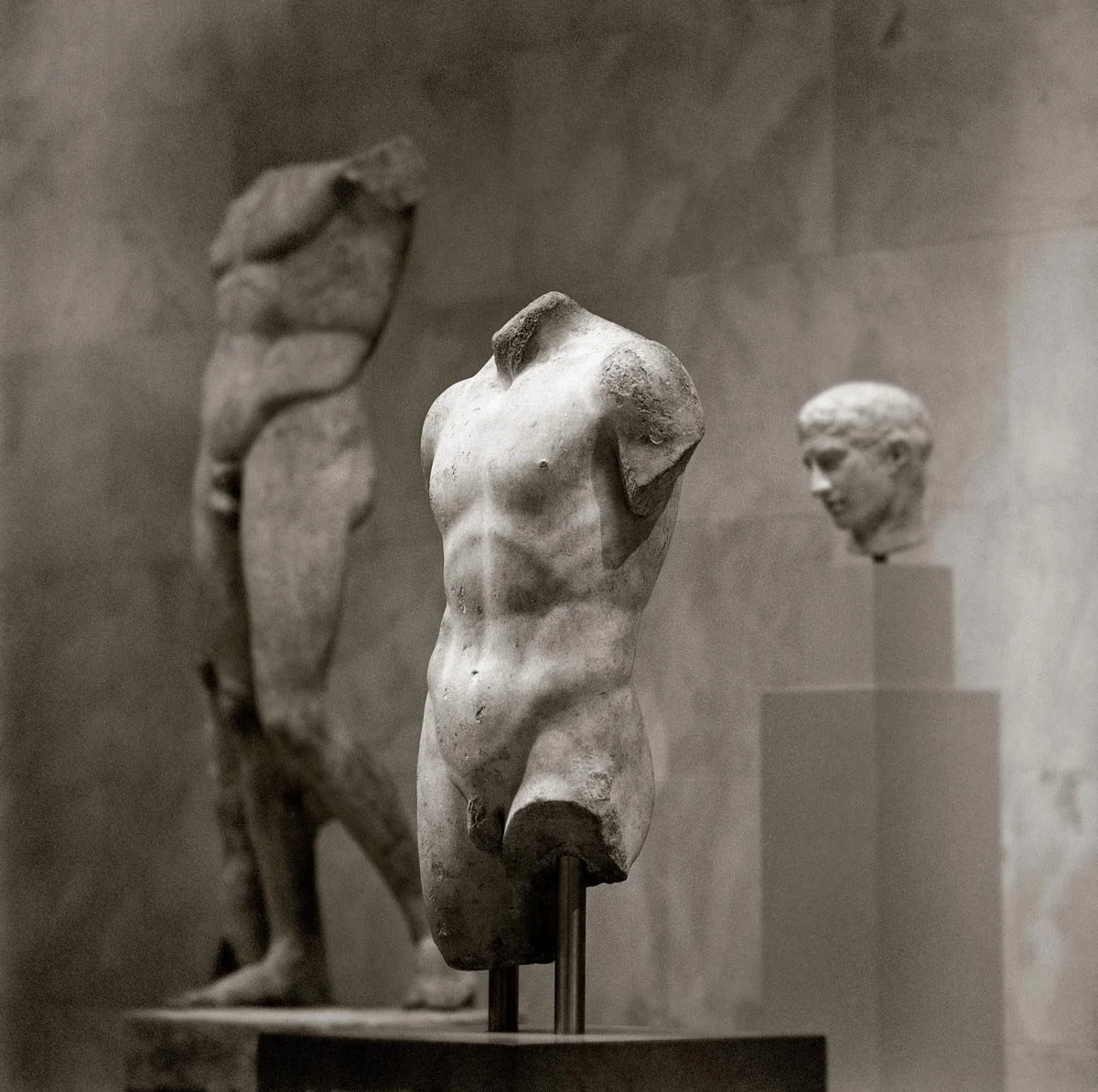
The same torso seen from the side.
Proportion isn’t math homework, it’s how the statue convinces your eye
It creates harmony that your brain reads as “natural,” even when it’s idealized.
When people say Classical sculpture follows a “beauty code,” they’re not imagining one secret formula that all sculptors obeyed. They mean something more practical: Classical artists cared deeply about relationships between parts.
Define it simply: a canon is a set of proportion rules artists reuse.
In Greek art, this becomes the famous canon of proportions idea. It’s not about turning bodies into calculators. It’s about building a figure where nothing feels randomly sized. Head, torso, limbs, hands, knees, feet: each part should feel like it belongs to the same body.
This is where Polykleitos enters the chat. His name shows up again and again because he didn’t just make statues, he helped make the logic explicit. If you want the focused version, Polykleitos’ Canon is essentially the “rulebook” conversation. And if you want the statue that became the poster child for that approach, Polykleitos’ Doryphoros is the one we keep circling back to.
Here’s the key: proportion in Classical sculpture often aims for credible perfection, not literal reality. Real bodies vary wildly. Classical bodies vary less. They’re edited toward clarity.
That editing is why Classical sculpture can feel universally “right” at first glance. The figure reads as coherent even before you notice details. Your eye glides. Nothing interrupts the flow.
So when proportion works, you don’t think, “Ah yes, ratios.” You think, “This body makes sense.”
Classical anatomy feels alive because it avoids shouting
It uses soft transitions and selective emphasis instead of outlining every muscle.
There’s a funny beginner trap with sculpture: we assume “more detail” equals “more realism.” Classical sculptors often do the opposite.
They don’t carve muscles like separate objects glued onto a torso. They carve them as gradual changes of surface. A thigh isn’t a labeled diagram of quadriceps. It’s a volume that shifts under skin. A stomach isn’t a six-pack grid. It’s a plane that tightens or softens depending on posture.
This is one reason Classical sculpture feels modern. It trusts the viewer’s eye. It lets light do part of the work.
Try this thought experiment: imagine the statue under shifting daylight. A sharp carved line will always read sharply. A soft transition will change with light, which makes the body feel responsive, almost breathing.
That’s also why the “calm” faces of Classical art matter. The emotional temperature is controlled. The drama moves into posture, balance, and surface. If you want the bigger arc of that emotional shift, from Archaic smiles to Classical calm is basically the story of Greek sculpture learning subtlety.
Even hair is part of this strategy. Archaic hair can feel patterned. Classical hair often becomes weight and texture. You start sensing gravity.
And once you notice understatement, you realize Classical sculpture is doing a strange double thing: it looks effortless, but it’s obsessively engineered. The body feels alive because nothing looks forced.
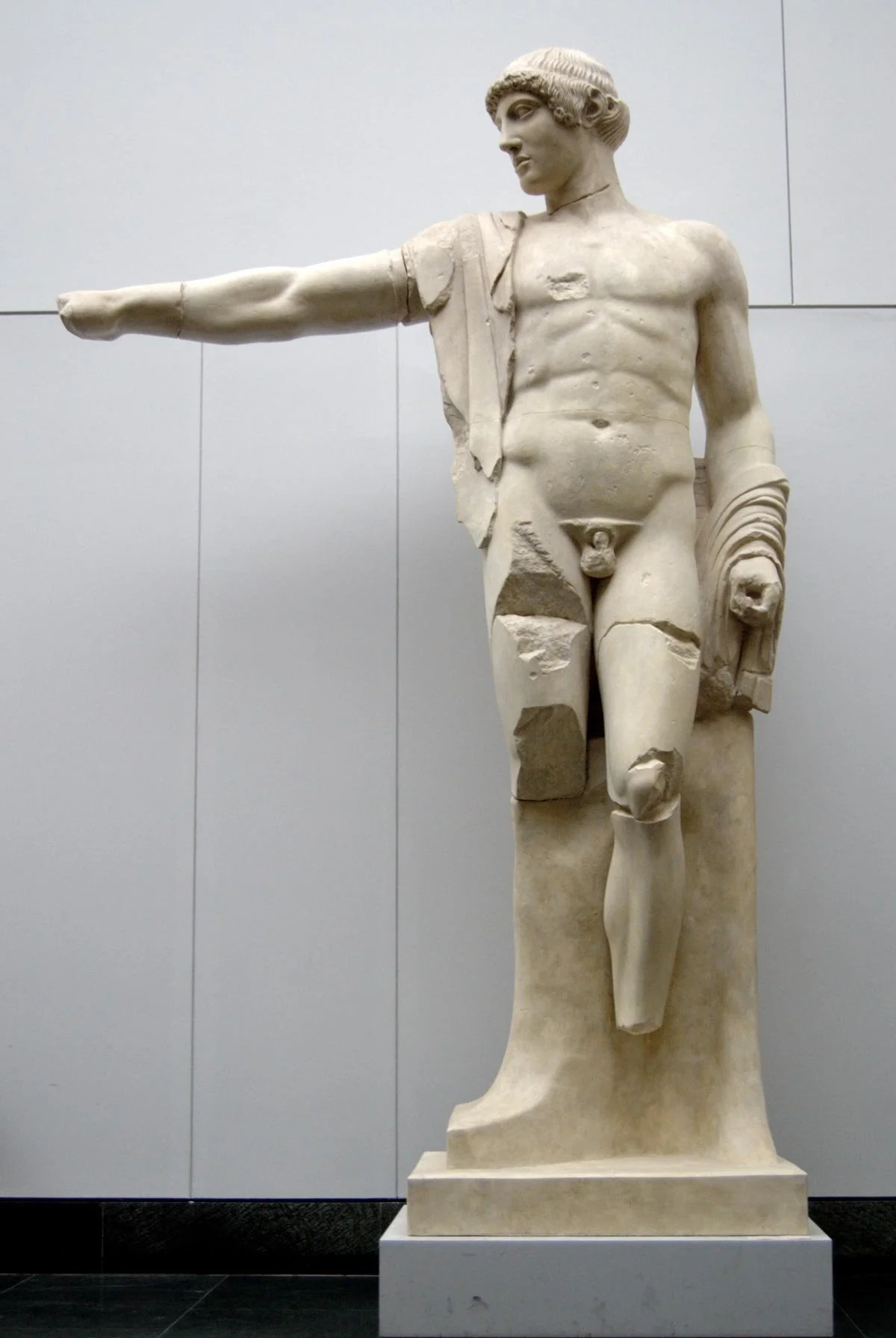
This Apollo is all about controlled authority: the extended arm reads like a command gesture, calm against implied chaos around him. It’s a great reminder that Greek sculpture often tells stories through posture as much as through faces.
“Bronze vs marble” is not just material, it’s two different ideas of life
Bronze allows a kind of movement and detail that marble constantly resists.
Let’s define the split quickly: marble sculpture is carved from stone; bronze sculpture is cast from molten metal.
That distinction changes everything. Marble is heavy, brittle, and dependent on support. Bronze is tougher and can hold outstretched forms more safely. So when we compare bronze vs marble, we’re really comparing two body languages.
Marble bodies tend to feel grounded. They like stable stances, close limbs, controlled projections. Marble can do drama, but it pays a structural price for it.
Bronze bodies can be more daring. An arm can reach. A leg can extend. A twist can be sharper. Bronze also invites another layer of realism: attachments and inlays. Define that simply: inlays are materials set into the surface for eyes, lips, or details.
That’s why ancient bronze statues could look shockingly lifelike in person. Not because the sculptor “copied reality,” but because the medium allowed more of reality’s cues:
brighter, more reflective surfaces
sharper edges where needed
eyes that could catch light like real eyes
details like copper lips or mixed metals
And then there’s technique. Large bronzes were typically made with lost-wax casting (lost-wax casting = wax model replaced by metal). That process also means the artist can build the figure with additive thinking, almost like clay, before it becomes metal.
If you want the deep dive, Greek bronze statues is where we can slow down on why so few survive and what that does to our idea of “Greek sculpture.”
The short version is this: the Classical “alive” effect isn’t one look. It’s a toolkit, and bronze expands what’s possible.
Classical statues were colorful, and the “white marble” look is a modern accident
Paint wasn’t a side detail, it was part of the finished image.
We have to clear one big misconception, because it quietly messes with how we read everything.
Define it simply: polychromy means sculpture originally painted in many colors.
A lot of Greek statues were painted. Some were vividly painted. And once you accept that, the entire idea of “Classical purity” shifts. The calm face doesn’t have to be blank. The body doesn’t have to be “just marble.” Color can emphasize hair, lips, brows, clothing edges, jewelry, even patterns.
This is why it’s useful to keep painted sculpture in the same conversation as “alive-ness.” Color is a life cue. We read it instinctively.
If you want the focused guide, painted Greek statues is the clean reset for the white-marble myth. And if you want a specific earlier case study that makes color feel undeniable, Peplos Kore is a reminder that Greek sculpture could be intensely styled and intensely specific.
Myth vs Fact
Myth: Classical Greek statues were meant to be pure white marble.
Fact: Many were painted, and most paint simply didn’t survive.
Once we let color back in, Classical sculpture feels less like an abstract ideal and more like a designed human image, closer to how ancient viewers actually experienced it.
Classical sculpture feels “alive” because it’s designed for real space and real light
It’s not made for a museum pedestal, it’s made for movement, distance, and changing viewpoints.
We’re so used to seeing statues indoors that we forget how much the original environment mattered. In Greek life, sculpture lived in sanctuaries, on buildings, in public spaces, and in places where light shifts all day.
That matters because a Classical sculptor is constantly negotiating with visibility. A subtle torso twist reads differently in side light than in overhead light. A polished bronze surface behaves differently at dawn than at midday. A carved eyelid shadow can do half the emotion without any expression change.
This is also why sculpture and architecture are basically siblings in Greek art, not separate categories. Temples shape how images are seen, and the images help the temple communicate. If you want that architectural grounding, Greek temples is the “how the stage works” explanation.
And once you start thinking this way, you notice the Classical obsession with controlled perception. The Parthenon is the most famous example because the entire building is engineered to look “right” to a moving human viewer. Even if we’re focusing on standalone sculpture here, it’s the same mindset. Seeing optical illusions of the Parthenon makes the broader Classical goal feel obvious: ideal form is something you experience, not something you measure.
So when a Classical statue feels alive, part of that effect is not “in the statue alone.” It’s in the relationship between statue, light, and viewer. The art assumes we will move. It assumes we will circle. It assumes we will look twice.
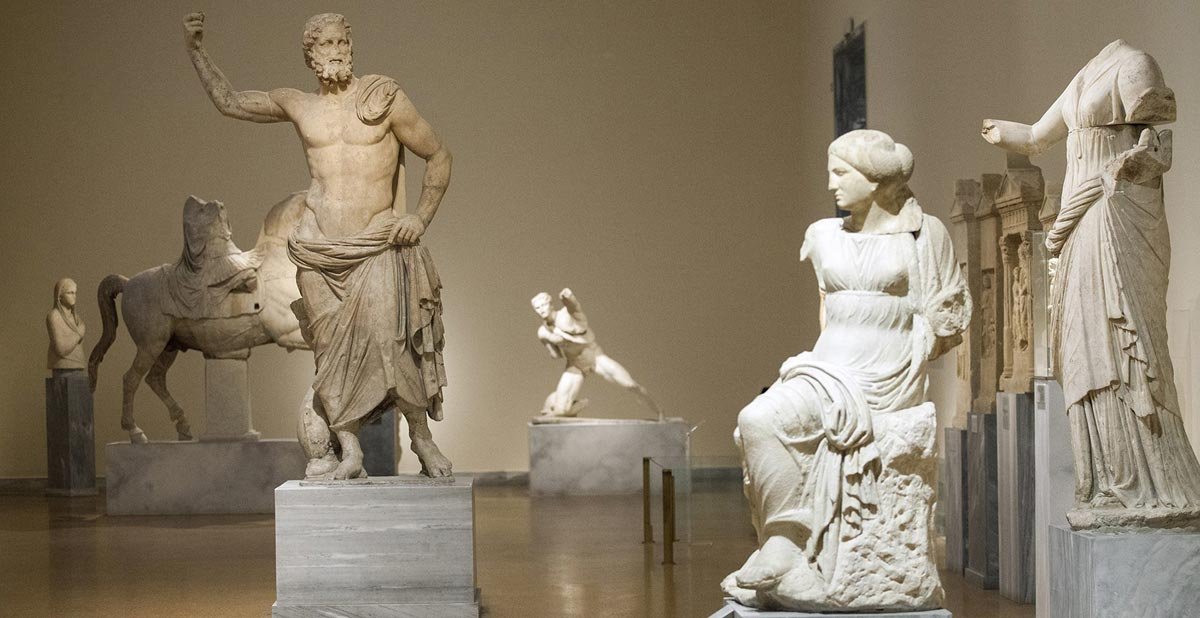
Wide gallery shots like this are perfect for “learning to look” because you can compare poses, drapery, and scale side by side. It’s basically a mini crash-course in how Greek sculpture handled bodies in space.
Conclusion
Classical sculpture makes bodies feel alive by doing something surprisingly humble: it respects how human eyes actually read humans. Weight creates balance. Balance creates posture. Posture creates implied motion. Then proportion smooths the whole system into harmony, while surface and material choices make the figure feel present in real light.
If there’s one takeaway worth keeping, it’s this: the Classical “alive” effect is not one trick. It’s a layered design strategy that we can learn to spot, even as beginners. And once we spot it, we don’t just admire the statue. We start hearing the sculptor’s thinking.
FAQ
What is Classical sculpture, in simple terms?
Classical sculpture is Greek sculpture that aims for balanced, idealized bodies that still behave like real bodies.
What does “contrapposto” mean?
Contrapposto is a weight shift onto one leg that tilts hips and shoulders, making a figure look relaxed and ready to move.
Is the canon of proportions one exact formula?
Not one universal equation. It’s a set of guiding relationships that keep body parts harmoniously scaled.
Why do Classical faces look so calm?
Because calmness signals self-control and stability, while movement is pushed into the body’s posture and balance.
Were Greek statues really painted?
Often yes. Many statues had color, but most pigment didn’t survive, which is why museums can make them look “naturally white.”
Why were bronze statues often more lifelike than marble?
Bronze can hold more extended poses and could include inlaid eyes and mixed-metal details that heighten realism.
Sources and Further Reading
The Metropolitan Museum of Art — “The Technique of Bronze Statuary in Ancient Greece” (2003).
Andrew Stewart (Journal of Hellenic Studies) — “The Canon of Polykleitos: A Question of Evidence” (1978).
Giovanni Verri et al. (Antiquity) — “The goddess’ new clothes: the carving and polychromy of the Parthenon Sculptures” (2023).
The Metropolitan Museum of Art — “Ancient Greek Sculpture in Color” (2022).
Liebieghaus Skulpturensammlung — “Polychromy Research: Gods in Color” (n.d.).
British Museum — “Marble head with preserved pigment traces” (n.d.).

You may also like