Who Were the Etruscans? Cities, Art and Why They Matter
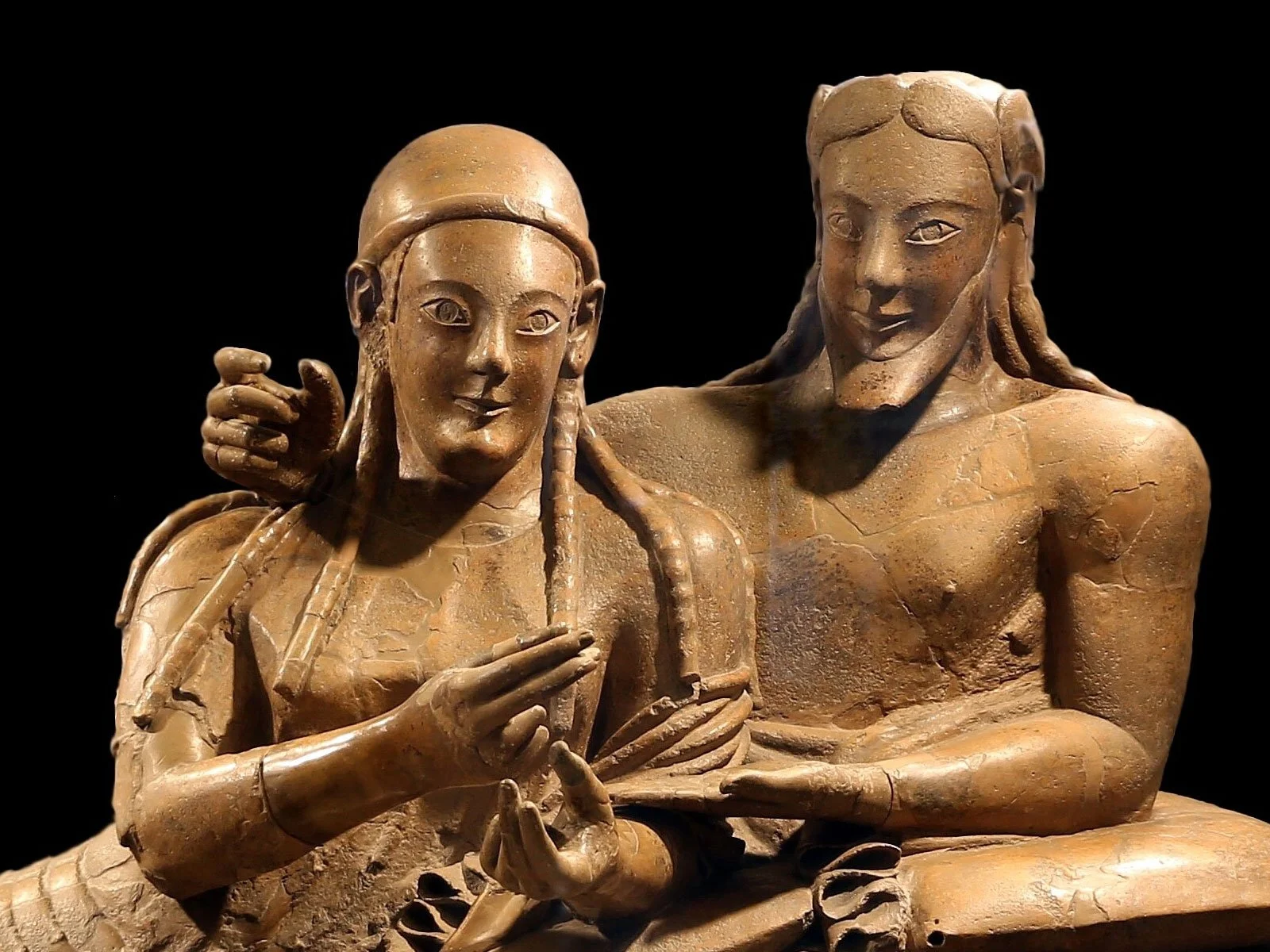
The Sarcophagus of the Spouses is one of the clearest introductions to Etruscan art because it makes the dead feel vividly present, not distant.
The Etruscans were a major civilization of central Italy long before Rome dominated the peninsula. They were urban, wealthy, technically skilled, and visually ambitious. If you know them only as “the people before the Romans,” you are missing the real picture. The Etruscans built powerful city-states, developed a distinctive artistic language, shaped temple design in Italy, and left behind some of the most vivid tomb paintings in the ancient Mediterranean. They matter not just because Rome absorbed them, but because they were a civilization in their own right.
Their story also survives in an unusual way. We do not have long Etruscan histories or literature in the way we do for Greece and Rome. What we do have are cities, sanctuaries, inscriptions, objects, and above all tombs. That means the Etruscans often come to us through material evidence, through things made, used, buried, and painted. For a beginner, that is actually a gift: their world is something you can often understand by looking closely at what they built and what they left behind.
The Etruscans were a civilization, not a footnote to Rome
Yes, Rome eventually absorbed the Etruscan world, but the Etruscans were already flourishing centuries earlier. Their culture grew out of the Villanovan culture of Iron Age Italy and became clearly identifiable by around the 8th to 7th centuries BCE. At their height, especially in the 6th century BCE, the Etruscans controlled a broad zone of central Italy and extended their influence north toward the Po Valley and south into Campania. This was not a loose tribal background to Roman history. It was one of the earliest urban civilizations in the western Mediterranean.
That point matters because the usual Roman-centered view can flatten everything that came before Rome into a kind of prelude. The Etruscans deserve better than that. They had their own language, their own religious practices, their own artistic preferences, and their own political structure. Their language is still only partly understood, not because it is pure mystery, but because most surviving inscriptions are short and practical rather than long literary texts. So when people ask for an Etruscans definition in world history, the clearest answer is this: the Etruscans were an ancient central Italian people who developed a city-based civilization with strong regional identity, rich visual culture, and lasting influence on early Rome.
Their identity was also shaped by contact. The Etruscans traded across the Mediterranean and interacted with Greeks, Phoenicians, and other cultures. This helped make their world visually rich and outward-looking. You can see Greek influence in some pottery shapes, myths, and artistic motifs, but Etruscan art never feels like a copy of Greek art. It translates imported ideas into something more frontal, more tactile, and often more emotionally immediate. That ability to absorb and transform outside models is one reason Etruscan culture feels so alive.
For a fuller chronological frame, it helps to see the Etruscan period as a long development rather than a single frozen moment. The Etruscan world changed over time, from early Iron Age roots to wealthy Orientalizing elites, from Archaic temple culture to gradual Roman conquest and assimilation.
Where did the Etruscans live? Their world was a network of city-states
The Etruscans lived mainly in what the ancient world called Etruria, roughly corresponding to much of modern Tuscany, plus parts of Lazio and Umbria. Their core territory lay between the Arno and Tiber rivers, but their influence reached farther at different moments. Instead of one unified kingdom, they organized themselves through city-states, each with its own ruling elite, sacred spaces, and local identity. Cities such as Veii, Cerveteri, Tarquinia, Vulci, Chiusi, Volterra, Perugia, and Populonia are central to the story.
This urban structure is one of the clearest answers to the question who were the Etruscan people. They were not a wandering or marginal population. They were settled, organized, and city-based. Their cities were often placed on defensible plateaus and connected to surrounding farmland, trade routes, ports, and mining zones. Some areas of Etruria were rich in metal resources, especially iron, copper, and other minerals, which helped support wealth, exchange, and craft production. The Etruscans were also active seafarers, and their position on the Tyrrhenian coast linked them to wider Mediterranean networks.
Thinking in terms of cities also helps explain why the Etruscan world could be both connected and fragmented. There were shared religious practices and cultural habits, and ancient writers later referred to a league of major cities, but political unity seems to have been limited. That is part of why Rome could absorb Etruscan cities one by one over time. A civilization can be sophisticated and still be politically divided. The Etruscans are a strong reminder of that.
If you want to picture that geography more clearly, an Etruscans map is useful, because place is not a side detail here. The shape of Etruria, its rivers, mineral zones, coastal outlets, and nearby Greek and Italic neighbors all help explain why Etruscan civilization became so strong so early.
Why do tombs tell us so much? The dead preserved the living world
The Etruscans are unusually visible through their tombs. That is partly because many ancient Etruscan cities remained occupied in later Roman, medieval, and modern periods, which makes their earliest layers harder to access. Cemeteries, by contrast, often survived outside the main urban core. As a result, much of what we know about Etruscan life comes through burials, grave goods, funerary architecture, wall painting, and inscriptions.
But tombs matter for a deeper reason too. The Etruscans invested heavily in the afterlife. Many tombs were designed almost like houses for the dead, with carved architectural features, furnishings, objects, and images that suggest continuity between life and afterlife. Banquets, dancers, musicians, athletic scenes, processions, mythological beings, and domestic references all appear in funerary contexts. These are not random decorations. They tell us what the Etruscans valued, feared, remembered, and hoped to preserve beyond death.
This is why Etruscan tombs can feel unexpectedly intimate. They do not present death only as loss or terror. In many cases, they stage memory, status, ritual, continuity, and the pleasures of elite life. The famous painted tombs of Tarquinia are especially important here, while Cerveteri is crucial for monumental tomb architecture and necropolis planning. UNESCO’s inscription of the necropolises of Cerveteri and Tarquinia reflects exactly this importance: these sites preserve burial practices over many centuries and show just how developed Etruscan urban and visual culture had become.
That is also why Etruscan tombs deserve attention on their own. They are not just one topic among many. They are one of the main doors into the whole civilization.
Etruscan art feels vivid because it was made for ritual, status, and presence
Etruscan art is often easy to recognize once you spend time with it. It tends to favor strong silhouette, expressive gesture, tactile surfaces, and materials that feel physically present, especially terracotta, bronze, painted plaster, ceramic, and gold. One of its most distinctive traits is that it often seems made for encounter. Figures are not always coolly distant in the Greek way. They can feel alert, direct, animated, and startlingly alive.
Take terracotta sculpture. In Etruria, terracotta was not a second-rate substitute for stone. It was a major artistic medium. Temple roofs carried brightly painted terracotta decoration, including large sculptural figures. Tombs and sarcophagi also made strong use of clay and paint. The famous reclining figures on Etruscan sarcophagi show how differently the Etruscans approached the body: less focused on ideal anatomy, more focused on social presence, gesture, and relation. The figure is often there to meet you, not just to be admired from afar.
Their pottery also has a distinctive chapter. Bucchero, the fine black pottery associated with Etruria, is not just dark ceramic. Its glossy black surface and elegant shapes show technical control and a strong local taste. Jewelry, metalwork, and engraved bronze objects likewise reveal a world of skilled workshops and elite display. What emerges is a culture where art was not sealed off into a separate “museum” category. It was tied to religion, feasting, burial, urban identity, and aristocratic power.
If you want to go deeper into materials, styles, and major works, Etruscan art is really the heart of the subject. Much of Etruscan history has to be read through images and objects, so the art is not decoration around the history. It is one of the main forms in which the history survives.
What made Etruscan architecture distinctive? Temples and cities shaped a different visual order
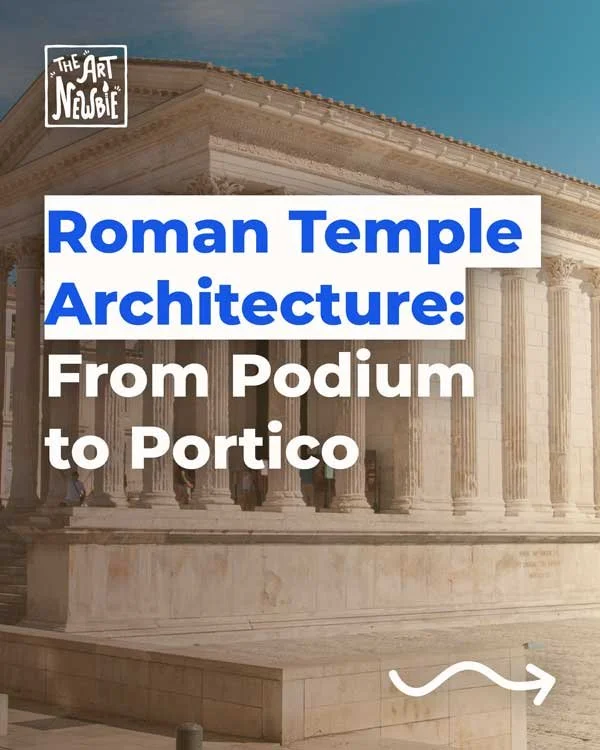
Etruscan architecture is harder to reconstruct than Greek stone architecture, but that difficulty is part of the story. Many Etruscan temples used perishable materials such as wood and mud brick on stone foundations, with extensive terracotta decoration. Because of that, much less survives above ground. Still, enough remains, along with later descriptions and archaeological evidence, to show a distinctive architectural logic. Etruscan temples often emphasized the front strongly, stood on a high podium, and featured a deep porch. This gave them a more directional, frontal character than the all-around sculptural balance of many Greek temples.
That frontal emphasis matters because it reveals a different relationship between building, ritual, and approach. You did not experience the temple equally from every side. You approached it, faced it, and encountered it along a clear axis. Roof sculpture and painted terracotta enriched that experience, making the upper parts of the building visually active and colorful. The Temple of Minerva at Veii is one of the most important examples for understanding this world, especially its combination of architecture and roof sculpture.
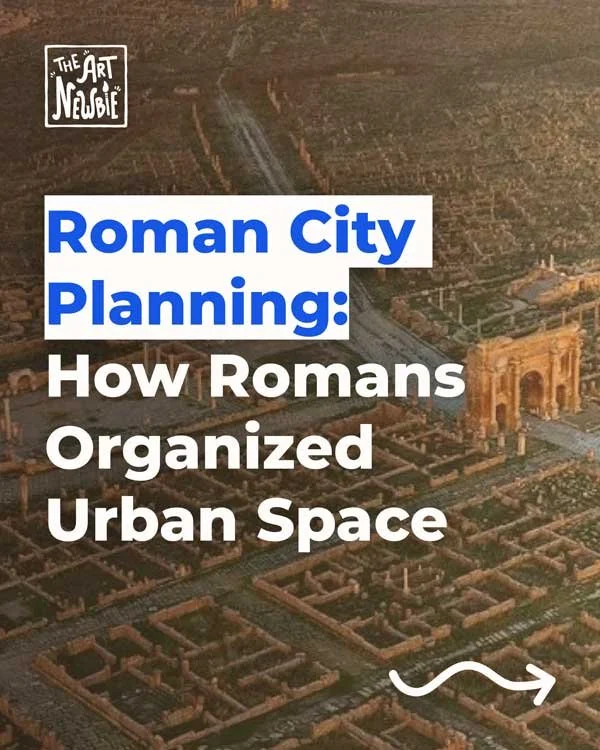
Their cities also mattered architecturally. Etruscan urbanism included fortified settlements, planned necropoleis, streets, drainage works, and sacred zones. Even when the physical remains are fragmentary, the pattern is clear: this was a culture of organized built environments, not isolated monuments. When beginners ask who were the Etruscans and why were they important, one answer is that they helped establish what an urban, monumental, ritually structured Italy could look like before Rome turned that inheritance into empire.
Why did the Etruscans matter to Rome and to art history?
The Etruscans mattered to Rome in concrete ways, not just as a vague background influence. Roman writers and later traditions connected early Rome to Etruscan rulers, and archaeologists have long recognized the strength of Etruscan impact on early Roman urban development, religious ritual, temple form, engineering traditions, and visual culture. Even after the Etruscans were politically absorbed, Rome continued to carry Etruscan habits forward.
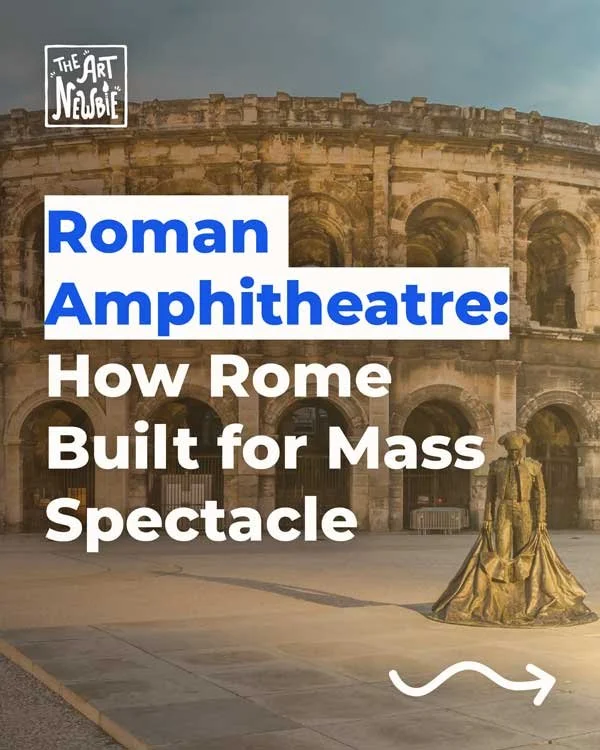
That influence is one reason Etruscan history deserves attention from anyone studying Roman art and architecture. Roman temple design, especially in its early Italic form, owes a real debt to Etruscan models. Religious specialists of Etruscan origin continued to matter in Rome. Some Roman spectacle traditions were later linked, at least in cultural memory, to Etruscan funerary practice. Even the spread of literacy in Italy is tied to the Etruscans’ role in adapting and transmitting alphabetic writing.
But the Etruscans matter for another reason too: they complicate the neat story that ancient Mediterranean art moves simply from Greece to Rome. Etruria was a major artistic zone in its own right, one that absorbed, reshaped, and transmitted forms across the region. It was a mediator, an innovator, and a producer, not just a receiver. Once you start looking at the Etruscans on their own terms, the map of ancient art history becomes richer and less predictable. Rome stops being the only center, and Italy before empire becomes far more interesting.
Conclusion
So, who were the Etruscans? They were an early central Italian civilization of cities, sanctuaries, tombs, artisans, traders, and powerful elites who built one of the most important cultures of pre-Roman Europe. Their world survives in fragments, but those fragments are unusually vivid: painted tombs, terracotta gods, black pottery, bronze work, inscriptions, and urban sites that still shape the landscape of Italy. Once you see that, the Etruscans stop looking like a shadow before Rome. They become what they were: one of the key civilizations that made ancient Italy what it was.

Conclusion
So, who were the Etruscans? They were an early central Italian civilization of cities, sanctuaries, tombs, artisans, traders, and powerful elites who built one of the most important cultures of pre-Roman Europe. Their world survives in fragments, but those fragments are unusually vivid: painted tombs, terracotta gods, black pottery, bronze work, inscriptions, and urban sites that still shape the landscape of Italy. Once you see that, the Etruscans stop looking like a shadow before Rome. They become what they were: one of the key civilizations that made ancient Italy what it was.
FAQ
Were the Etruscans Italian?
Yes, in the sense that they lived in ancient central Italy. Their core homeland was Etruria, in parts of modern Tuscany, Lazio, and Umbria.
Did the Etruscans come before the Romans?
Yes. Etruscan civilization developed before Rome became the dominant power in Italy, though the two overlapped for centuries.
Why are Etruscan tombs so important?
Because tombs preserve much of the best evidence for Etruscan life, beliefs, art, and social identity. They are one of the main reasons we know the civilization so well visually.
What was special about Etruscan art?
It was highly expressive, materially rich, and closely tied to ritual, burial, and elite display. Terracotta sculpture, painted tombs, bucchero pottery, and metalwork are especially important.
Did the Etruscans influence Rome?
Very strongly. Early Roman religion, temple design, aspects of engineering, and parts of visual culture all show Etruscan influence.
Sources and Further Reading
The Metropolitan Museum of Art — “Etruscan Art” (2004)
The Metropolitan Museum of Art — “Etruscan Language and Inscriptions” (2013)
Smarthistory, Laurel Taylor — “The Etruscans, an Introduction” (2015)
Encyclopaedia Britannica — “Etruscan” (2026)
UNESCO World Heritage Centre — “Etruscan Necropolises of Cerveteri and Tarquinia” (2004)
You may also like