How Did the Etruscans Influence the Development of Rome? Religion, Power and Urban Life
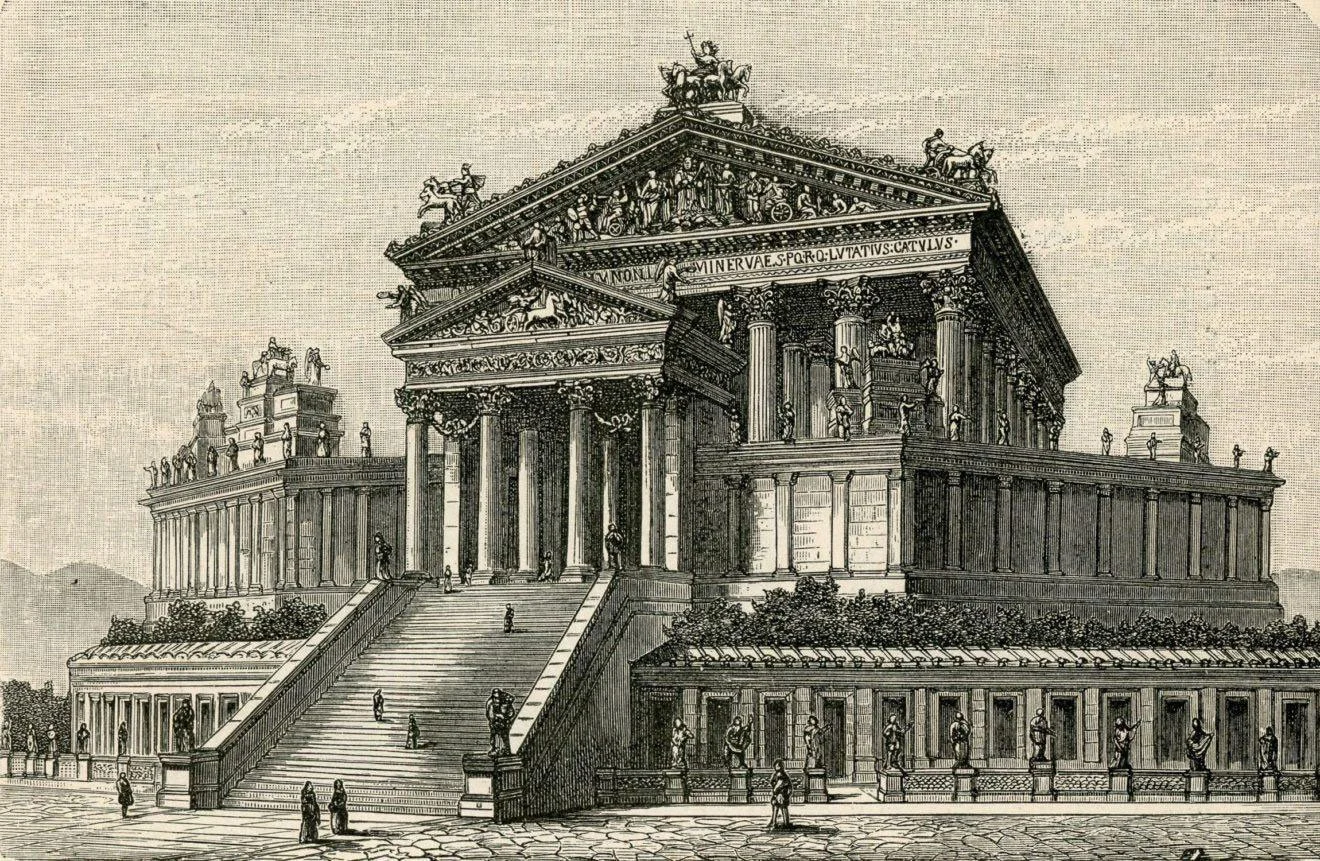
This reconstruction helps show how early Rome inherited an Italic and Etruscan way of building sacred space.
Rome did not rise in isolation, and one of the strongest influences on early Rome came from the Etruscans. In practical terms, that influence can be seen in religion, symbols of political authority, temple design, urban works, and habits of public display. The Romans did not simply become Etruscan, but they absorbed and reshaped important Etruscan ways of organizing power and city life.
That distinction matters. When people ask how the Etruscans influenced the Romans, the answer is not a single dramatic borrowing. It is a cluster of deep habits that entered Roman life during its early formation. Some came through direct contact with Etruscan cities to the north. Some were tied to the traditional memory of Rome’s Etruscan kings. Some survived because Rome found them useful and made them its own. The result is a Rome that was never purely “Roman” from the start, but already mixed, adaptive, and culturally layered.
Rome did not become Etruscan, but early Rome absorbed Etruscan habits
Yes, early Rome was shaped in a multicultural environment, and Etruscan influence was one of the strongest parts of that mix. This is especially visible in the late 7th and 6th centuries BCE, when Rome was growing from a cluster of settlements into a more structured urban center. Ancient tradition links that phase to the Tarquin kings, rulers remembered as Etruscan or closely tied to the Etruscan world.
Modern historians treat some of those royal stories with caution, and that is important. The details of the kings are filtered through later Roman memory, so they cannot be read as simple fact. Still, the broader point holds. Early Rome was in close contact with Etruria, and that contact helped shape its political culture, built environment, and ritual life.
This is why who were the Etruscans is such an important companion topic. Rome’s development makes more sense when you see that the Etruscans were not a vague background people. They were a powerful urban civilization just to the north, with cities, sanctuaries, elites, and technical knowledge that Rome could observe, rival, and adopt from.
Religion was one of the deepest Etruscan influences on Rome
Yes, religion is one of the clearest areas where Etruscan influence runs deep. The Etruscans were especially known for divination, the attempt to read the will of the gods through signs. In their world, lightning, the flight of birds, and the entrails of sacrificed animals were not random details. They were messages that had to be interpreted correctly before important decisions could be made.
Rome absorbed much of this mentality. Roman public religion became highly concerned with signs, omens, ritual correctness, and the proper reading of divine approval. The famous haruspices, specialists who interpreted entrails, were originally associated with Etruscan religious practice, and their authority continued to matter in Roman life. Roman augury also fits into this broader world of formally reading signs before political or military action.
What Rome borrowed here was not just a few rituals. It was a way of linking religion to state action. Religion in Rome was never only personal belief. It was bound up with power, law, war, and public order. That is one reason Etruscan influence mattered so much. It helped shape the Roman idea that the city’s success depended on maintaining the right relationship with the gods through exact public ritual.
Even vocabulary reflects this influence. Some ritual concepts and spatial ways of defining sacred order in Rome seem to grow out of Etruscan divinatory practice. In other words, the Roman religious system did not simply invent itself from scratch. It grew partly through contact with Etruscan methods of reading and organizing the sacred world.
Symbols of office and ceremony gave Roman power an Etruscan look
Yes, some of the most recognizable signs of Roman authority seem to have come through Etruscan precedent. This is one of the most striking parts of the story, because it moves from belief into public image. Rome did not just borrow rituals. It also borrowed the visual language of command.
A classic example is the fasces, the bundle of rods, sometimes with an axe, carried before magistrates as a sign of authority. The curule chair, a folding ceremonial seat used by high officials, is another. So is the toga praetexta, the toga with a purple border associated with rank and office. These are not small decorative details. They are part of the public theater of power.
Why does that matter? Because states do not rule only through laws and armies. They also rule through symbols, gestures, clothing, and ceremony. Early Rome needed forms that could make authority visible, and the Etruscan world already had strong traditions of elite display. Rome adopted that language and turned it into one of the most powerful political visual systems in antiquity.
This is a useful reminder that influence is not always abstract. Sometimes it appears in the way a magistrate sits, dresses, enters a public space, or is preceded by attendants. Etruscan influence on Rome was not only intellectual or religious. It was also staged in the body and in the city.
Urban life in Rome changed through Etruscan models of building and monumentality
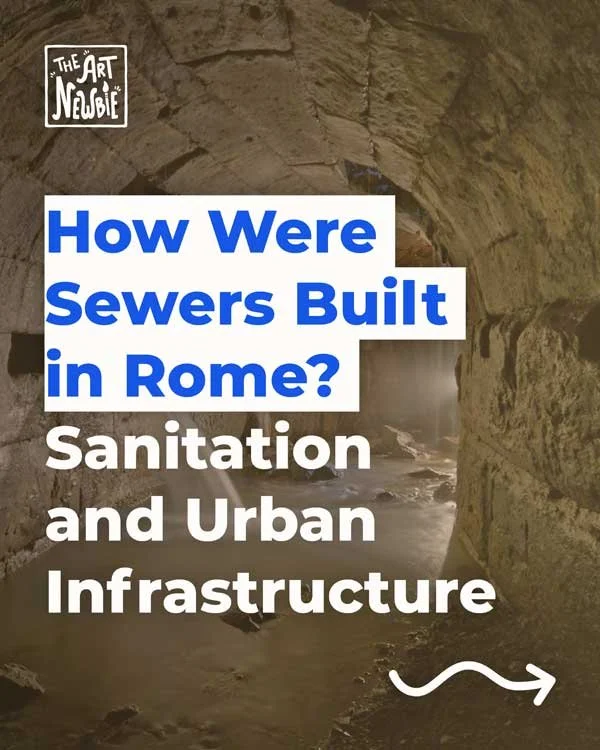
Yes, Etruscan influence also helped Rome become more urban in a visible, physical sense. Ancient tradition connects the Etruscan phase of Rome with major public works, especially the draining of low-lying ground in the Forum area and the early development of the Cloaca Maxima, one of Rome’s earliest great drainage systems. Even if later rebuilding changed what survives, the larger point is clear: early Rome was learning how to organize and monumentalize urban space.
This is where Etruscan influence meets engineering and planning. A growing city needs more than houses. It needs controlled water, usable public ground, sacred centers, and architectural emphasis. Rome’s early transformation into a more coherent urban environment belongs to that larger process.
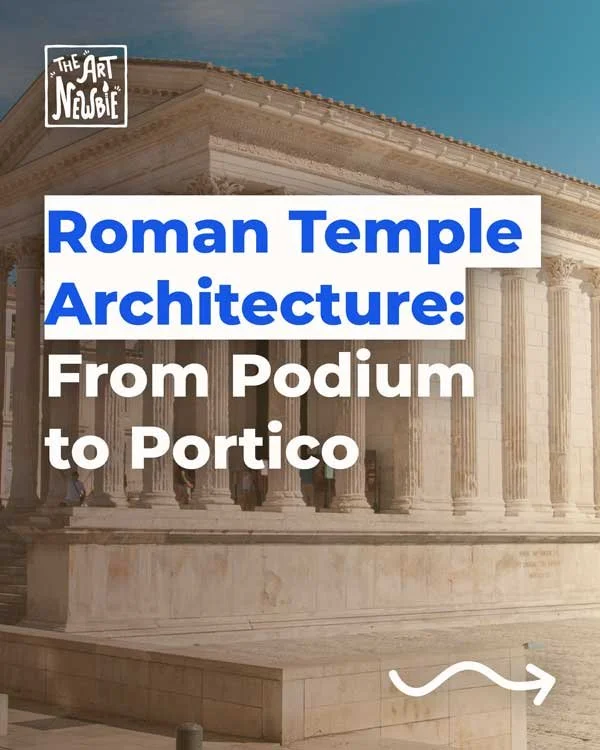
Temple design is especially important here. Early Roman temples were strongly shaped by Italic and Etruscan building traditions: high podiums, a marked frontality, and deep porches that directed approach toward the façade. That is very different from the ideal of the Greek temple as a building to be viewed more evenly from all sides. The famous Temple of Jupiter Optimus Maximus on the Capitoline Hill is one of the clearest examples of this early Roman monumental language.
If you want to follow that architectural story more closely, Etruscan architecture gives the background, while Etruscan influence on Roman architecture helps trace how those forms continued to matter as Rome developed its own monumental identity.
The real story is influence, not total inheritance
Yes, Etruscan influence on Rome was real, but it was not total. This is the point that keeps the topic historically honest. Rome was shaped by Etruscans, but also by Latins, Sabines, Greeks, and other Italic peoples. It was a city formed through contact, conflict, and adaptation, not through one single parent culture.
That matters because older accounts sometimes make the story too simple. On one side, Rome can be presented as purely self-made. On the other, it can be treated as if it were almost an Etruscan city in disguise. Neither version is satisfying. The stronger explanation is that Rome learned selectively. It took forms that worked, adapted them to its own needs, and then made them part of a new Roman system.
You can see that clearly in religion, authority, and architecture. Rome did not preserve Etruscan practices unchanged. It absorbed them into a broader Roman framework. That is exactly why the influence lasted. Borrowed elements survive best when they are transformed into something locally useful.

Conclusion
So, how did the Etruscans influence the development of Rome? They helped shape the way early Rome read the gods, displayed authority, built temples, organized urban space, and imagined public power. Rome did not copy Etruria wholesale, but it learned a great deal from it. Once you see that, early Rome stops looking like a culture that appeared fully formed. It looks more like what it really was: a city built through contact, selection, and adaptation.
FAQ
How did the Etruscans influence early Rome?
They influenced early Rome in religion, political symbols, temple architecture, and public urban development.
Did the Etruscans rule Rome?
Ancient tradition says that Rome’s last kings, especially the Tarquins, were Etruscan or closely tied to the Etruscan world. The details are debated, but strong Etruscan influence in early Rome is widely accepted.
What religious ideas did Rome take from the Etruscans?
Rome absorbed Etruscan practices of divination, especially the formal reading of signs and the use of specialists such as haruspices.
Did Roman architecture come from the Etruscans?
Not entirely, but early Roman temple design and some habits of monumentality were strongly shaped by Etruscan and broader Italic models.
What symbols of Roman power were linked to the Etruscans?
The fasces, the curule chair, and the purple-bordered toga are among the clearest examples usually connected to Etruscan influence.
Sources and Further Reading
Encyclopaedia Britannica — “Etruscan” (2026)
Encyclopaedia Britannica — “Ancient Rome” (2026)
Encyclopaedia Britannica — “Fasces” (2026)
Encyclopaedia Britannica — “Cloaca Maxima” (2026)
Smarthistory, Dr. Andrew Findley — “Temple of Jupiter Optimus Maximus, Rome” (2016)
You may also like