Golden Age of Greece: Dates, Leaders, and Major Works
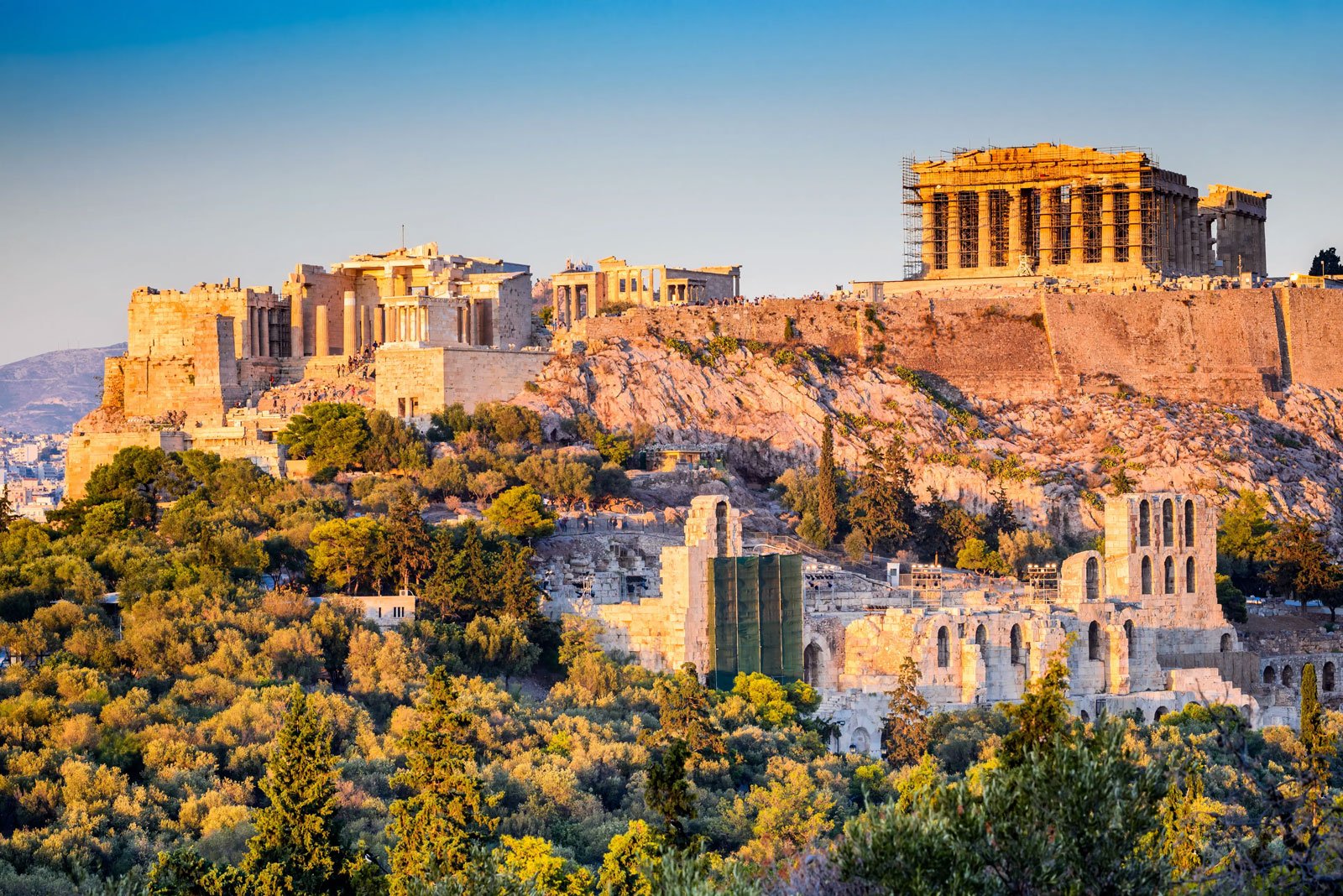
This is the “city + sanctuary” relationship in one frame: the Acropolis rises like a stone stage over everyday Athens. It’s a reminder that Greek temples were designed to be seen from afar, not only visited up close.
When people say “the Golden Age of Greece,” they usually picture one thing: Athens, sunlit, confident, building the Parthenon like it’s a statement to the world. And honestly, that mental image isn’t wrong. But it can feel too neat, like a documentary montage that skips the messy parts.
So let’s slow down and read this “Golden Age” the way we’d read a great artwork: with context, with details, and with the uncomfortable bits left in. We’ll map the dates (even when historians disagree), meet the leaders who shaped the era, and connect the major works to the political moment that paid for them.
The “Golden Age of Greece” is really a Golden Age of Athens
This is the first thing to get straight: the famous “Golden Age” is mostly the Golden Age of Athens, not a magical, unified glow over every Greek city-state.
Athens happens to be where the story concentrates, because Athens had a rare combo at the same moment: money, naval power, public institutions, and an ambition to look inevitable. The art that survives is tied to that reality. A temple isn’t just “beautiful.” It is also labor, resources, decisions, and messaging.
A quick definition as we go: a city-state is a self-governing city with its territory. Greece at this time wasn’t one country. It was a network of rival cities that shared language and gods, and still fought constantly.
Myth: The Golden Age was “all of Greece” at its peak.
Fact: It’s mainly Athens at its most powerful and visible.
This matters for reading the artworks. When we talk about “classical” balance and ideal beauty, we’re not just talking about style. We’re talking about a city explaining itself to its citizens and its rivals through stone, bronze, and story. That’s why linking the Golden Age to the Classical Period timeline helps: “Golden Age” is the cultural high point inside that wider period.

Tool marks are the sculpture’s “handwriting.” Once you recognize patterns like these, you start reading process—how the surface was roughed out, refined, and intentionally left textured in places.
The dates are fuzzy, but the timeline has a clear spine
If you search for “Golden Age of Greece dates,” you’ll find slightly different answers, because “Golden Age” is a label, not an official ancient calendar category. Still, most timelines orbit the mid-5th century BCE, when Athens expanded its power and invested heavily in public works.
Here’s the spine of it, with the honest caveat that the edges blur:
After the Persian Wars (early 5th century BCE), Athens rises as a naval power.
An Athenian-led alliance forms (often called the Delian League, an alliance originally aimed at defense).
Athens begins treating the alliance’s contributions as a steady income stream, which changes the power balance.
Under Perikles, Athens launches major building projects on the Acropolis.
The Peloponnesian War begins (late 5th century BCE), and the mood shifts from confident expansion to survival.
If you want one “best guess” range, many people use something like mid-5th century BCE through the early Peloponnesian War, because that’s when the most iconic cultural output clusters. But if you want something that matches the big art-history structure, it’s safer to say: the Golden Age is a peak moment within the Classical Period timeline, not the whole thing.
And notice what keeps showing up as our anchor point: the Parthenon. If you’re ever unsure where you are in this story, checking when the Parthenon was built gives you a surprisingly solid timeline handle.
Perikles is the headline leader because he controlled the stage
Perikles (often spelled Pericles) didn’t single-handedly “create” the Golden Age, but he becomes the face of it for a simple reason: he shaped the conditions that let the era look the way it does.
One quick in-line definition: a strategos is an elected general, a top military and political role. Perikles held influence through leadership positions and persuasion in the Assembly, which matters because Athens was unusual in how public decision-making worked. The system was imperfect and limited (citizenship excluded many residents), but it still created a political culture where public speech, public judgment, and public reputation mattered intensely.
That publicness feeds directly into art.
When a city builds monumental architecture, it’s not only “for the gods.” It’s also a kind of civic performance. The audience includes citizens, visiting allies, rivals, and future generations. That’s why the Golden Age isn’t just about who ruled. It’s about who could fund and justify large-scale projects in a way people accepted.
This is also where the Parthenon becomes more than a building. The question of Parthenon meaning is basically the question: what story did Athens tell about itself when it had the microphone?
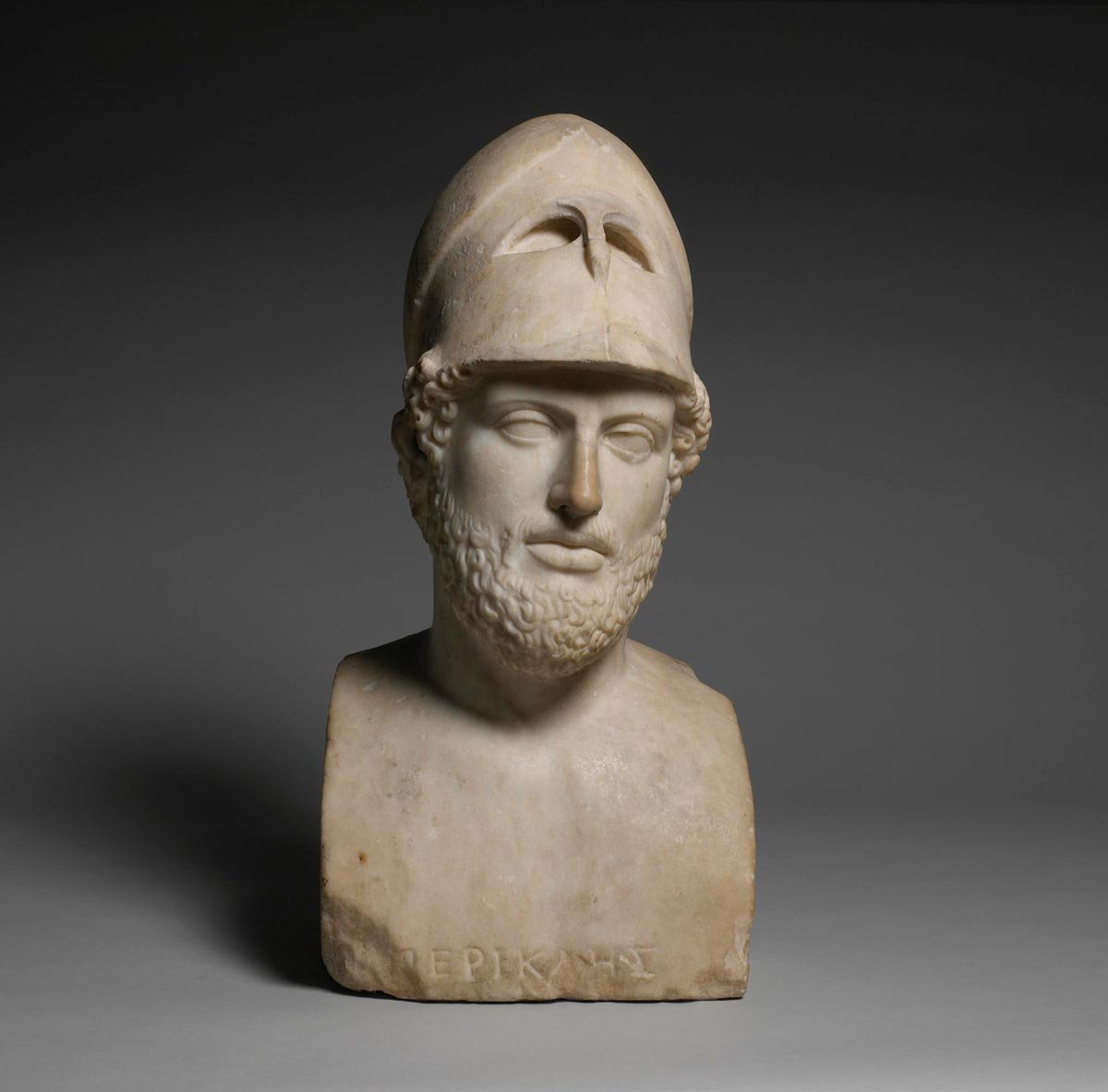
That helmet is doing a lot of work: it signals civic authority and military leadership at once. Portraits like this sit right at the crossroads of art and politics—image-making as public memory.
The Acropolis building program turns politics into stone
If we zoom in on the Acropolis (a citadel hill, basically a fortified sacred high ground), the Golden Age becomes almost readable like a curated exhibition. Athens builds, rebuilds, and upgrades its sacred center with a coherence that feels intentional because it is.
A useful clarification: the Acropolis is the hill. The Parthenon is one building on it. If those two blur together in your head, you’re not alone, and a quick reset with Parthenon vs Acropolis helps.
Now, why does this construction wave feel so “Classical”?
Because the architecture and sculpture work together as a system. Greek temples weren’t designed like isolated shells. They were engineered, planned, and finished with a full set of visual expectations, which is part of what “Classical” looks like in the first place.
And the Parthenon is the centerpiece. Its impact isn’t just size or marble. It’s the way sculpture is embedded into the building’s identity. Once you start reading the sculptural elements as connected, you can’t unsee it. That’s exactly what our guide to Parthenon sculptures is for, because the frieze, metopes, and pediments aren’t decorations so much as a visual argument.
The major works aren’t random masterpieces, they’re coordinated signals
Here’s the part I wish someone had told me earlier: Golden Age “masterpieces” make more sense when we treat them as a network, not a highlights reel.
A few major works, with the simplest “why it matters” attached:
The Parthenon: a temple that broadcasts Athenian power and ideals, especially once you sit with Parthenon meaning.
The sculptural program: not one sculpture, but an integrated story. You can enter through the Parthenon frieze and end up understanding why Parthenon sculptures read like a unified message.
Athena Parthenos: a massive cult statue (a sacred statue of a deity) that turns religious awe into political symbolism, especially once you picture Athena Parthenos inside the temple.
Classical sculpture as a “new body language”: artists refine stance, balance, and anatomy until the figure feels present. If you want the mechanics of that lifelike effect, Classical sculpture breaks down the tricks that make stone feel warm.
Materials and realism: many originals were bronze and many surfaces were colored. It changes the vibe completely when you remember bronze vs marble and the evidence for painted Greek statues.
What ties all of these together is that they’re not just “art things.” They’re choices that sit inside a civic system. That’s why the Golden Age is often described as a time of rule-making in art: artists, patrons, and viewers begin to agree on what counts as “right,” “balanced,” and “worthy,” which is the foundation of what “Classical” looks like.
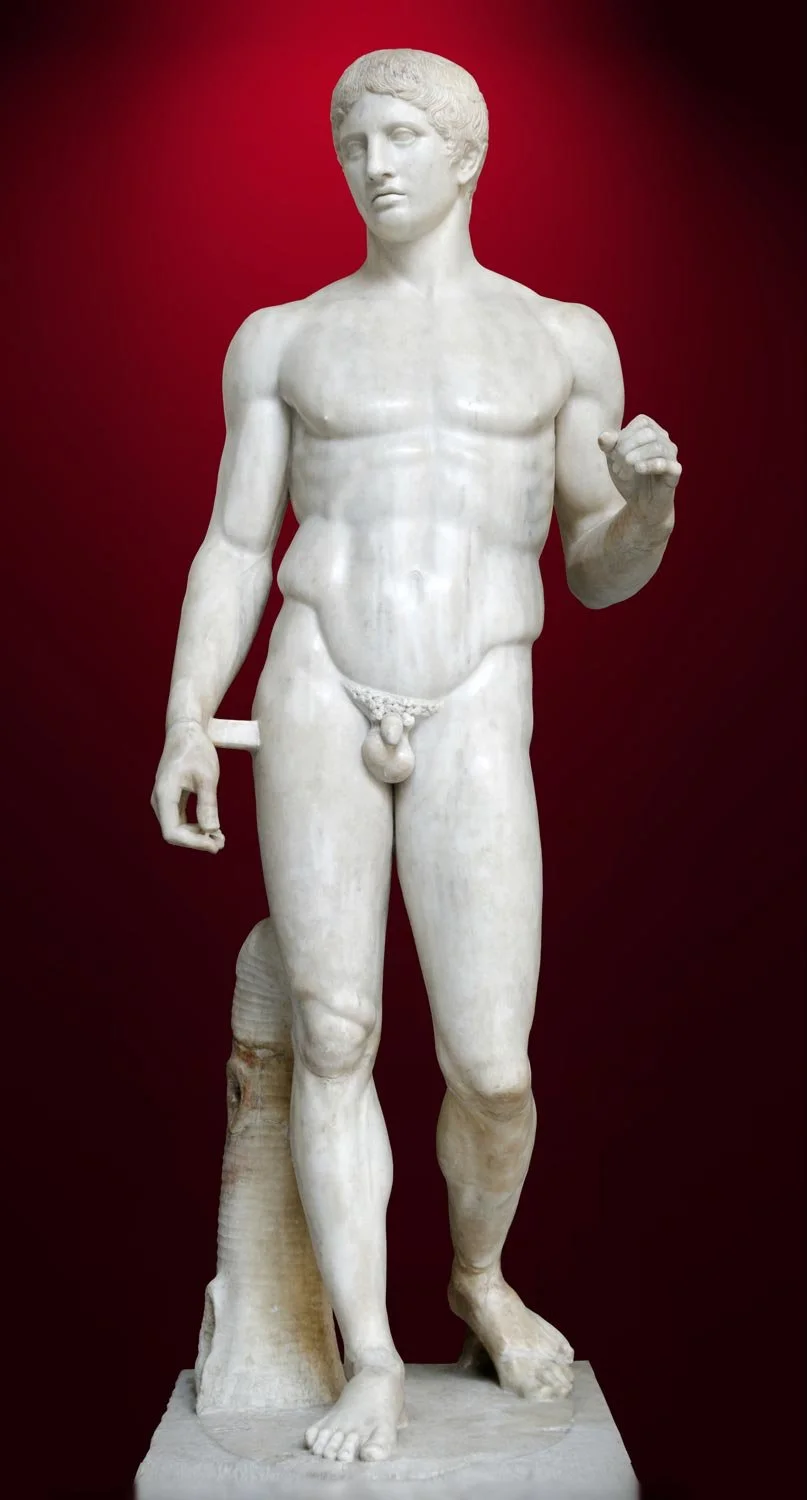
Doryphoros is the classic contrapposto lesson: weight settles into one leg, and the whole body quietly “answers back” up through the hips, ribs, and shoulders. It’s naturalism built from structure, not chaos.
The Golden Age ends, but its style becomes a template
Here’s the emotional twist, if we’re being honest: the Golden Age is not a fairytale ending. It’s a peak built between conflicts, and it’s followed by major strain.
Once the Peloponnesian War begins, Athens is pressured, then battered. Leaders change. Resources tighten. The civic mood shifts. The “Golden” glow is partly a retrospective effect, because later cultures looked back and said, “That’s the model.”
And that legacy is real. Even when Athens loses power, the Classical look survives as a portable template: proportion, calm faces, controlled movement, architectural clarity. The style travels because it’s teachable, repeatable, and persuasive. It’s one reason the Classical Period timeline matters more than the headline term “Golden Age.” The Golden Age is a high note, but the Classical period is the whole song.
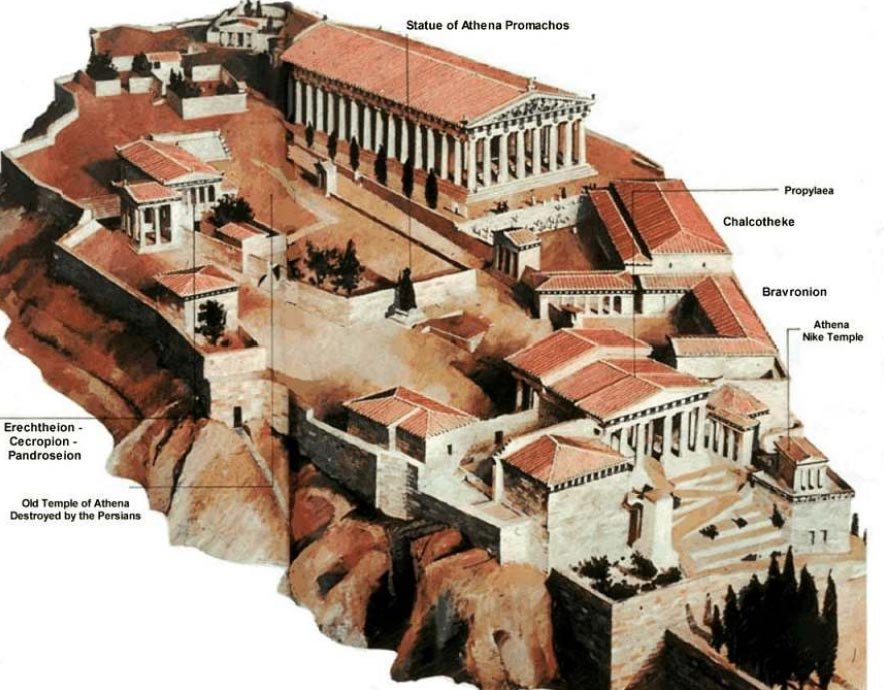
Maps like this help us stop thinking “single monument” and start thinking “sacred complex.” The Acropolis is a sequence—gateways, shrines, open courts—designed to choreograph movement and attention.
Conclusion
If the Golden Age of Greece feels “perfect” in our imagination, it’s because Athens made it look that way on purpose. The temples, the sculptures, the city’s public image, even the idea of what counted as beauty all worked together as a program. Once we see that coordination, the masterpieces stop being isolated miracles and start feeling like evidence: evidence of what Athens wanted to be, and what it wanted others to believe.
And for us, reading it this way is oddly freeing. We don’t have to treat “Classical” as an untouchable standard. We can treat it as a human invention, built in history, with motives, trade-offs, and real people behind the marble.
FAQ
What years were the Golden Age of Greece?
There isn’t one official range, but it usually centers on mid-5th century BCE Athens, especially the decades tied to Perikles and the Acropolis building program.
Why is Perikles so closely linked to the Golden Age?
Because his leadership coincides with Athens’ peak influence and major public projects, including the Parthenon and its sculptural program.
Was the Golden Age peaceful?
Not really. It sits after the Persian Wars and overlaps with growing tensions that lead into the Peloponnesian War.
What are the most important “Golden Age” artworks?
The Parthenon (and its sculptures), related Acropolis monuments, and the broader rise of Classical sculpture that defines how the human body is shown.
Is “Golden Age of Greece” the same as the Classical Period?
No. The Golden Age is a peak moment within the wider Classical period, which covers a longer stretch of Greek art and history.
Sources and Further Reading
UNESCO World Heritage Centre — “Acropolis, Athens” (n.d.)
The Metropolitan Museum of Art — “The Art of Classical Greece (ca. 480–323 B.C.)” (2008)
Acropolis Museum — “Sculptural decoration” (n.d.)
Cambridge University Press — “The Cambridge Companion to the Age of Pericles” (2007)
P. J. Rhodes — “Democracy and Empire” (2009)
Oxford Academic (California Scholarship Online) — “Pericles: A Sourcebook and Reader” (2009)
British Museum — “The Parthenon Sculptures” (n.d.)

You may also like