Parthenon Meaning: The Secret Message Behind Athena’s Temple
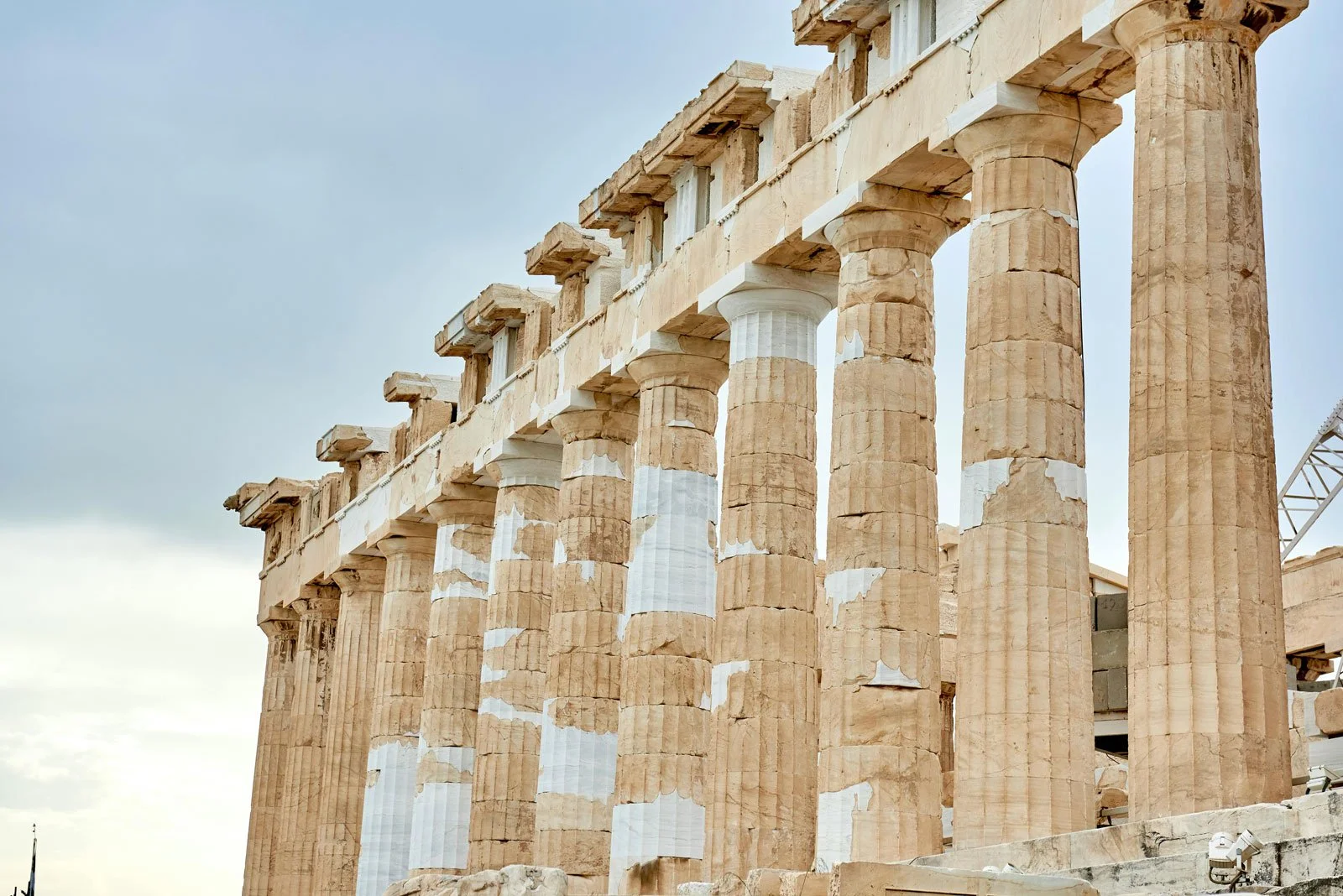
The Parthenon was first of all a temple dedicated to Athena.
The Parthenon is one of those buildings we think we already understand. It’s a temple. It’s beautiful. It’s “Classical.” End of story.
And then you stand in front of it, or even just look closely at its images, and a different feeling shows up: this isn’t only a temple. It’s a statement. A carefully engineered one.
So when people ask about Parthenon meaning, they’re usually hoping for a single hidden code. One neat sentence we can repeat at dinner. But the Parthenon doesn’t really work that way. Its “message” is layered, like the building itself: religion at the core, civic identity wrapped around it, and political ambition shimmering on the surface.
Myth vs Fact
Myth: The Parthenon has one “secret message.”
Fact: Its meaning is stacked: religious, civic, and political at once.
The Parthenon’s meaning starts with belief, not tourism
The Parthenon is a temple, and temples are about relationships.
In ancient Greek religion, a temple wasn’t mainly a place where everyone gathered inside to listen to a sermon. A temple is, in plain words, a god’s house. The key rituals often happened outside, at the altar, in public view. The temple interior protected and honored the cult image and the treasures offered to the god.
That’s why it’s useful to keep temples and belief in your back pocket. It resets the modern instinct to treat a temple like a church building. For Greeks, the god’s presence mattered. The offerings mattered. The festival calendar mattered. The building framed all of that.
So the Parthenon’s core meaning is straightforward: Athens is honoring Athena. But even that simple sentence has a twist, because Athena here is not just “Athena.” She is Athena in a specific identity: Athena Parthenos, tied to the temple’s name and to a particular Athenian vision of their patron goddess.
And that leads us to the building’s center of gravity.
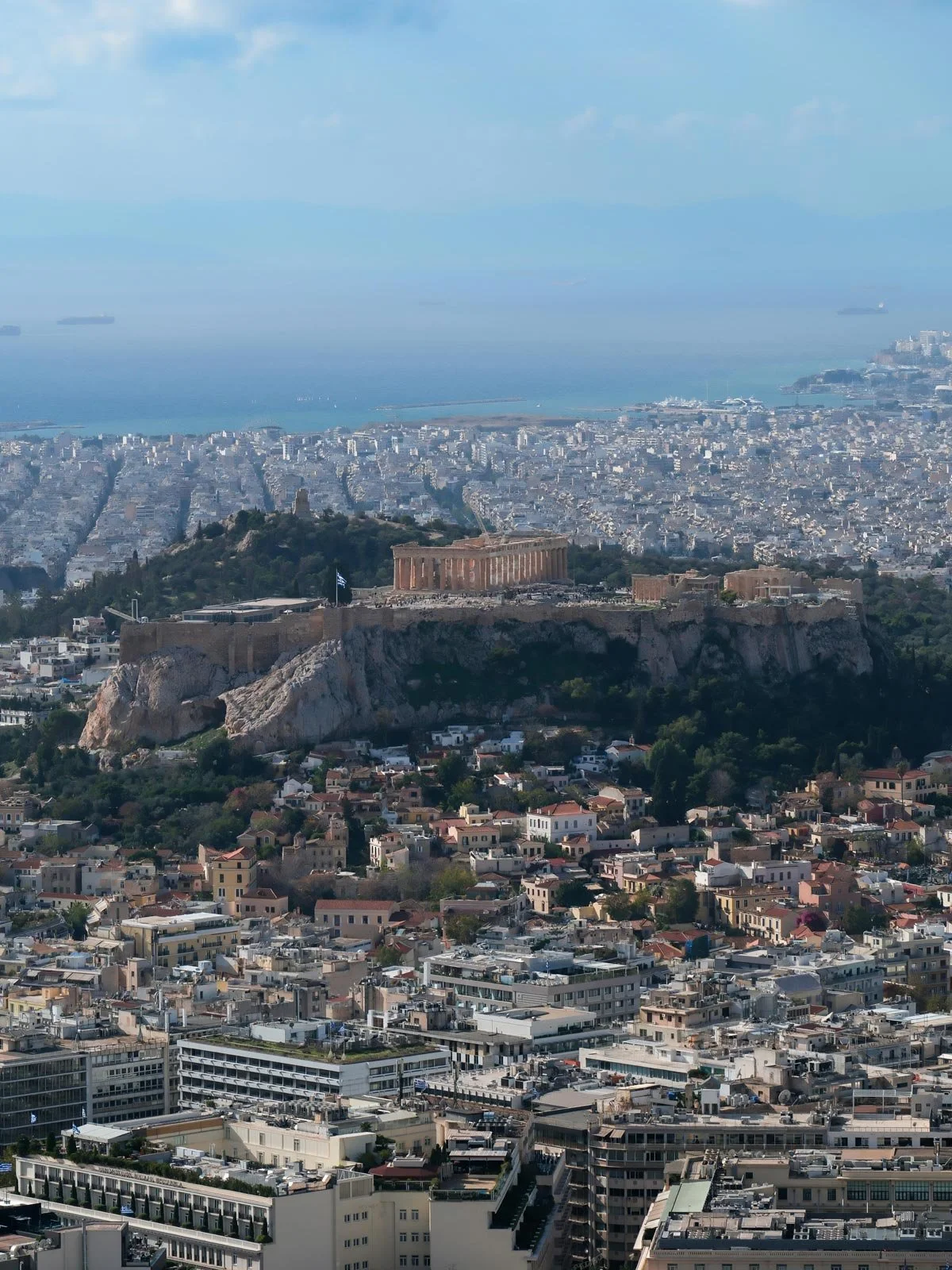
From its high position above Athens, the Parthenon also worked as a civic and political symbol.
Athena Parthenos inside wasn’t decoration, she was the point
If the Parthenon is the container, the cult statue was the heart.
Inside stood Athena Parthenos inside, a colossal image that ancient sources describe as made with gold and ivory over a core. Even if we hold some details lightly, the broad point is solid: this was a spectacle of devotion and wealth.
Define it simply: a cult statue is the main sacred image of a deity.
This matters for meaning because a cult statue is not primarily “art” in the museum sense. It’s a focus for ritual attention. It anchors the god’s presence in the space. And in Athens, it also anchored the city’s identity. Athena is not a private household god here. She’s the city’s patron.
There’s also a practical political edge to this. A lavish cult image makes a claim: “We can afford this.” It turns belief into public confidence.
That’s why, when we talk about Parthenon meaning, we shouldn’t start outside with columns. We should start with the inside logic: Athens is building a monumental home for the goddess who legitimizes Athens.
The building’s meaning begins as piety. But it doesn’t stay only piety.
The Parthenon sculpture program is the building’s public voice
If Athena Parthenos is the interior center, the sculpture is the exterior speech.
Greek temple sculpture isn’t random ornament. It’s designed storytelling, placed where the building can “say” something to viewers circling it. The Parthenon is famous because its sculptural system is unusually rich and unusually coordinated.
That’s why reading the Parthenon sculpture program as a single plan changes everything. Instead of isolated scenes, we get a coherent message delivered in different registers:
Big mythic origins and divine authority at the ends (pediments).
Violent mythic conflicts on the outer panels (metopes).
A long civic procession running around the building (frieze).
And the tone is consistent. Myth is not used as fantasy. Myth is used as a vocabulary for identity. The conflicts signal order overcoming chaos. The procession makes the city’s ritual life look worthy of a temple’s most prestigious image band.
This is where the Parthenon starts to feel like a political document written in marble. Not because it stops being religious, but because Greek religion and civic life were deeply intertwined. The city honored the goddess, and the goddess, in turn, protected and validated the city.
So the “meaning” isn’t hidden. It’s carved on the outside. We just have to read temple sculpture the way ancient viewers were meant to: as public communication.
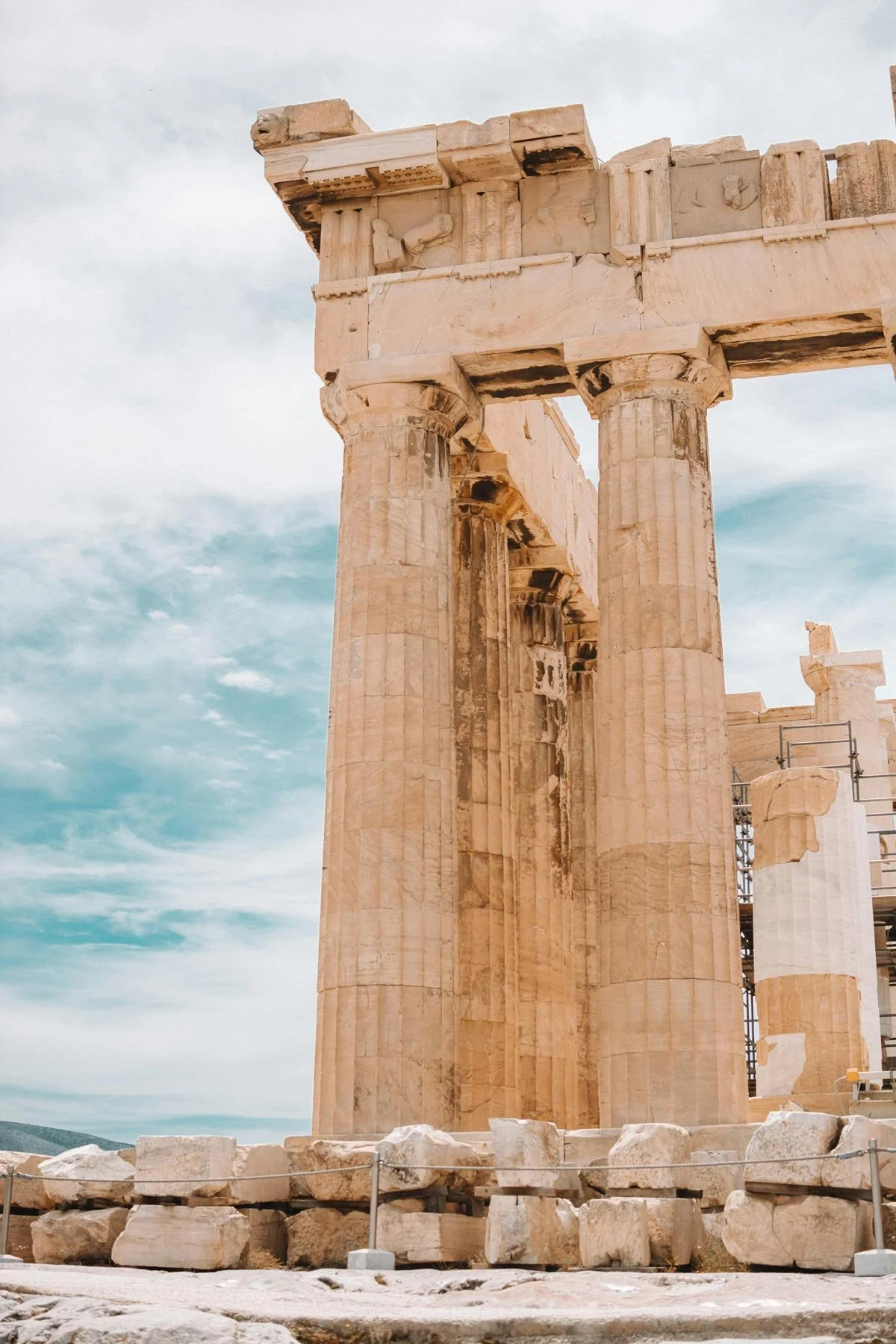
Its meaning was carried not just by the goddess inside, but by the whole monument people saw from afar.
Golden Age politics turned the Parthenon into a claim about Athens
Here’s the uncomfortable but necessary layer: the Parthenon sits inside an Athenian power moment.
The 5th century BCE is often framed as Athens’ cultural peak, the era we summarize as the Golden Age politics story. In that atmosphere, building big is never only about religion. It’s also about leadership, reputation, and control.
A temple this expensive says something before you even read the sculptures: Athens has resources, organization, and ambition. That alone is a message to allies and rivals.
This is where it helps to remember that Greece at the time is not one nation. It’s a set of competing communities. If you want the broader frame, civic identity and public art lays out how city-states used shared spaces and shared images to construct “who we are.”
In that world, the Parthenon is not “Athens making art for art’s sake.” It’s Athens shaping its public identity in the most visible place possible.
This is also why the Parthenon’s meaning can feel double. On one level it’s devotion: honoring Athena with the best craft available. On another level it’s branding: presenting Athens as the cultural and moral center of Greece, a city aligned with order, reason, and divine favor.
Both layers can be true at once. The Parthenon is not subtle about being important. Its meaning is part of its scale.
The “secret message” is really a public lesson about civic identity
So what is the Parthenon ultimately “saying”?
In the simplest terms, it’s saying: Athens belongs to Athena, and Athena belongs to Athens. That loop creates legitimacy.
But the more specific message is about what kind of Athens this is. The imagery repeatedly frames Athens as:
orderly rather than chaotic
civilized rather than “barbaric”
unified in ritual life
protected by divine authority
And this is where the civic identity layer becomes sharp. The Parthenon doesn’t just represent a goddess. It represents a city’s self-image. It turns public values into a permanent visual environment.
If that sounds modern, it should. We still use monuments to stage ideals in public space. The Parthenon is an early and extremely successful example of that strategy.
So yes, people call it a “secret message.” But the more accurate phrasing is: it’s a public message that became so famous we forgot it was messaging at all.

Conclusion
The Parthenon’s meaning isn’t a single hidden code. It’s a layered statement built into stone: a temple that honors Athena through temples and belief, centered on Athena Parthenos inside, and broadcast outward through the Parthenon sculpture program. In the context of Golden Age politics and Greek civic identity and public art, it becomes more than a sacred building. It becomes Athens telling the world what Athens believes it is.
And once we see that, the Parthenon stops being “a perfect ruin.” It becomes a living lesson in how art, belief, and power can be designed to reinforce each other.
FAQ
What is the main meaning of the Parthenon? It’s a temple honoring Athena, and a public statement of Athenian identity and power.
Why is the Parthenon considered political? Because it was built during Athens’ peak influence and its imagery reinforces civic leadership and legitimacy.
What role did Athena Parthenos play in the Parthenon’s meaning? She was the central cult image inside, anchoring the temple’s religious purpose and the city’s devotion.
How do the sculptures communicate meaning? They use myth and civic ritual imagery to frame Athens as ordered, protected, and divinely aligned.
Is the Parthenon’s meaning only religious? No. It’s religious at the core, but it also carries civic and political layers.
Sources and Further Reading
Acropolis Museum — “Sculptural decoration” (n.d.)
Acropolis Museum — “The Parthenon Gallery” (n.d.)
UNESCO World Heritage Centre — “Acropolis, Athens” (n.d.)
Smarthistory — “The Parthenon, Athens” (n.d.)
Osborne, Robin — “The viewing and obscuring of the Parthenon frieze” (1987)
Roberts, Ellie Mackin — “(Re)appraising the Parthenon Frieze: ‘Divinespace’ and ‘Mortalspace’” (2025)
Verri, Giovanni, et al. — “The goddess’ new clothes: the carving and polychromy of the Parthenon Sculptures” (2023)
You may also like