When Was the Greek Parthenon Built? Dates and Timeline
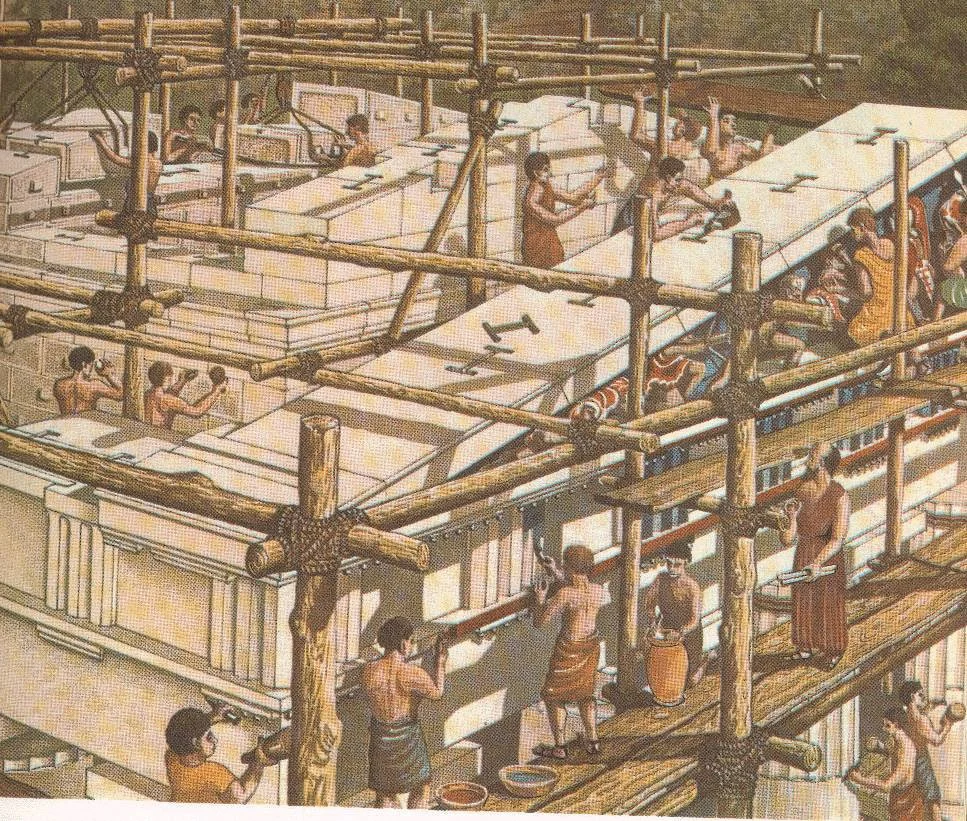
The Parthenon was a major construction project that required labor, planning, and time.
If you Google “when was the Greek Parthenon built,” you’ll get a few different answers, and they all sound confident. 447. 438. 432. Sometimes all three. Sometimes only one.
The good news is that the Parthenon isn’t a mystery. The “confusion” is mostly about what we mean by built. Are we talking about the main structure? The roof? The statue inside? The sculpture on the outside? The final finishing work?
This article is our clean timeline. We’ll pin down the key dates, explain why the project moved so fast, and connect the construction phases to the world that paid for it: Classical Athens and the Golden Age story.
The Parthenon was built 447–432 BCE, with a major finish line in 438
That’s the short answer, and it’s the one that keeps everyone honest.
Construction began in 447 BCE. By 438 BCE, the building itself was essentially complete and ready for use, including its roof and the major moment of dedication. Work then continued on sculptural and finishing details until about 432 BCE.
So why do we see different “end dates” online?
Because both are true, depending on what you’re counting.
If you’re counting the temple as a functioning building, 438 BCE is the key milestone. If you’re counting the full artistic program, including the finished sculptural system, 432 BCE is the more complete “project end.”
This is also why the Parthenon gets used as a timestamp for the wider era. The building sits inside the Classical Period dates, and it also sits right in the heat of the Golden Age timeline, when Athens is investing heavily in public monuments and the image of civic power.
Myth vs Fact
Myth: “The Parthenon was built in 432 BCE.”Fact: Construction started in 447 BCE, the structure was largely done by 438 BCE, and final decoration continued to about 432 BCE.
People argue about the date because “built” has phases
When we say “built,” we usually imagine one clean moment: start, finish, done. Ancient construction does not behave like that, especially on a monument with this level of detail.
The Parthenon is a temple, but it is also a complete design system: architecture, sculpture, surfaces, and the interior cult image all working together. And each of those layers has its own timeline.
Think of it like building a film set:
You can finish the structure.
You can still be painting, carving, and dressing the set for years after.
The “opening night” can happen while the last details are still being added.
That’s basically what’s happening between 438 and 432 BCE. The building is standing, but the artistic program is still being completed.
And because Greek temples were designed for presence and perception, not just shelter, the finishing layers matter. If you want the architectural grounding for how temples function and why the exterior program is so important, this is exactly the logic behind how Greek temples are designed.
So in timeline terms, it helps to keep two clocks running:
the construction clock (structure and roof)
the program clock (sculpture and finishing)
The speed makes sense once we remember this was a state project
It’s genuinely impressive how quickly the Parthenon rose, especially for a marble building with this precision. But the speed isn’t magic. It’s organization, money, labor, and political will.
The Parthenon is not a private commission. It is the centerpiece of a public building program, launched when Athens has unusual resources and unusual ambition. That’s why the project sits so cleanly in the Golden Age timeline: the monument is not only “religious.” It’s also a civic statement about what Athens can do.
This is one of the reasons the dates matter. A building created in a crisis looks different from a building created in confidence. The Parthenon is created at a moment when Athens wants the world to see stability, control, and authority. That intention shows up in the architecture’s refinements, the material choice, and the scale of the workforce.
So when you hear “fast, precise, and politically charged,” that’s not a vibe. It’s a description of how a city uses construction as messaging.
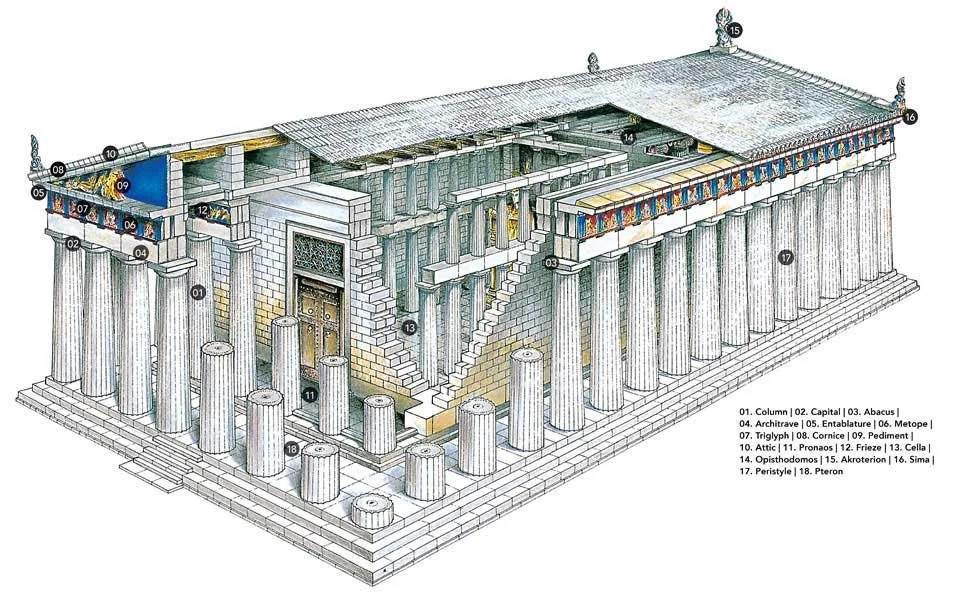
This historical image visualizes the scale of the building campaign behind the Parthenon.
The Parthenon’s architects shaped the timeline by shaping the system
Names matter here because “built” is not only manual labor. It’s design, planning, and logistics.
Ancient sources and modern scholarship usually identify Iktinos and Kallikrates as the architects. In plain terms: they are the minds behind the building’s plans, its proportions, and its structural decisions. If you want to keep them straight, the Parthenon’s architects gives you the clean profile.
And then there is the broader team structure: the sculptor Pheidias is often described as supervising the sculptural program, and the construction involved an enormous range of craftspeople. That matters for timeline because the Parthenon wasn’t “one workshop.” It was a coordinated operation.
So it’s not surprising that the project has two finish lines. Architecture can be “complete enough” to function while sculpture and finishing continue under separate teams. That separation is built into how large projects work.
Here’s the timeline you can remember without a spreadsheet
If you want the simple version that still stays accurate, this is the one to keep:
447 BCE — construction begins on the Parthenon.
438 BCE — the structure is essentially complete and the temple can function.
432 BCE — the major exterior sculptural and decorative work is completed.
That’s the timeline most reputable summaries converge on, and it also explains why different sources give different “end dates.” They’re answering slightly different versions of the question.
If your goal is to sound confident in conversation, you can even say it like this: “Built 447 to 432, with the main building finished by 438.” It’s clear, accurate, and it shows you understand phases, not just numbers.
The dates matter because they frame what the sculptures say
Once we put the timeline in place, the Parthenon stops being “a timeless masterpiece” and becomes what it really is: a monument designed for a particular moment in Athenian history.
That’s why the sculpture timeline matters. The imagery wasn’t added randomly. It was planned as a coherent program, and it was completed as Athens was shaping its identity in public space. Reading it as one system is exactly what we do in what the sculptures say.
This is also where the “politically charged” part becomes easy to grasp. If the temple is built during the peak confidence of Classical Athens, and its sculptural program is completed as tensions rise toward the Peloponnesian War era, then the building carries the emotional weight of that shift. It becomes a snapshot of how Athens wanted to be seen at its best.
So the construction dates are not dry trivia. They are interpretive context. They tell us when the city had the resources, the unity, and the ambition to build something that still dominates the global imagination.

Conclusion
The Greek Parthenon was built in the mid-5th century BCE, with construction beginning in 447 BCE, the structure essentially complete by 438 BCE, and the broader decorative program continuing until about 432 BCE. The “multiple dates” problem isn’t a contradiction. It’s a reminder that monumental buildings have phases, and each phase tells us something about the society behind the monument.
And once we hold those phases clearly, the Parthenon becomes easier to read. Not only as architecture, but as a timed message from Classical Athens.
FAQ
When was the Greek Parthenon built? Construction began in 447 BCE; the building was largely complete by 438 BCE, with decoration continuing until about 432 BCE.
Why do some sources say 438 BCE and others say 432 BCE? 438 BCE often refers to the structure being finished and usable, while 432 BCE refers to the completion of major decorative and sculptural work.
Who were the Parthenon’s architects? The architects are traditionally identified as Iktinos and Kallikrates.
Was the Parthenon built during the Golden Age of Greece? Yes, it belongs to Athens’ “Golden Age” phase within the wider Classical period.
Why was the Parthenon built so quickly? Because it was a massive state-backed project with strong funding, organization, and political motivation.
Sources and Further Reading
Acropolis Museum — “The Parthenon Gallery” (n.d.)
Encyclopaedia Britannica — “Parthenon” (2026)
UNESCO World Heritage Centre — “Acropolis, Athens” (n.d.)
Greek Ministry of Culture (ODAP) — “The Acropolis of Athens” (n.d.)
British Museum — “An introduction to the Parthenon and its sculptures” (2018)
Stevens, Gorham Phillips (ASCSA) — “The Setting of the Periclean Parthenon” (1940)
Bouzakis, K.D., et al. (ScienceDirect) — “3D-laser scanning of the Parthenon west frieze blocks…” (2016)
You may also like