Male Greek Statues: Why Nudity Signaled Power & Virtue
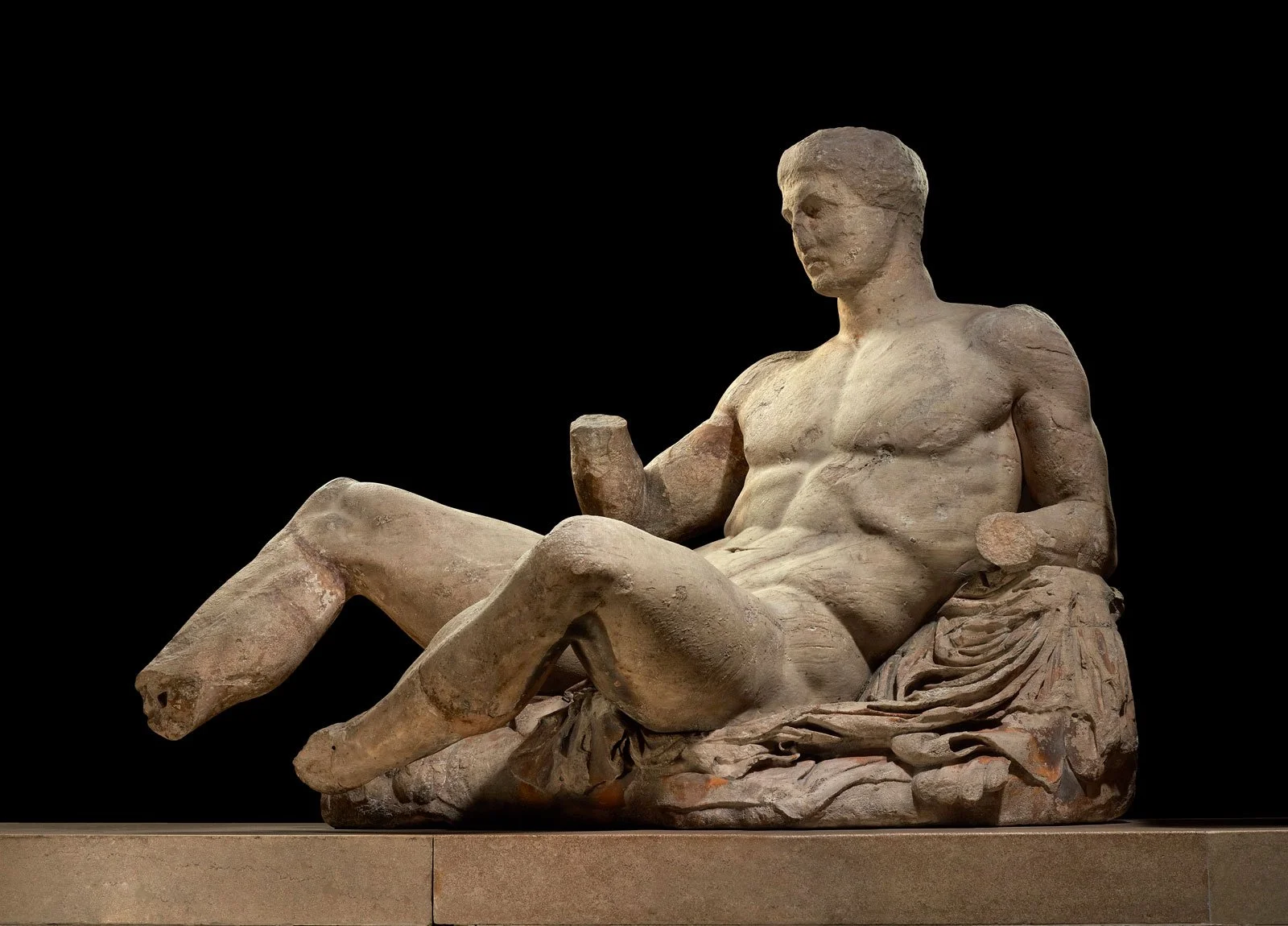
Pediment sculptures often had to fit awkward triangular spaces, so reclining bodies (and lots of drapery) become smart solutions. Even broken, you can still read the dramatic twist and the careful carving of soft folds.
Walk into almost any gallery of ancient Greece and you’ll notice something fast: a lot of naked men. Not “oops, forgot my toga” naked. Carefully carved, balanced, posed, and polished naked.
If that feels confusing, good. It means you’re reading the statues the way a modern viewer does first: as bodies. But the Greeks often read them as messages. In many cases, nudity wasn’t about vulnerability or sex appeal. It was a visual shorthand for status, strength, self-control, and even civic identity.
So let’s do what The Art Newbie does best: slow down, look closely, and decode the nudity without assuming it means what it means today.
Nudity in Greek male statues was a code, not a lifestyle
Greek artists didn’t carve nude men because Greek men walked around nude all day. They didn’t. Most daily life involved clothing, and nudity was reserved for specific contexts. That’s the first “beauty-code” clue: in art, nudity is often a costume.
One key idea here is heroic nudity (ideal nakedness used like a uniform). It shows a body that is not just unclothed, but upgraded: young, athletic, calm, and perfectly built. The statue isn’t saying “this guy forgot his clothes.” It’s saying “this guy belongs to a higher category of human.” Gods, heroes, athletes, and elite men could be shown nude because the nude body became a symbol of being worthy.
And the code could flip depending on context. A nude victor offering a statue at a sanctuary reads as proud and exemplary. A nude defeated enemy on a battlefield scene can read as exposed and humiliated. Same nakedness. Different meaning. Greek art is constantly asking us to read the situation, not just the skin.
Myth: Greek statues are nude because Greeks were “casually nude” in daily life.
Fact: Greek artists used nudity strategically to signal role, status, and meaning.
Once we accept nudity as a visual language, we stop asking “why are they naked?” and start asking the better question: what kind of naked is this, and what is it trying to say?
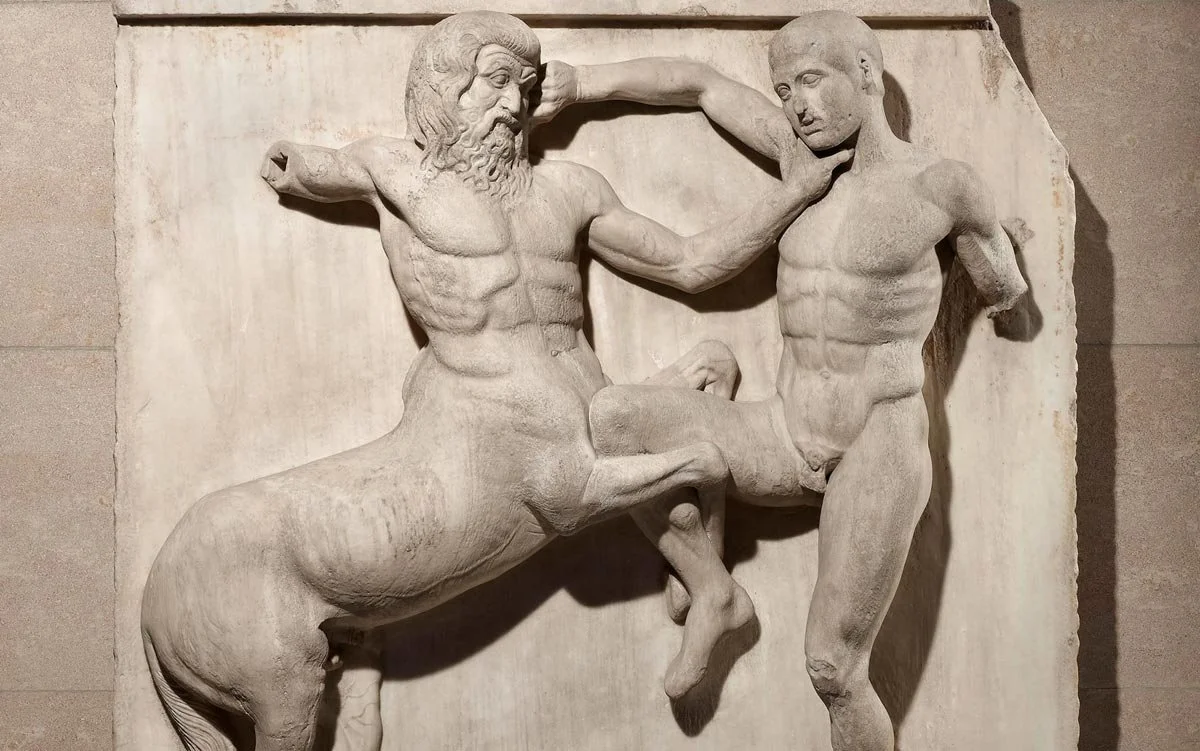
These myth battles aren’t just action scenes—they’re moral metaphors, staged as a clash between order and chaos. Look at how the sculptor uses torsion (twisting) to make stone feel like it’s moving.
Athletics taught Greeks to read the nude body as excellence
Why did the Greeks link nudity to virtue in the first place? It helps to remember where many Greek men were nude: in athletics.
Greek athletic culture formed a whole training ecosystem, especially in the gymnasium. Gymnasium literally connects to gymnos, “naked.” Training wasn’t just exercise. It was education, social status, and a public performance of discipline. In other words, the body became a visible proof of character.
This is where aretē (excellence, doing your role well) comes in. The athletic body wasn’t admired only because it was beautiful. It was admired because it looked earned. It suggested training, self-control, endurance, and competitiveness, all traits that Greek city-states valued in citizens.
Now look at something like Myron’s Discobolus, the famous discus thrower: the body is tuned like a machine, but the face stays composed. That mix matters. Greek art loves the idea that power should look controlled, not chaotic. If you want a clean visual anchor for that idea, keep the athlete in sculpture in your mental gallery.
Once you see the athletic context, the nudity starts to feel less like “nude” and more like public identity. The statue says: this is a body trained for greatness, and greatness is what the city admires.
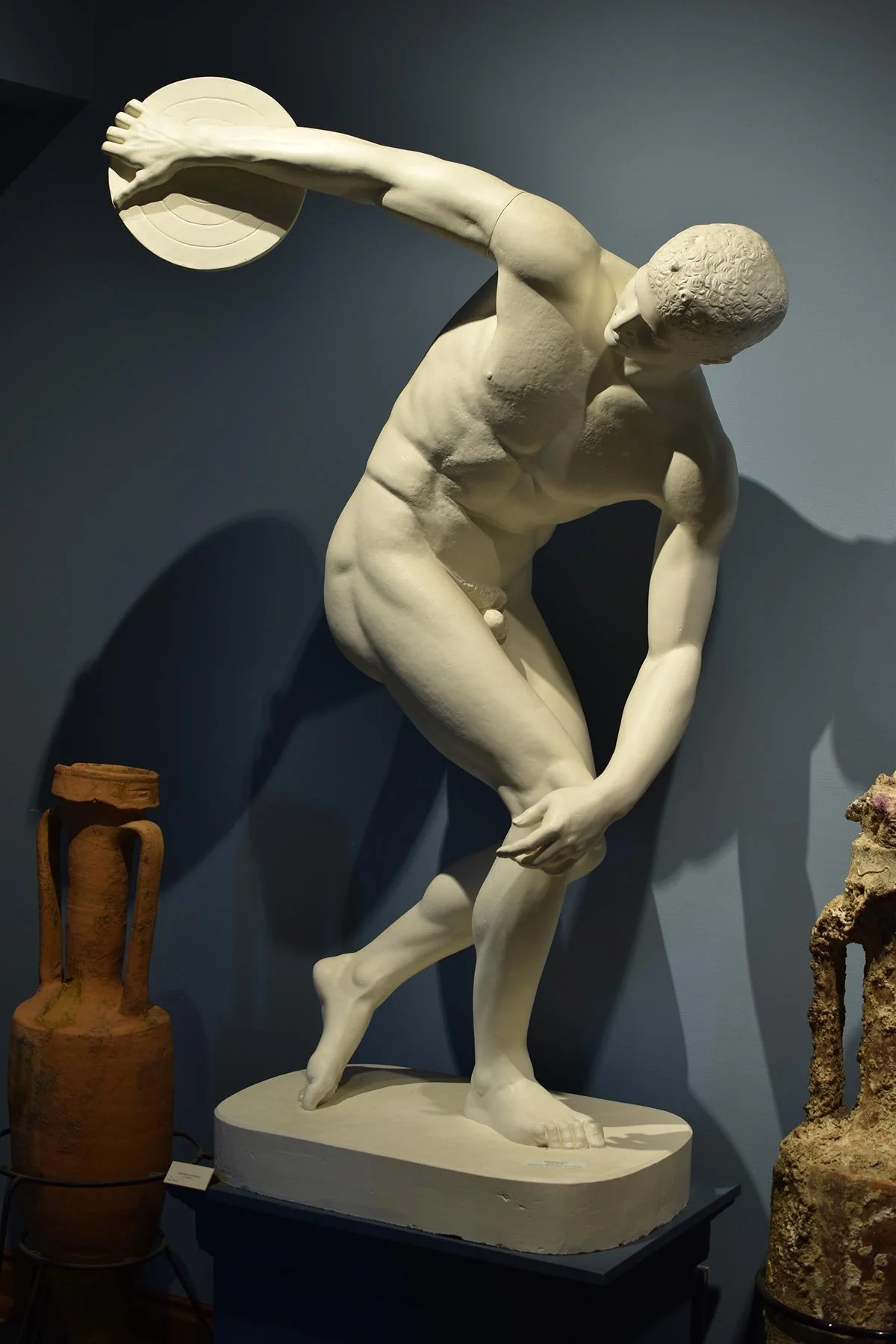
The Discobolus freezes a split-second that’s impossible to hold in real life—yet it still feels believable. That’s the Classical trick: choreograph the body into a perfect “moment,” then make it look effortless.
The “ideal nude” was built with rules, not just muscle
Here’s the part that surprises most beginners: Greek sculptors weren’t only carving bodies. They were carving ideals. And ideals need a system.
That’s why so many male statues share the same underlying logic: balanced stance, youthful anatomy, steady facial expression. Even when the figure is in action, it still feels organized. The Greeks often wanted beauty to look like order made visible.
A big tool here is proportion. Canon (a rule-set for designing the body) helped sculptors structure the figure so it felt harmonious. When you start learning ideal body proportions, you realize “perfect” in Greek art is rarely accidental. It’s designed.
Another tool is contrapposto. Contrapposto (weight shift that creates relaxed balance) makes a figure look alive without looking messy. One leg bears weight, the hips tilt, the shoulders respond. The whole body behaves like a connected system. This matters because it turns “a nude body” into “a thinking, breathing person.” If you want a fast way to train your eye on all these markers, keep Greek statue clues close as your checklist.
Also, notice what the “ideal nude” tends to exclude. Aging bodies are rare. Softness is rare. Disability is rare. Even individual features get smoothed into the type. This isn’t because Greeks never saw real bodies. It’s because these statues were often trying to show what a male citizen should be, not what any one man was.
So nudity becomes almost architectural: a carefully proportioned structure built to carry meaning.
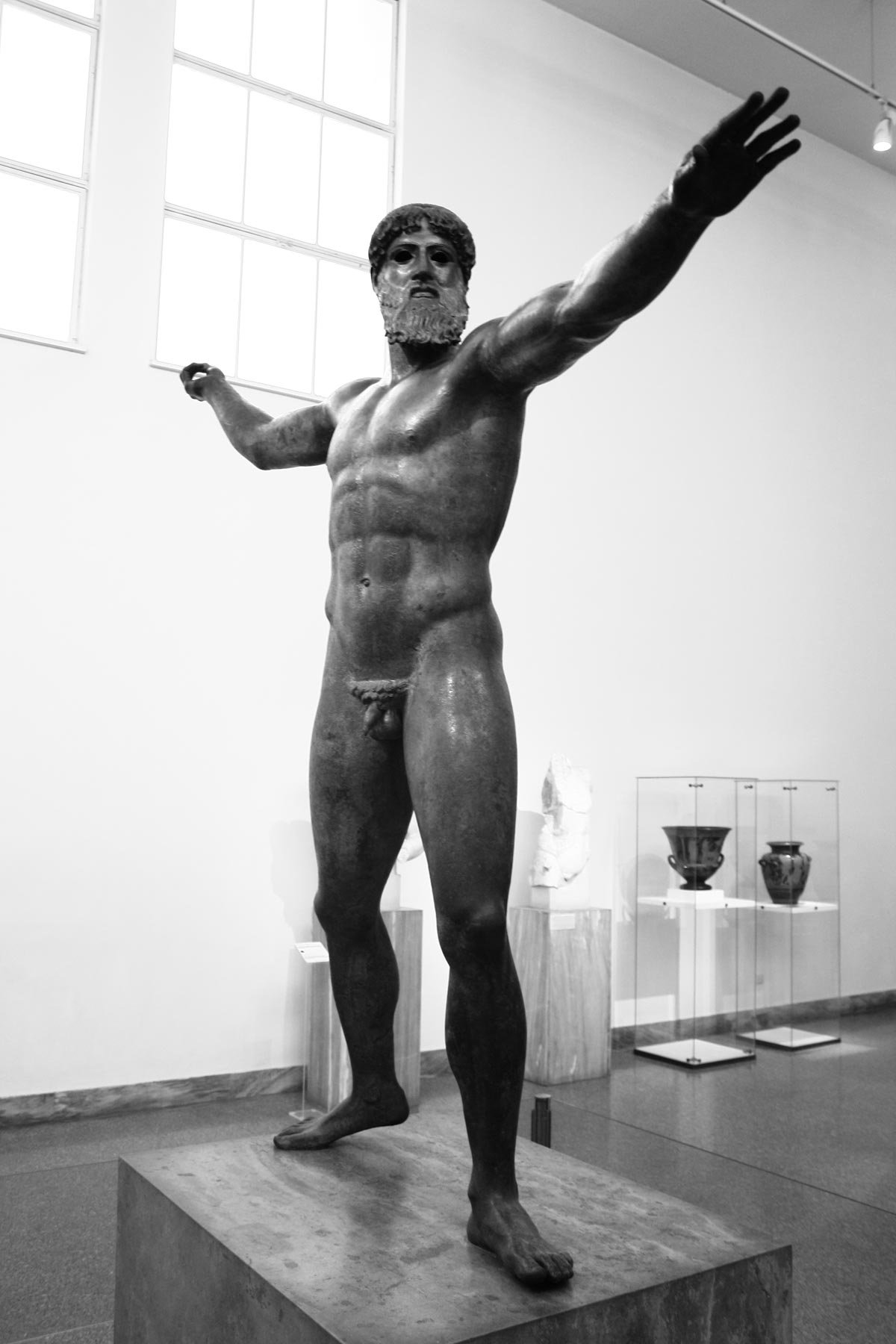
The Artemision Bronze is basically a lightning-bolt (or trident) about to happen. Bronze lets the artist stretch arms into space without chunky supports—so the pose can be wider, riskier, and more dramatic.
Archaic nudity and Classical nudity don’t mean the same thing
If we compare eras, the Greek nude gets even clearer.
In the Archaic period, male nudity shows up early in kouroi, those standing youth statues with a forward step and a formal symmetry. Kouros (standing youth statue, often a grave marker) is already nude, but the body reads more like a sign than a living person. The nudity is strong and declarative. The figure is “a youth,” “a noble,” “a presence.”
Then Classical sculpture pushes toward naturalism: softer transitions, believable anatomy, a more human stance. The body still signals virtue, but now it also signals life. The nude becomes less like a label and more like a personality container.
A perfect “bridge” statue for understanding this shift is the Anavysos Kouros as an Archaic reference point. He’s nude, idealized, and calm, but he also carries a human backstory: a memorial for a young man who died. That combination is powerful. It shows how nudity can carry both type (ideal youth) and emotion (real loss).
This is why “Greek male nude” is never just one thing. Sometimes it says:
“I am an athlete, trained and victorious.”
“I am a hero, closer to the divine.”
“I am the citizen ideal, orderly and self-controlled.”
“I am a memorial, the body as a symbol of a life.”
And the meaning is always shaped by context: where the statue stood, who commissioned it, and what role the figure was meant to play.
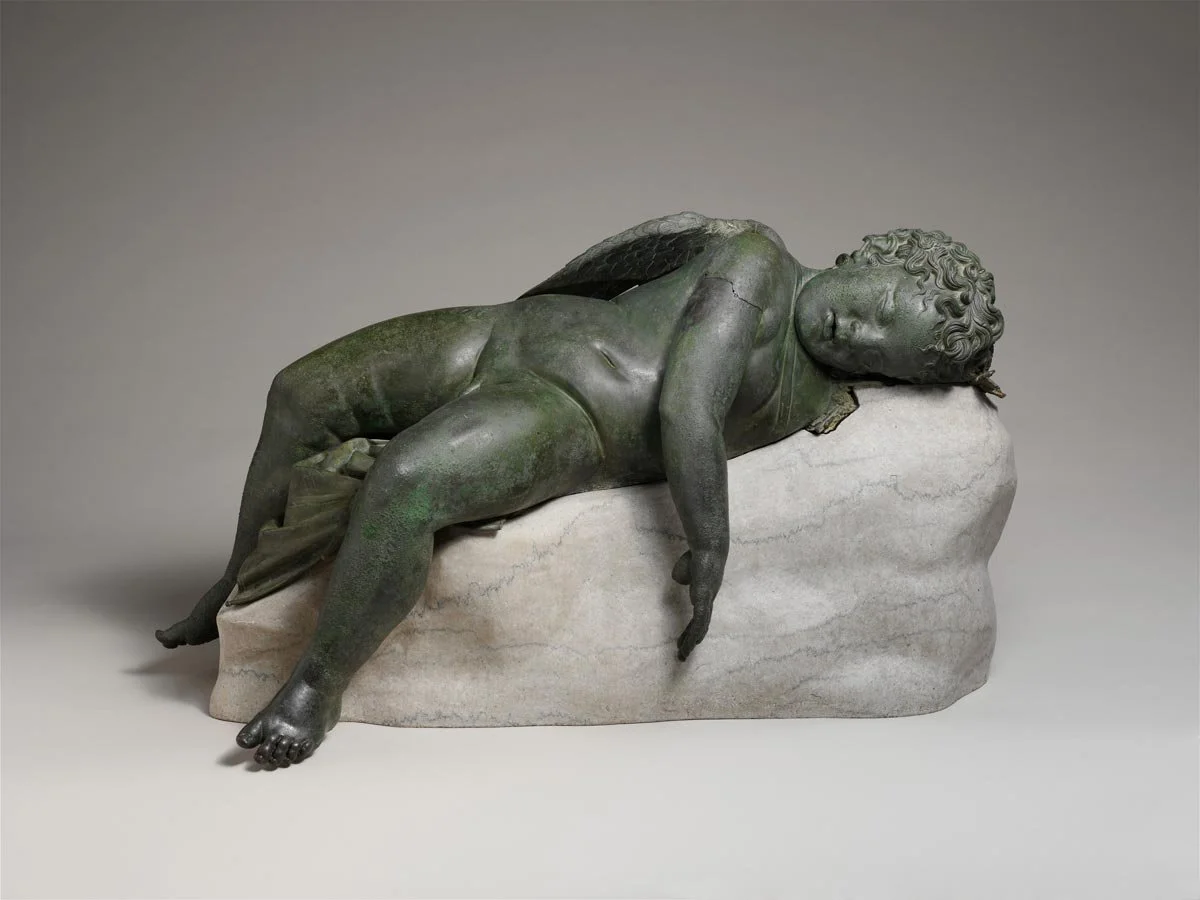
Sleeping Eros flips the usual heroic vibe into something tender and human. The relaxed limbs, heavy head, and soft belly all show how later Greek and Roman art loved realism and emotion.

Conclusion
So when we ask why Greek male statues are nude, the answer is not “because Greeks liked nudity.” The better answer is: because nudity became a visual badge. It could stand for excellence, heroism, civic status, and a kind of moral clarity that the Greeks wanted to see in their public world.
And honestly, this is one of the big lessons Greek art keeps teaching us: bodies in art are rarely just bodies. They’re arguments. They’re ideals. They’re stories, told through proportion, pose, and the quiet confidence of stone.
If you want to keep building your eye for how art starts as a material thing and becomes a meaning-machine, that’s exactly what we do in the course.
FAQ
Were Greek men actually nude in public all the time?
No. Most daily life involved clothing; nudity was mainly linked to athletics, bathing, and specific social contexts.
What is “heroic nudity” in Greek sculpture?
It’s idealized nakedness used to signal a god-like, heroic, or exemplary status rather than literal undress.
Why are most nude Greek statues young and athletic?
Because the nude often represents an ideal of excellence and beauty, not a realistic portrait of every body type.
Does nudity always mean virtue in Greek art?
Not always. Context matters: nudity can signal honor, but it can also signal defeat or vulnerability depending on the scene.
How can I quickly spot “Classical-style” nudity versus Archaic nudity?
Classical bodies usually show more natural weight shift, softer anatomy, and lifelike balance, while Archaic bodies tend to be more symmetrical and emblem-like.
Sources and Further Reading
The Metropolitan Museum of Art — “The Nude in Western Art and Its Beginnings in Antiquity” (2008).
Archaeological Institute of America / American Journal of Archaeology — “The Problem with Dexileos: Heroic and Other Nudities in Greek Art” (2007).
Cambridge University Press — “The Body as Dress” (2015).
The British Museum — “Desire, love, identity: LGBTQ+ histories” .
The Metropolitan Museum of Art — “What’s so significant about the nudity in this early Greek sculpture?” (2013).
Smarthistory — “Myron, Discobolus (Discus Thrower)”.
You may also like