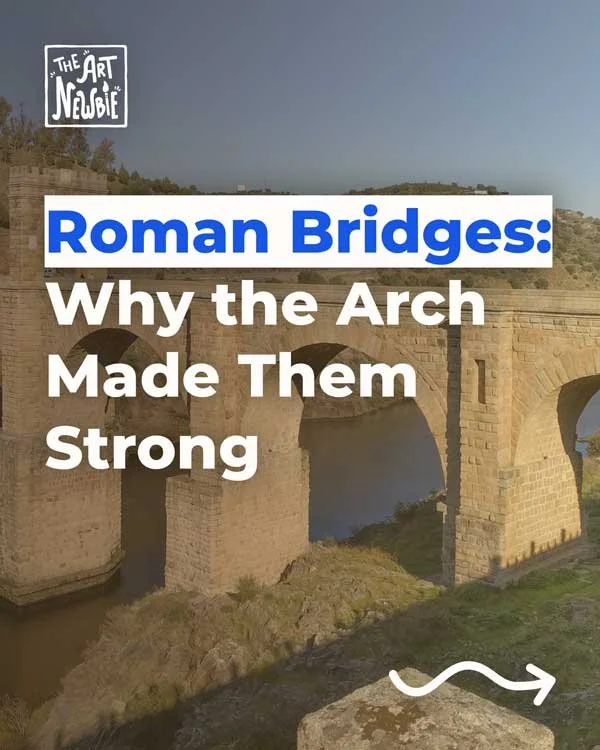
Roman Architecture: Materials, Types and How Roman Building Worked
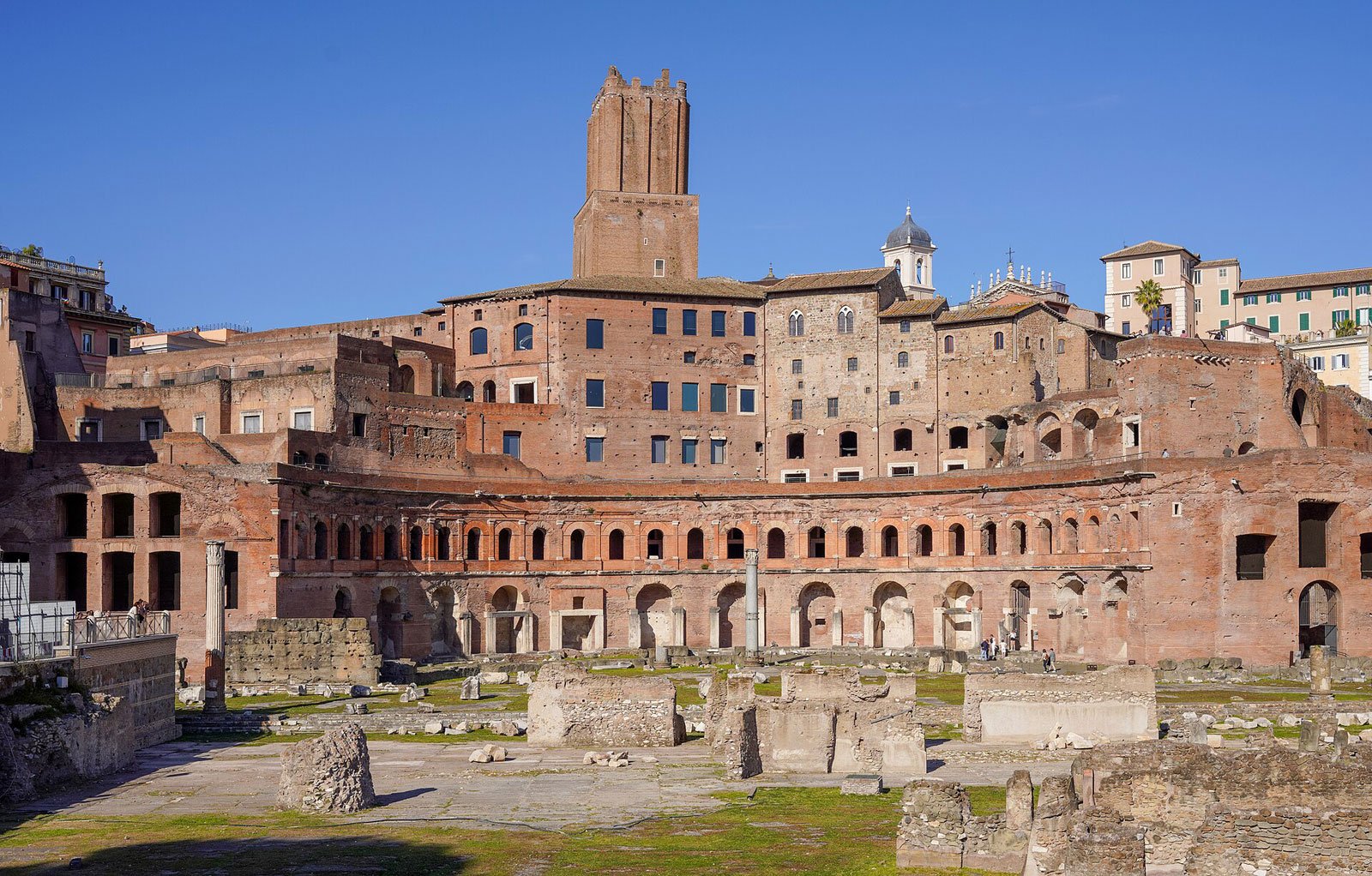
Trajan’s Market is a strong way into Roman architecture because it brings arches, brick, multiple levels, and urban scale into one image.
Roman architecture was not just a collection of famous ruins. It was a powerful building system. The Romans combined inherited forms, new materials, engineering skill, and urban planning into a way of shaping space that could serve religion, politics, infrastructure, entertainment, trade, and everyday life all at once.
That is what makes Roman building feel so different from many earlier traditions. A Roman temple, bath complex, bridge, amphitheater, road, and aqueduct might look like separate things, but they belong to the same broader logic. Roman architecture was about organization at scale. It turned construction into a tool for ruling territory, managing crowds, moving water, and giving cities a recognizable civic form.
This is why Roman architecture matters so much in art and architectural history. It did not simply decorate the ancient world. It changed how buildings could work. It expanded interior space, multiplied building types, and tied architecture closely to engineering. If you want the big picture, this is the place to start.
What is Roman architecture?
At its core, Roman architecture is the built tradition developed by Rome and the Roman world from the early city’s beginnings through the Republic and Empire. In practical terms, it includes temples, basilicas, baths, theaters, amphitheaters, houses, roads, bridges, aqueducts, forums, tombs, and monumental arches, along with the techniques that made them possible.
What makes it distinct is not one single style. Roman architecture changed across time and across regions. A temple in Republican Rome does not look exactly like a late imperial bath complex. A house in Pompeii differs from a public monument in North Africa or a bridge in Spain. Still, a few broad Roman architecture characteristics keep returning.
First, Roman builders were highly interested in function. Buildings had to work. They had to manage movement, load, water, heat, spectacle, and administration. Second, Roman architecture was deeply tied to typology, meaning recurring building types with recognizable uses. The Romans refined and spread building types so effectively that many of them shaped later architecture for centuries. Third, Roman architecture depended on a strong alliance between design and construction. In Rome, architecture was never far from engineering.
This is why it helps to think of Roman architecture as more than marble facades. Many Roman buildings were impressive because of what happened behind the visible surface: thick walls, vaults, concrete cores, circulation systems, heating networks, drainage, and careful control of approach and entry. The exterior mattered, but the hidden structure mattered just as much.
If you are new to the topic, one useful shortcut is this: Greek architecture often feels focused on the perfected exterior form of the temple, while Roman architecture often feels more concerned with spatial performance. That contrast is not absolute, but it is a good starting point.
Where did Roman building come from?
Roman architecture did not appear out of nowhere. It grew through exchange, adaptation, and experimentation. Early Rome learned from neighboring cultures, especially the Etruscans and the Greeks, then reworked those influences into something more expansive.
Greek influence was crucial. The Romans inherited the classical orders, meaning the recognizable column systems such as Doric, Ionic, and Corinthian. They also absorbed Greek ideas about temples, proportion, monumental public architecture, and urban display. If you want to trace that older formal language, it helps to look at Greek architecture first.
But Rome was not simply a Greek copy. Early Roman building was also shaped by Italic and Etruscan traditions. High podia, deep porches, strong frontality, and a more direct emphasis on approach are all important in early Roman temple design. That background becomes clearer when you look at Etruscan influence on Roman architecture.
There is also a wider Mediterranean context. Older monumental traditions, including those of ancient Egyptian architecture, had already shown how architecture could project permanence, sacred authority, and political power. Roman builders inherited a world in which monumentality already mattered. What they added was a new level of technical versatility and urban integration.
This is where Roman architecture becomes especially interesting. The Romans took familiar elements, columns, pediments, stone construction, ceremonial planning, and combined them with a different structural mindset. They were less tied to the old post-and-lintel logic, where vertical supports carry a horizontal beam, and more willing to build with arches, vaults, thick masonry, and concrete. In other words, they moved from a mainly trabeated architecture toward one that could enclose larger and more complex volumes.
So Roman architecture is best understood as a hybrid tradition. It begins in borrowing, but it does not stay there. It turns borrowed forms into a new architectural language fit for roads, baths, amphitheaters, domed halls, imperial forums, and vast infrastructure networks.
What materials did Romans build with?
One of the clearest ways to understand ancient Roman architecture is to look at its materials. Roman building was not only about marble. In fact, marble often played the role of finish or prestige surface, while the real structural work was done by more practical materials.
Stone remained important, especially local stones such as tufa, travertine, and later many regional varieties across the empire. Brick also became increasingly significant, especially in imperial construction. Fired brick could be used in facing, bonding, and structural organization. Timber had its place too, particularly in roofs, centering, and temporary works.
But the material that changed everything was Roman concrete. Roman concrete, often referred to by the Latin term opus caementicium, was a mixture of lime mortar, water, aggregate, and often volcanic sand such as pozzolana. That volcanic ingredient mattered because it improved the material’s strength and durability. More importantly, concrete allowed Roman builders to shape mass and space in a way that cut stone alone could not easily match.
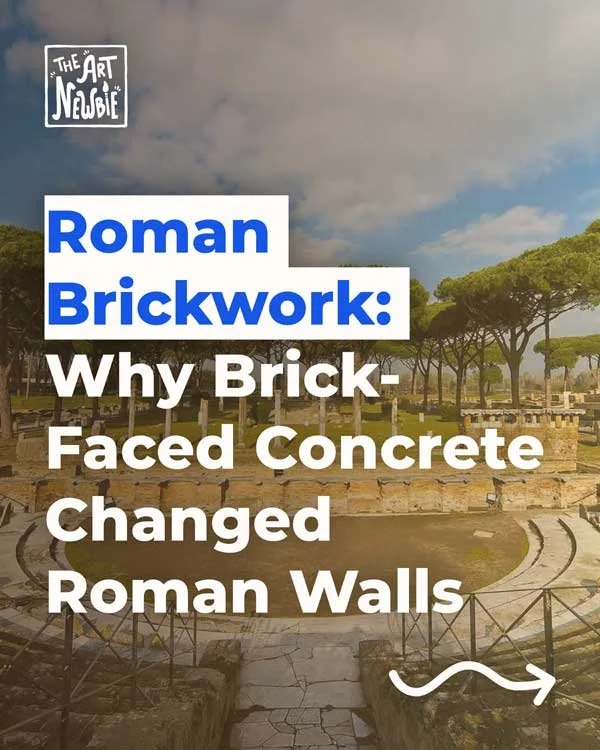
This did not mean every Roman building was poured the way modern concrete is. Roman construction often used concrete cores combined with brick or stone facing. But the effect was revolutionary. Walls could become continuous masses. Curved forms became easier to execute. Vaults and domes could be built at unprecedented scale.
That is why Roman materials are inseparable from Roman structure. To understand how concrete changed building, it helps to connect it to the Roman arch and the Roman dome. The arch is a curved structure that redirects weight sideways into supports. A vault is basically an extended arch. A dome is a vault rotated around a central point. Together, these systems let Romans cover wider spans and create interiors that feel unified rather than divided by forests of columns.
This material intelligence is one reason Roman building sits so close to ancient Roman engineering. Roman architecture was rarely just composition. It was also about foundations, loads, moisture, heat, circulation, and technical control. Materials were chosen not only for appearance, but for performance.
How did Roman engineering change space?
This is where Roman architecture becomes more than impressive building and starts to feel like a genuine architectural turning point. Roman engineering changed not only what could be built, but what kind of interior experience architecture could offer.
Earlier monumental traditions often emphasized exterior order and tectonic clarity. Roman builders, by contrast, became increasingly confident in creating enclosed, continuous, and varied interior volumes. Instead of a building being primarily a container around a simple room, it could become a sequence of connected spaces, corridors, niches, halls, courts, and vaulted chambers.
Think of the difference between a colonnaded porch and a massive bath hall. The second is not just larger. It is spatially different. Roman construction allowed for interiors that could absorb crowds, guide movement, stage rituals, and produce dramatic effects of scale, light, and sequence.
Arches and vaults were central here. They made it possible to roof corridors, support seating systems, bridge gaps, and stack circulation routes. In theaters and amphitheaters, vaulted substructures helped move large groups of people efficiently. In bath complexes, vaulting covered warm rooms, hot rooms, exercise spaces, and service areas. In basilicas, it helped organize large civic interiors. In imperial architecture, it made space itself feel monumental.
Domes pushed this even further. A dome does not just cover space. It gathers space. It creates a sense of centered volume, often with a strong vertical pull. Roman domes could turn architecture into a single, unified interior experience. The Pantheon is the most famous example, but it is not an isolated miracle. It belongs to a much broader Roman interest in pushing structure toward new spatial effects.
This is one reason Roman architecture often feels unexpectedly modern. It is less dependent on surface decoration than people assume. What often matters most is the relation between mass, void, light, and movement. Even when columns and pediments remain visible, they are frequently attached to a deeper structural world that is no longer governed by the old Greek logic alone.
What types of Roman buildings mattered most?
Roman architecture becomes easier to understand when you stop treating it as one thing and start seeing it as a family of building types. Each type answered a different social need, and together they formed the built fabric of Roman life.
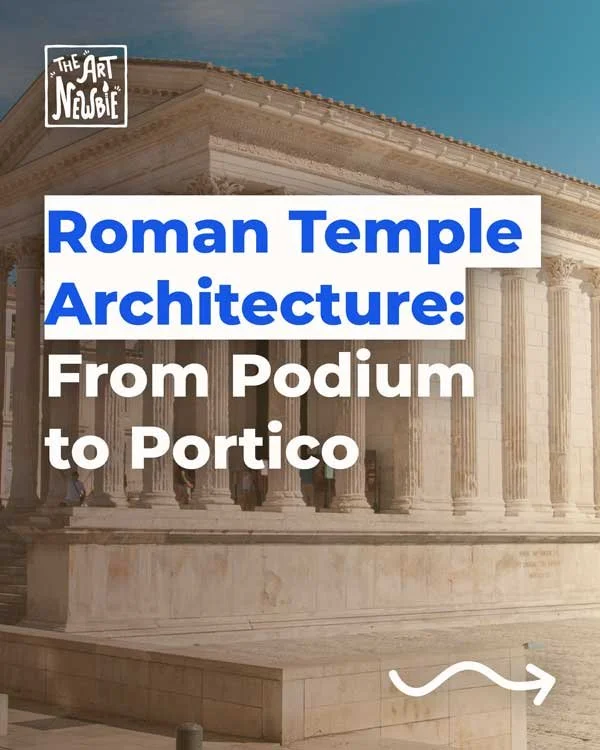
Temples remained important, but Roman temples often differ from Greek ones in how they organize approach and emphasis. They are more frontal, often raised on high podia, and frequently designed to be read from the front rather than equally from all sides. That topic deserves its own closer look in Roman temple.
Baths were one of Rome’s great architectural achievements. They were not only places for washing. They were social complexes with hot and cold rooms, exercise areas, gardens, and sometimes libraries and lecture spaces. In them, Roman architecture shows its full ability to combine engineering, public life, and monumental interior space. You can follow that thread further in Roman baths.
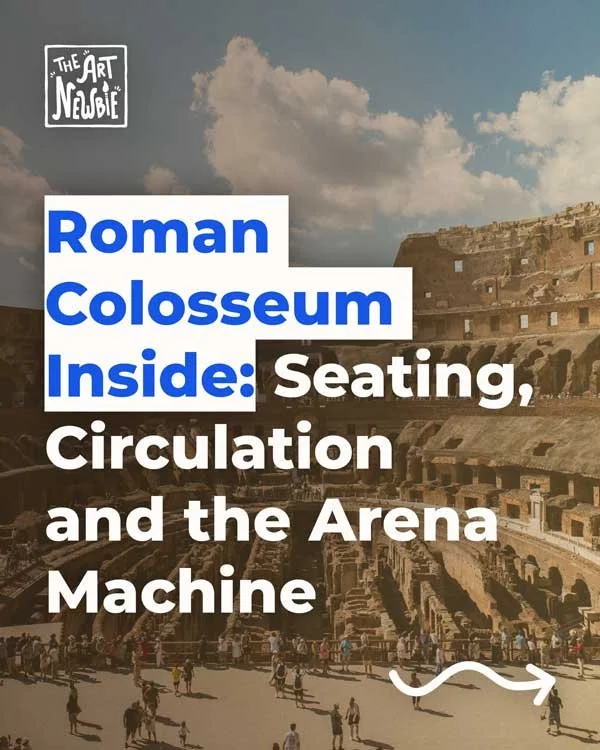
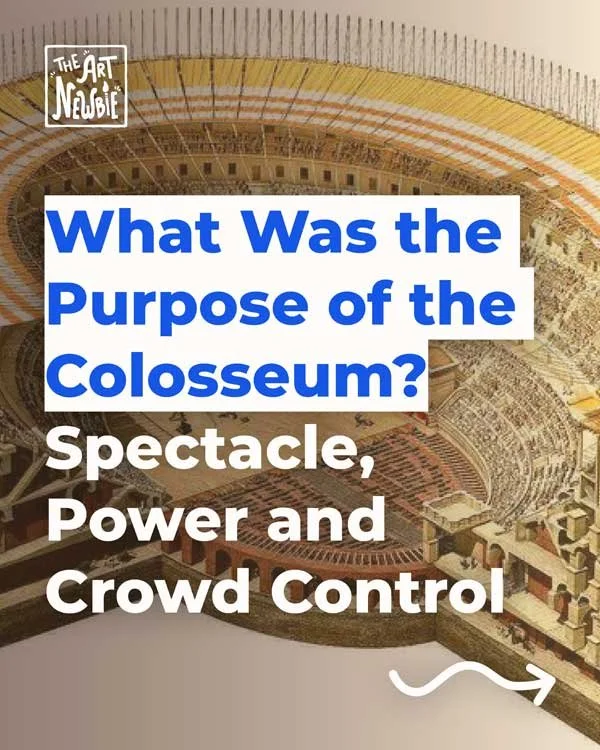
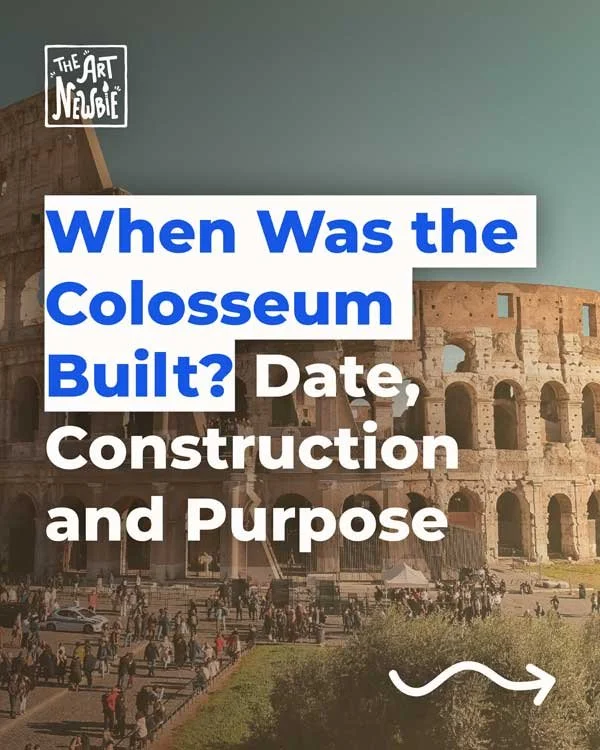
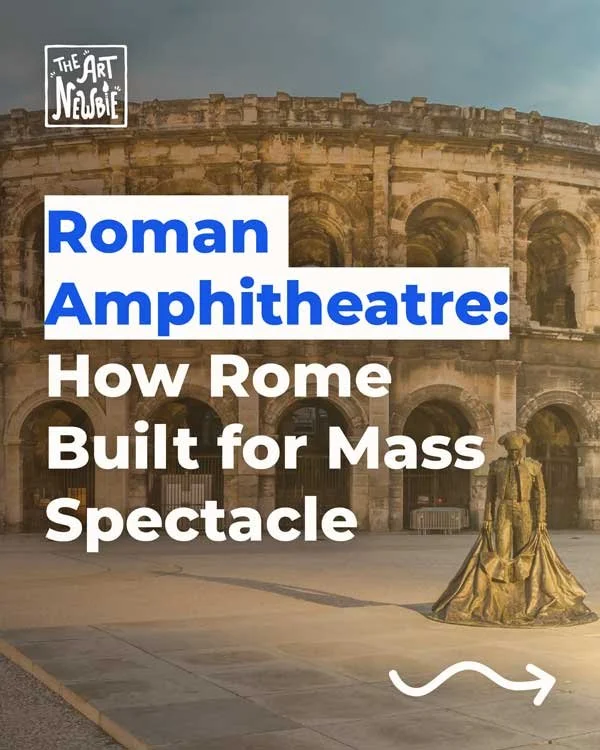
Entertainment buildings were also central. The theater developed from Greek precedents but became more enclosed and structurally self-supporting. The amphitheater, by contrast, is a particularly Roman type: an elliptical arena built for mass spectacle. These were buildings of visibility, control, and civic identity.
Domestic architecture matters too. Roman houses ranged from the domus, an elite urban house, to the villa, a country residence, and the insula, a multi-storey apartment block. This range is important because Roman architecture was not only monumental. It also organized daily life, family structure, patronage, commerce, and urban density.
Then there were the infrastructural types. Roads, bridges, and aqueducts are sometimes treated as engineering rather than architecture, but in the Roman world that division is too sharp. Roman roads structured territory, movement, and military control. Roman aqueducts carried water across great distances and made baths, fountains, and dense urban life possible. Many Roman structures that seem purely practical also had a strong visual presence. They helped give the empire a legible physical form.
How did Roman cities work?
Roman architecture makes the most sense when you place it inside the city. The Romans did not just produce isolated monuments. They built urban systems.
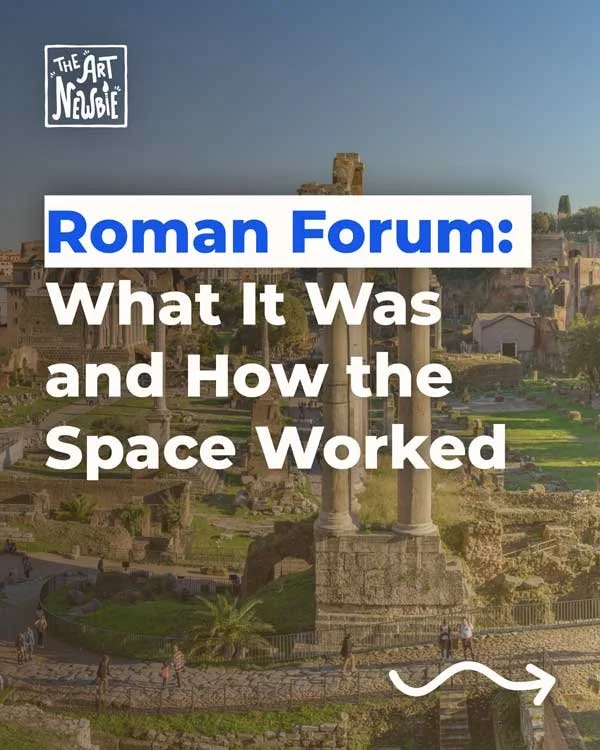
The heart of many Roman cities was the forum, a public square surrounded by important civic and religious buildings. It was not only an empty plaza. It was the political, legal, commercial, and symbolic center of urban life. Nearby you might find temples, basilicas, curia buildings for council meetings, shops, and commemorative monuments.
This already shows something essential about Roman urbanism. Different functions were placed into relation with one another. Architecture helped make the city readable. It directed where people gathered, how they circulated, and which institutions dominated public space.
The basilica is a good example. Before it became a major Christian church type, the basilica was a Roman civic building used for law, administration, and business. That alone tells you how influential Roman typology became. A building form first shaped for Roman public life later became central to Christian architecture.
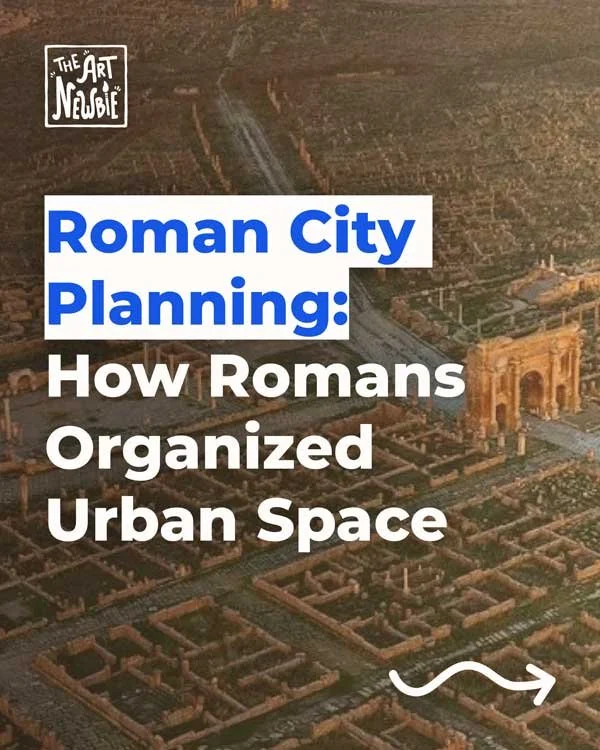
Roman cities also depended on infrastructure. Streets, sewers, water supply, public baths, fountains, warehouses, and walls all contributed to urban order. In planned settlements, the city could be laid out with impressive regularity. In older cities such as Rome itself, the urban fabric was more layered and complex, but still marked by strong axes, public nodes, and monumental insertions.
This is why Roman city planning matters so much. Roman architecture was never only about isolated masterpieces. It was about how temples, baths, roads, aqueducts, markets, arches, and housing worked together to produce civic structure. The city was the largest Roman building of all, not as a single object, but as a coordinated built environment.
Why does Roman architecture still matter?
Roman architecture still matters because it changed the architectural imagination. It showed that building could operate across many scales at once, from the domestic room to the imperial city, from decorative surface to territorial infrastructure.
Its legacy is enormous. Later architects repeatedly returned to Roman models for arches, domes, basilicas, baths, urban monuments, and ideas of civic grandeur. The Renaissance studied Roman ruins closely. Neoclassicism drew heavily on Roman formal language. Modern infrastructure, stadium design, and even state architecture still carry Roman echoes, whether directly or indirectly.
But Roman architecture matters for a deeper reason too. It teaches us that architecture is not only style. It is also capacity. Capacity to move people. Capacity to organize institutions. Capacity to shape climate, water, ritual, and urban life. Roman builders understood that architecture could be both symbolic and operational, beautiful and technical, monumental and practical.
That is why the topic keeps opening outward. If you begin with a temple, you soon reach city planning. If you begin with a dome, you soon reach concrete. If you begin with baths, you soon reach water systems, heating technology, and public culture. Roman architecture is a perfect reminder that buildings are rarely just objects. They are systems of space, structure, use, and meaning.

Conclusion
Roman architecture was a new way of building the world. It joined inherited forms to bold engineering, practical materials, repeatable building types, and an urban logic large enough to serve an empire. That is why it produced not just memorable monuments, but a whole built system of temples, baths, roads, aqueducts, houses, forums, arches, and domed interiors.
Once you see that bigger picture, Roman architecture stops being a list of ruins and starts to feel like what it really was: a highly organized architectural culture that changed how space could be made, used, and understood.
FAQ
What is Roman architecture in simple terms?
Roman architecture is the building tradition of ancient Rome. It is known for combining practical engineering, monumental public buildings, and materials such as concrete, brick, and stone.
What are the main characteristics of Roman architecture?
The main characteristics include arches, vaults, domes, concrete construction, strong urban planning, and recurring building types such as baths, basilicas, amphitheaters, and temples.
Did the Romans invent the arch?
No. Arches existed before Rome. What the Romans did was use them far more systematically and at much larger scale in architecture and infrastructure.
Why was Roman concrete so important?
Roman concrete made it easier to build thick walls, vaults, domes, and complex interior spaces. It gave Roman builders much more structural freedom than cut stone alone.
What is the difference between Greek and Roman architecture?
Greek architecture is often associated with temple form, exterior proportion, and post-and-lintel construction. Roman architecture borrowed from Greece but pushed much further into engineering, enclosed interior space, and large public infrastructure.
Why are Roman baths important in architecture?
Roman baths show how architecture, technology, and public life came together in Rome. They combined water systems, heating, circulation, and monumental interior space in one building type.
Sources and Further Reading
Smarthistory — “Ancient Roman Architecture, an Introduction” (2015)
Cambridge University Press — “Roman Architecture and Urbanism” (2019)
Yale University Press — “Principles of Roman Architecture” (2003)
Yale University Press — “The Genesis of Roman Architecture” (2016)
The Metropolitan Museum of Art — “Theater and Amphitheater in the Roman World” (2006)
You may also like