Roman Roads: How the Romans Built Routes That Lasted
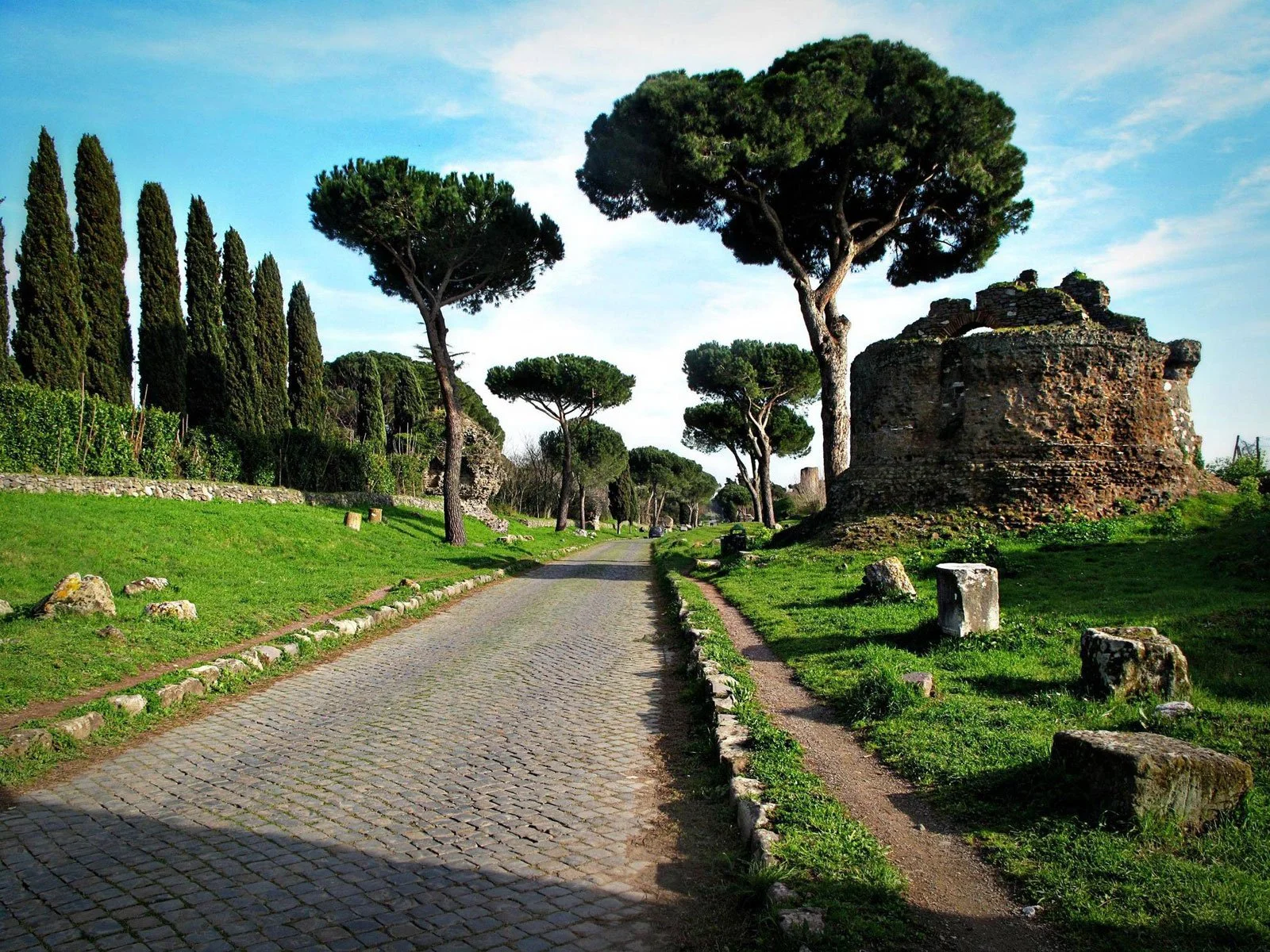
The Via Appia shows why Roman roads mattered: they were engineered surfaces built for movement, control, and long-term use.
Roman roads were not just paths for getting from one place to another. They were engineered routes that helped organize the Roman world. They moved armies, connected cities, supported trade, carried messages, and gave the empire a physical structure that could be seen and used across huge distances. That is why Roman roads matter so much. They were not only practical surfaces. They were part of how Rome built power into the landscape.
This is also why the topic is bigger than the familiar idea that “Roman roads were so good that some are still used today.” That claim points in the right direction, but it is only the beginning. Roman roads lasted because they were carefully planned, properly drained, solidly built, and integrated into a much wider system of bridges, cities, milestones, stations, and territorial control.
If you want to understand how Roman infrastructure worked, roads are one of the best places to start. They show Rome at its most practical and most ambitious at the same time.
Quick answer
Roman roads lasted because they were engineered with grading, drainage, compacted layers, and durable surfaces. More importantly, they were built as part of a larger system that connected military movement, trade, administration, and urban life.
What were Roman roads for?
Roman roads were built for movement, but not movement in only one sense. They served armies, state administration, merchants, travelers, local communities, and long-distance communication. In other words, they were not simply transport routes. They were tools for linking the Roman world together.
Military use was one of the main reasons roads mattered so much. Armies had to move quickly and reliably, especially across difficult terrain or newly controlled territories. A durable road could speed marching, organize supply, and make strategic movement more predictable. This is one reason Roman roads are so closely connected to ancient Roman engineering. They were practical works of control.
But roads were not only military. Once a route existed, it also helped commerce, communication, and settlement. Goods could move more efficiently. Officials could travel faster. Messages could circulate through the imperial system. Towns along major routes could grow in importance. Agricultural production could reach markets more easily. A road might begin as a strategic intervention, then become a permanent economic and civic framework.
That broader role matters because it changes how we picture the Roman road system. It was not just a web of military lines projected across a map. It was a built network that tied infrastructure to everyday life. A road could connect a rural area to a town, a town to a regional center, and a regional center back to Rome itself.
This is also why roads belong inside the wider story of Roman architecture. They may not look like temples or baths, but they are still part of Rome’s architectural culture. They shape territory, organize approach, and make urban and imperial life possible.
How were Roman roads built?
This is the question most people ask first: how were Roman roads built? The short answer is that Roman builders prepared the ground carefully, created a stable roadbed, and used compacted layers and durable surfaces to make the route strong and long-lasting.
The process began with surveying and alignment. Roman roads are famous for their straightness, but they were not blindly straight at all costs. Engineers aimed for direct routes where possible, then adapted to terrain when necessary. The line of the road had to work in the real landscape.
Once the route was fixed, builders prepared the subsoil and created the roadbed. Many Roman roads were built in layers, though not every road across the empire followed one identical recipe. That distinction matters. People sometimes repeat a very rigid model of Roman road construction as if every road had exactly the same four layers everywhere. In reality, materials and exact methods could vary by place and purpose. Still, the basic principle was consistent: stability below, durable surface above, drainage throughout.
A solid Roman road might include a lower foundation of larger stones, intermediate compacted material, and a finer upper layer or paved surface. The surface could be made with fitted paving stones in important stretches, especially near cities or on prestigious roads, but not every Roman road looked like a monumental stone pavement. Some had gravel or compacted surfaces adapted to local use and materials.
That is the key point. Roman road construction was not about one universal visual style. It was about dependable performance. The road had to resist wear, shed water, and stay usable over time.
Why was drainage so important?
One of the biggest reasons Roman roads lasted was drainage. This is easy to overlook because drainage sounds less exciting than paving stones or famous names like the Appian Way. But structurally, it was essential.
Water is one of the main enemies of a road. If water sits on the surface or seeps into the structure below, it weakens the roadbed, softens the ground, and accelerates damage. Roman builders understood that a good road was not only solid. It also had to stay dry.
That is why many Roman roads were given a camber, meaning a slightly raised center that encouraged water to run off toward the sides. Side ditches or drainage channels could then carry water away. In some cases the road itself was slightly elevated above the surrounding ground. This improved drainage further and helped protect the route from standing water and mud.
This attention to water control tells you something important about Roman engineering. Roman roads were not just hard surfaces laid onto the earth. They were environmental interventions. Builders had to think about slope, runoff, ground condition, and long-term wear. A road was successful not when it looked neat on the day it was finished, but when it stayed usable over time.
That same practical intelligence connects roads to other Roman infrastructures such as Roman aqueducts. In both cases, Roman builders were managing terrain and water with a strong sense of system rather than isolated construction.
Were all Roman roads paved?
No, and this is one of the most useful myths to clear up. Not every Roman road was paved with large fitted stones in the way many tourist images suggest.
The best-known roads, especially major stretches near important cities or monumental routes, can make it seem as if all Roman roads had the same stone-paved appearance. But the Roman world was enormous, and road construction varied depending on location, status, available materials, and local needs.
Some roads had carefully paved stone surfaces. Others used compacted gravel or layered materials that created a durable route without monumental paving. What made a road “Roman” was not only whether its top layer was dramatic to look at. It was whether it was engineered as a reliable route.
This matters because it helps us avoid turning Roman roads into a visual cliché. Their achievement was not just that they looked impressive. It was that they worked. The best Roman roads combined route planning, solid foundations, drainage, and maintainability. A less glamorous surface could still belong to a very effective Roman road.
So when people ask about Roman road construction, the most accurate answer is not “they were all paved with stones.” It is “they were built with recurring engineering principles, but their final form could vary.”
Why were Roman roads so straight?
Roman roads are famous for straight lines, and many of them really were strikingly direct. That directness came partly from military and administrative logic. A straighter route could shorten travel, simplify surveying, and express a certain Roman confidence in imposing order onto the landscape.
But Roman roads were not irrationally straight. Engineers still had to respond to hills, marshes, rivers, and rock formations. A road that ignored the terrain completely would be difficult to build and maintain. So straightness was a tendency, not an absolute rule.
This is important because the straight Roman road has become almost symbolic. It represents Roman discipline, efficiency, and territorial control. And in many cases, that symbolism matches reality. A Roman road can feel like a line of decision drawn across geography.
Yet the deeper achievement was not straightness alone. It was the ability to balance direct route planning with engineering judgment. A road needed to be buildable, passable, and durable. If a detour improved the route in the long term, Roman builders could adapt.
The Via Appia, or Appian Way, is the most famous example of Roman road ambition. It became one of the great arterial routes of the Roman world and remains central to how we imagine Roman infrastructure.
How did roads support empire?
Roman roads helped make the empire governable. That is the larger political story behind their construction.
An empire spread across vast regions needs more than military victories. It needs reliable circulation. Troops must move. Officials must travel. Messages must reach provincial centers. Supplies must be transported. Roads made all of that easier. They reduced friction across space.
This does not mean roads created empire by themselves. But they helped maintain it. A controlled route is a form of control over territory. It links distant places into a system where movement becomes more predictable and state presence becomes more tangible.
Roads also helped shape regional development. Once a major route existed, towns along it could gain importance. Economic activity could cluster around it. Settlements might grow where traffic, exchange, and services converged. Over time, roads did not only connect existing places. They also influenced which places became significant.
That is one reason Roman roads should not be seen as neutral infrastructure. They had political and economic consequences. They redistributed access, movement, and opportunity. They tied peripheral zones more tightly to larger centers. They made Rome’s reach more concrete.
In this sense, roads were as much part of imperial architecture as forums, baths, or arches. They built the empire spatially.
How did roads connect cities?
Roman roads mattered not only between cities, but also because of cities. Their routes linked urban centers, and those cities gave the network meaning.
A Roman city was not an isolated island. It was part of a larger system of circulation. Roads brought people, goods, and information into the city, then led them outward again. In that sense, roads and cities completed one another.
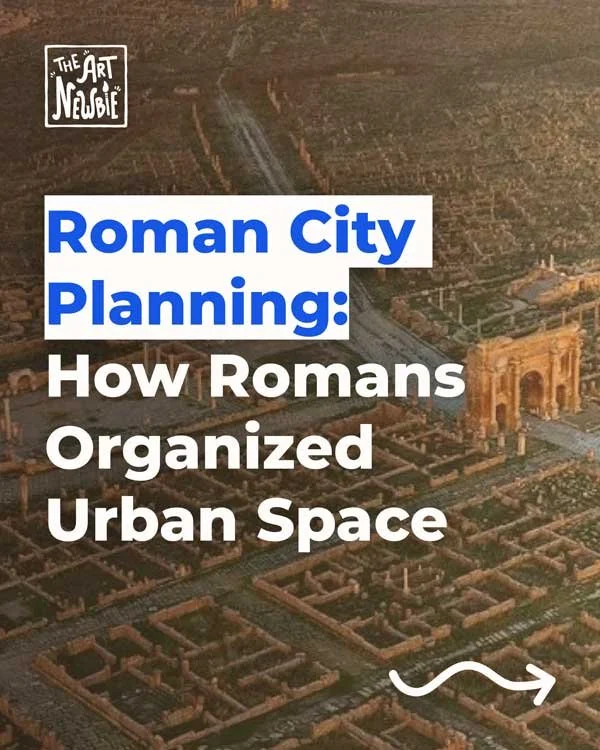
This becomes clearer when you think about Roman city planning. Roman urbanism often depends on legible structure: streets, gates, public spaces, and organized civic centers. Roads helped connect those local patterns to the broader world beyond the walls.
Within the city, routes often converged toward central places such as the Roman Forum, where political, legal, commercial, and ceremonial life concentrated. Outside the city, those same roads stretched outward toward other towns, ports, agricultural territories, and military frontiers. The road was both local and imperial at once.
This is also why roads matter for understanding monuments and public life. Major routes could shape how one approached civic buildings or entertainment spaces. Even a place like the Circus Maximus belongs to a city structured by circulation, arrival, and movement. Roads are not just what lies between monuments. They are part of the logic that makes monuments function within urban life.
What made the network so durable?
The durability of Roman roads came from a combination of construction quality, maintenance, and strategic importance. A well-built road lasts longer, but it also lasts because people keep using it, repairing it, and integrating it into later landscapes.
This helps explain why so many Roman routes remained influential long after the Roman Empire itself changed or collapsed. Once a road established a practical line through terrain, later generations often reused it. A good route tends to stay a good route. It may be repaired, resurfaced, narrowed, expanded, or absorbed into newer systems, but its logic survives.
That is the real meaning behind the idea of Roman roads still in use. It does not always mean that modern cars are driving on an untouched ancient surface. More often, it means that the Roman route remained so effective that later societies kept building on or along it.
Bridges are especially important here. A good bridge fixes a crossing point, and once that crossing becomes established, the road around it tends to endure as well. This is why Roman bridges are so closely connected to the road network. A road system is only as continuous as its crossings.
Durability, then, is not just a material fact. It is also a geographic and historical one. Roman roads lasted because they were built well, but also because they were placed where movement really mattered.
Why do Roman roads still matter?
Roman roads still matter because they reveal something essential about Rome: the empire did not only build monuments. It built systems.
A temple or bath tells us about religion, public life, and architecture. A road tells us how those worlds were linked. It shows how Rome connected cities, landscapes, and institutions into a functioning territorial network. It reminds us that infrastructure is never secondary. It is one of the main ways a culture organizes power.
Roman roads also matter because they sharpen our sense of what engineering can be. Engineering is not only about solving isolated technical problems. It is also about shaping how people move, where towns grow, and how regions become connected. Roman roads did all of that.
And for beginners, they are especially useful because they make the Roman world easier to picture. Instead of imagining the empire as a scattered set of ruins, you begin to see a connected geography: roads, bridges, cities, aqueducts, civic centers, and routes of movement all working together.
That is the deeper lesson of Roman roads. They were not just lines on a map. They were one of the ways Rome turned space into structure.
Conclusion
Roman roads lasted because they were engineered with care and used with purpose. Their builders paid attention to route planning, foundations, drainage, surface durability, and long-term function. But their real significance goes further than construction technique.
Roman roads helped organize empire. They linked cities, supported armies, enabled exchange, and fixed routes that shaped movement for centuries. Once you see them that way, Roman roads stop looking like old stones in the landscape and start looking like what they really were: infrastructure on an imperial scale.
FAQ
How were Roman roads built?
Roman roads were built by preparing the ground, creating a stable roadbed, using compacted layers, and ensuring good drainage. Exact materials varied, but the engineering principles were consistent.
Were all Roman roads paved with stone?
No. Some major roads had stone paving, but many Roman roads used gravel or other compacted materials. What mattered most was durability and drainage, not one universal surface finish.
Why were Roman roads so durable?
They were durable because they were carefully graded, well drained, solidly layered, and often maintained over time. Their routes were also so useful that later societies kept reusing them.
Why were Roman roads important to the empire?
They helped armies move, supported communication, connected cities, encouraged trade, and made Roman territorial control more effective.
Are Roman roads still in use today?
Some Roman routes are still in use in the sense that later roads followed the same line or reused parts of the ancient infrastructure. Often the route survives even when the original surface has changed.
What is the most famous Roman road?
The most famous Roman road is the Via Appia, or Appian Way, begun in 312 BCE. It became one of the great strategic and symbolic roads of the Roman world.
Sources and Further Reading
You may also like