Greek vs Roman Sculpture: What’s the Difference, Really?
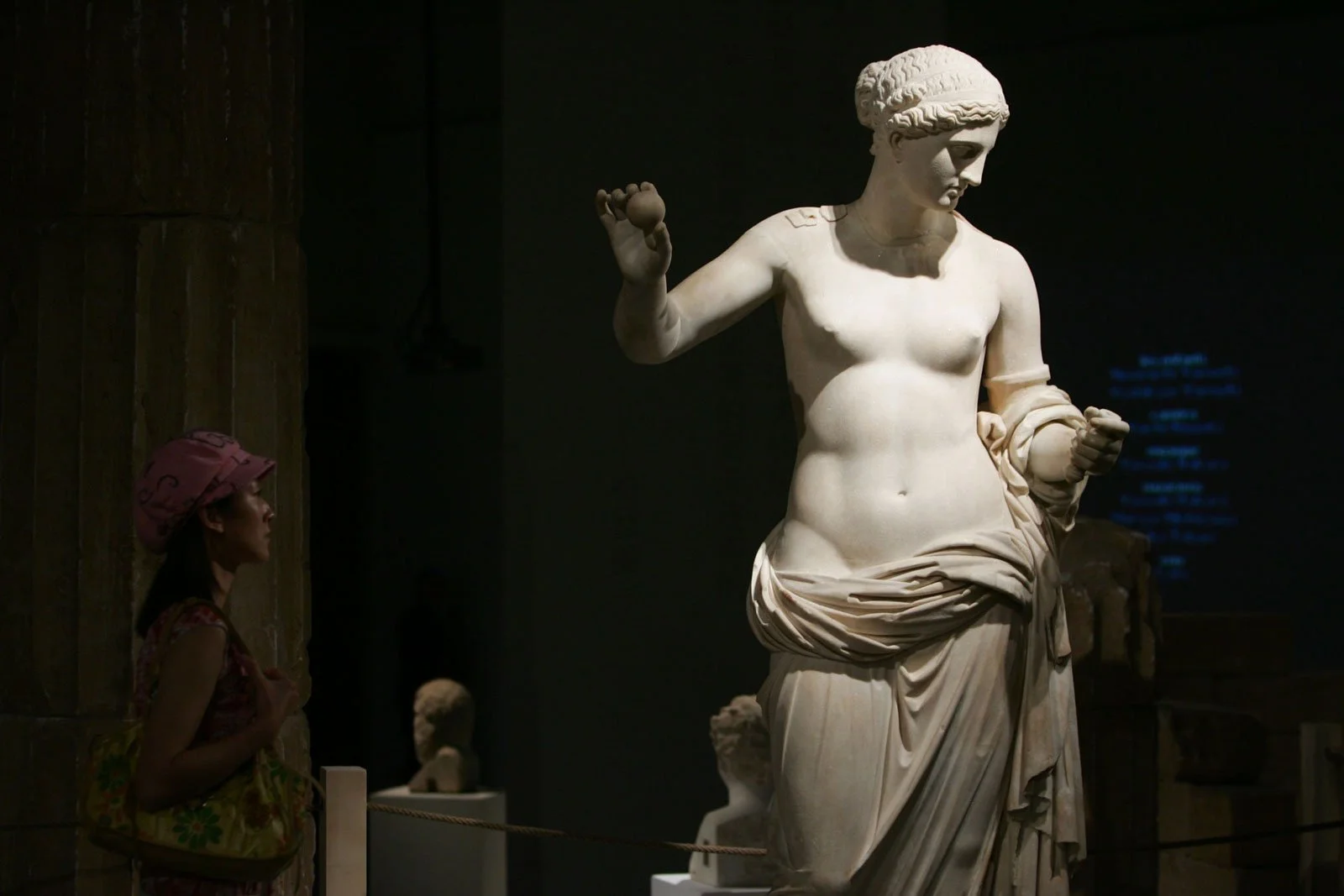
A Venus type like this shows why Greek models and Roman adaptations are so easy to mix up.
Greek and Roman sculpture get mixed together all the time, and honestly, that makes sense. Romans admired Greek art so deeply that they collected it, copied it, adapted it, and built much of their own sculptural world in conversation with it. So the short answer is not “they are opposites.” It is this: Greek sculpture usually shaped the visual ideals, while Roman sculpture often reused those ideals for different purposes.
In practical terms, Greek sculpture is usually more associated with gods, athletes, ideal beauty, and the exploration of the human body as a perfected form. Roman sculpture, by contrast, is often more associated with portraits, ancestors, emperors, political image-making, and the use of sculpture to communicate status, family memory, and public power.
That is the core difference in roman sculpture vs greek sculpture. Greek art gives Rome many of its models. Roman art then turns those models toward Roman needs. Once you see that, the confusion starts lifting.
The first big difference is purpose, not style
The easiest mistake is to start with the face or the drapery and ask which looks “more Greek” or “more Roman.” That can help later, but the most useful first question is simpler: what was the sculpture for?
Greek sculpture often lives in religious and civic worlds. It appears in sanctuaries, temples, tombs, and public spaces. A Greek statue might represent a god, an athlete, a hero, or an idealized human type. Even when it is based on a real person, it often leans toward a broader idea of beauty, virtue, or bodily perfection.
Roman sculpture often has a more specific social job. It can honor an emperor, preserve a family ancestor, mark a tomb, decorate a villa, or project power in a forum. Portraiture becomes especially important. Romans use sculpture not only to show beauty, but also to show lineage, authority, public office, experience, and political legitimacy.
That is why greek vs roman sculpture is not just a style question. It is also a function question. Greek sculpture often asks, “What is the ideal body or ideal presence?” Roman sculpture more often asks, “Who is this person, and what should this image communicate about their role?”
Greek sculpture usually leans more toward idealization
If you are trying to feel the Greek side of the comparison, the key word is idealization. That means the figure is shaped toward a perfected version rather than toward a purely individual likeness.
This is especially clear in classical sculpture. Greek artists were brilliant at making bodies feel natural, but they usually did not stop at raw observation. They edited the body into harmony. A chest is clarified. A face is calmed. Muscles are organized. The result feels more “right” than any one real person.
That does not mean Greek sculpture is all the same. The world of ancient Greek sculpture stretches from Archaic rigidity to Hellenistic drama. But even across those changes, Greek art often keeps returning to the human body as a field of beauty, balance, and expressive design.
This is one reason Greek sculpture had such an enormous afterlife. It offered later cultures a powerful visual language for ideal bodies, heroic nudity, divine presence, and harmonious form.
Roman sculpture often leans more toward portraiture and social identity
Roman sculpture can absolutely idealize too, especially in imperial images. But one of its strongest habits is portraiture.
A portrait is an image meant to represent a specific person. In Roman art, portraits do not always mean strict realism in the modern photographic sense, but they do often care more about individual identity than Greek sculpture usually does. Roman viewers wanted to recognize emperors, ancestors, politicians, and family members. Sculpture became one of the main ways to do that.
This is where the famous idea of verism enters. Verism means a style that emphasizes age, wrinkles, and other signs of lived experience. It is especially associated with Roman Republican portraiture. Not every Roman portrait is veristic, but the very existence of that sculptural habit tells us a lot. Roman art could value the face not because it was perfectly beautiful, but because it signaled seriousness, age, authority, and moral weight.
That creates a major difference from Greek idealism. Greek figures often ask us to admire the perfected human form. Roman portraits often ask us to read character, office, ancestry, and public role.
So if Greek sculpture often universalizes the body, Roman sculpture often particularizes the person.
Many “Greek” statues we know are actually Roman copies
This is one of the most important points in the whole topic.
A lot of famous Greek sculptural types survive today because Romans copied them. Many original Greek bronzes are lost. Bronze was valuable and often melted down. What remains instead are Roman marble copies of famous Greek works, made for villas, gardens, baths, and public spaces.
That means the history of roman vs greek statues is tangled from the start. Romans did not just imitate Greek art occasionally. They collected it obsessively. They transported Greek originals to Italy, commissioned copies, adapted famous types, and filled Roman spaces with Greek-looking sculpture.
This also explains why Greek art and Roman art are so easy to confuse in museums. You may be looking at a Roman marble copy of a lost Greek bronze original. The visual language may be Greek, but the surviving object may be Roman.
That is why Greek bronze statues matter so much in this comparison. Greek originals were often bronze, while Roman collectors and copyists frequently translated those forms into marble. In some cases, what we think of as “Greek sculpture” survives mostly through Roman taste.
So the difference is not “Greek equals original, Roman equals fake.” Roman copies are historically crucial. Without them, we would know far less about Greek art.
Roman sculpture borrows Greek style, but often uses it for Roman messages
This is the point that makes the whole comparison more honest.
Romans did not only copy Greek works because they lacked ideas of their own. They copied Greek forms because Greek art carried prestige. It suggested culture, education, refinement, and connection to a revered past. Roman patrons understood that very well.
So a Roman statue might use a Greek body type, a Greek pose, or a Greek drapery formula, but still serve a Roman purpose. An emperor might appear in an idealized body borrowed from Greek heroic tradition. A wealthy Roman might decorate a villa with mythological figures to project taste and status. A portrait might combine an individualized head with a generic idealized body.
This is where greek vs roman art becomes much more interesting than a simple checklist. Roman sculpture does not merely repeat Greek sculpture. It repurposes it. Greek forms become part of Roman self-presentation.
In other words, Greek sculpture often builds the language. Roman sculpture often becomes brilliantly strategic in how it uses that language.
Color and context matter for both more than museums suggest
One more correction helps here: neither Greek nor Roman sculpture was originally the pure white museum world we often imagine today.
Both Greek and Roman statues could be painted, and painted Greek statues remind us how misleading modern whiteness can be. Color could sharpen hair, eyes, lips, garments, armor, and attributes. Roman sculpture also used color and surface variation more than the stripped-down museum afterlife suggests.
Context mattered too. A sculpture in a Greek sanctuary does not mean the same thing as a sculpture in a Roman villa, forum, or tomb. Even when the forms overlap, the surrounding world changes the message.
That is why the difference between Greek and Roman sculpture is never just one visible trait. It is the combination of style, function, material, display, and cultural intention.
So what is the difference, really?
The cleanest answer is this:
Greek sculpture is usually more focused on ideal bodies, gods, heroes, and the artistic exploration of human form. Roman sculpture is usually more focused on portraits, political image-making, family memory, and the reuse of Greek forms for Roman social purposes.
But the deeper answer is even better: Roman sculpture grows out of deep admiration for Greek art. It does not replace Greek sculpture so much as absorb it, adapt it, and turn it toward a different world.
That is why the two traditions are best understood not as rivals, but as closely related visual systems with different priorities.

Conclusion
Greek and Roman sculpture are not the same, but they are also not cleanly separate. Greek sculpture usually gives us the idealizing language of gods, athletes, and perfected human form. Roman sculpture often takes that language and uses it for portraits, emperors, ancestors, and public identity. Many works we think of as “Greek” survive only because Roman collectors and copyists preserved their forms in marble.
So the real difference is not simply style. It is purpose. Greek sculpture often asks what the beautiful or heroic body can be. Roman sculpture more often asks what an image can do for memory, power, and status.
FAQ
What is the main difference between Greek and Roman sculpture?
Greek sculpture usually emphasizes ideal beauty and the perfected body, while Roman sculpture more often emphasizes portraiture, public identity, and political or family meaning.
Are Roman sculptures just copies of Greek sculptures?
Not all of them. Romans made many copies of Greek works, but they also created original portraits, historical reliefs, and sculptures designed for Roman social and political purposes.
Why do Greek and Roman statues look so similar?
Because Romans deeply admired Greek art and borrowed many Greek styles, poses, and subjects.
Was Greek sculpture more realistic than Roman sculpture?
Not usually in the portrait sense. Greek sculpture is often more idealized, while Roman portrait sculpture can be more individual and sometimes more realistic in showing age and facial detail.
Were famous Greek statues often made of bronze?
Yes. Many Greek originals were bronze, while Roman copies of them were often made in marble.
Were Greek and Roman statues originally painted?
Often yes. Both traditions used color more than modern museum displays usually suggest.
Sources and Further Reading
The Metropolitan Museum of Art — “Roman Copies of Greek Statues” (2002)
The Metropolitan Museum of Art — “The Technique of Bronze Statuary in Ancient Greece” (2003)
The Metropolitan Museum of Art — “Roman Portrait Sculpture: The Stylistic Cycle” (2003)
Encyclopaedia Britannica — “Western sculpture: Ancient Greek” (2026)
You may also like