Roman Amphitheatre: How Rome Built for Mass Spectacle
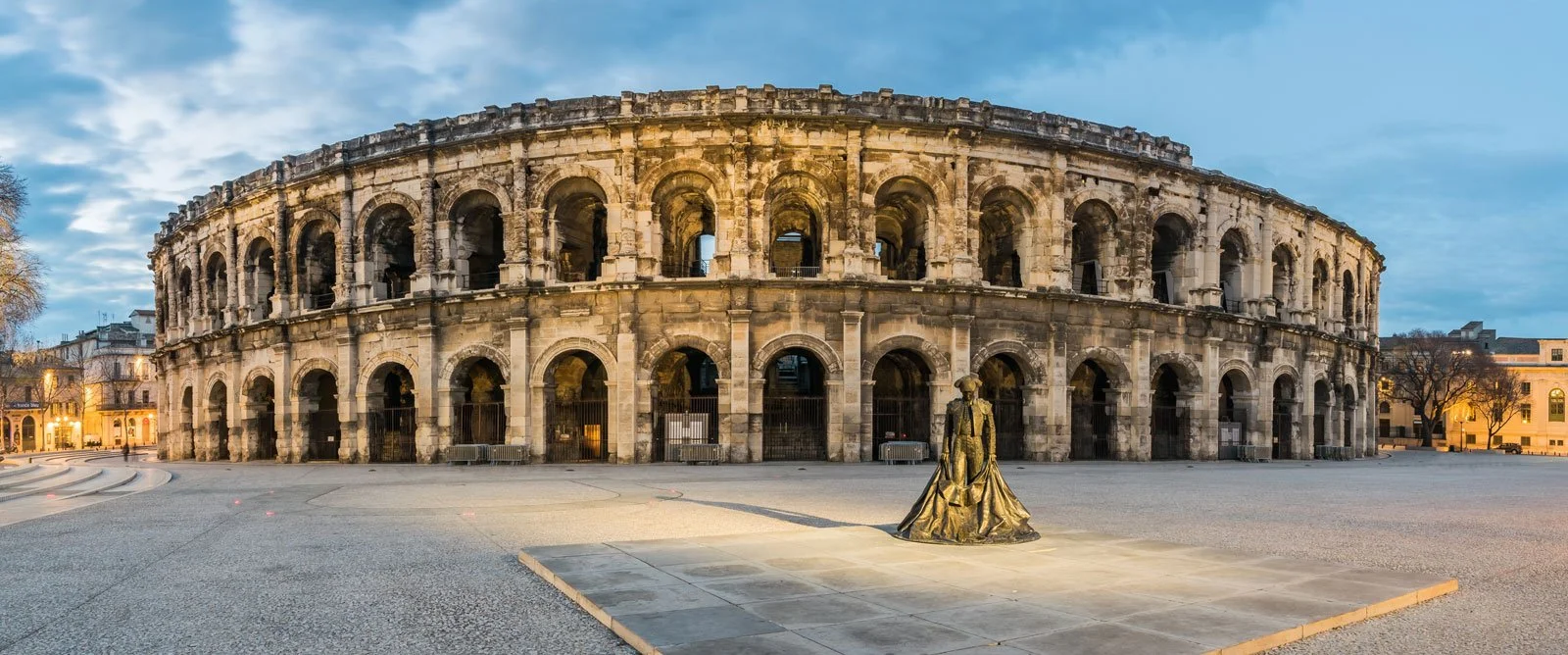
This is a good image for the Roman amphitheatre as a type, because the outer shell already shows crowd scale and repeated structure.
A Roman amphitheatre was not just a place for entertainment. It was a carefully engineered container for crowds, spectacle, and control. That is the easiest way to understand the type. Before the Colosseum becomes a famous monument, the amphitheatre already exists as a very clear Roman solution to a very Roman problem: how do you gather thousands of people around a violent, highly staged event and make the whole thing work?
That question shaped the building from the ground up. The arena had to stay visible. The crowd had to be seated and sorted. Entrances had to absorb and release large numbers of spectators. The structure had to support heavy seating banks and repeated circulation routes. In other words, the Roman amphitheatre was not only about what happened in the center. It was about everything around the center.
This is why the type matters so much in architectural history. It shows Rome building not just for form, but for mass experience. The amphitheatre is one of the clearest examples of Roman architecture as engineering, planning, and social organization all at once.
In simple terms: A Roman amphitheatre was an oval or circular open-air venue with tiered seating around a central arena, built to manage large crowds and give as many spectators as possible a clear view of the action.
What is a Roman amphitheatre?
A Roman amphitheatre is an open-air building with a central arena surrounded by rising tiers of seats. The key feature is that the audience wraps around the action almost completely. That is what distinguishes the amphitheatre most clearly from the theatre.
The word itself helps. “Amphi” means “on both sides” or “around,” and “theatre” points to a place of viewing. In simple terms, an amphitheatre is a viewing structure that surrounds the event rather than facing it from one side only.
This surrounding form matters because it changes the whole experience. In a theatre, the audience looks toward a stage. In an amphitheatre, the audience looks inward toward an arena. That arena becomes the center of the building’s logic. Seating, entrances, barriers, and circulation are all organized around it.
This is why the amphitheatre is such a useful building type to study inside Roman architecture. It makes Roman priorities very visible. The building is practical, repetitive, and highly organized. It is less about one ceremonial facade and more about how the whole structure works under pressure.
How was it different from theatres?
The difference between a theatre and an amphitheatre is simple, but very important. A Roman theatre is usually semicircular. It faces a stage. An amphitheatre is usually oval or rounder in form and surrounds a central arena.
That geometric difference changes everything. A theatre is designed for drama, performance, speech, and staged presentation in one main direction. A Roman amphitheatre is designed for events viewed from all around. That means the building must work more like a bowl or ring than like a frontal hall.
This is why it helps to compare the type directly with the Roman theatre and with Roman theatre vs amphitheatre. The theatre is about stage and audience facing one another. The amphitheatre is about enclosing action within a continuous field of spectators.
The amphitheatre also differs from the circus, such as the Circus Maximus. A circus is long and rectangular with a central spine, built mainly for races. The amphitheatre is compact and centralized, built for combat, hunting spectacles, executions, and other events that required close visual focus around one arena.
So the Roman amphitheatre is not just “a big ancient stadium.” It is a very specific response to a very specific kind of spectacle.
Why was the arena central?
The arena was the heart of the amphitheatre, both physically and conceptually. It was the floor where the spectacles happened, usually covered in sand. In fact, the word “arena” comes from the Latin word for sand.
That detail matters because the arena was not just an empty open space. It was a controlled performance ground. Everything in the building pointed toward it. The seating rose around it. The barriers protected the crowd from what happened inside it. The entrances fed participants and spectators into a larger system centered on that floor.
This centrality explains why amphitheatres feel so intense. The whole building gathers attention inward. There is no broad scenic background in the way a theatre has a stage building. There is no long racecourse as in a circus. There is only the arena and the concentrated energy around it.
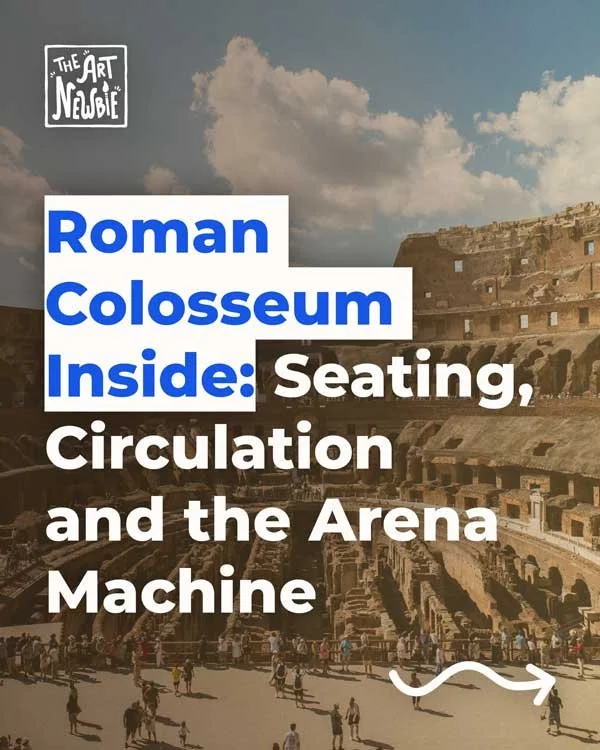
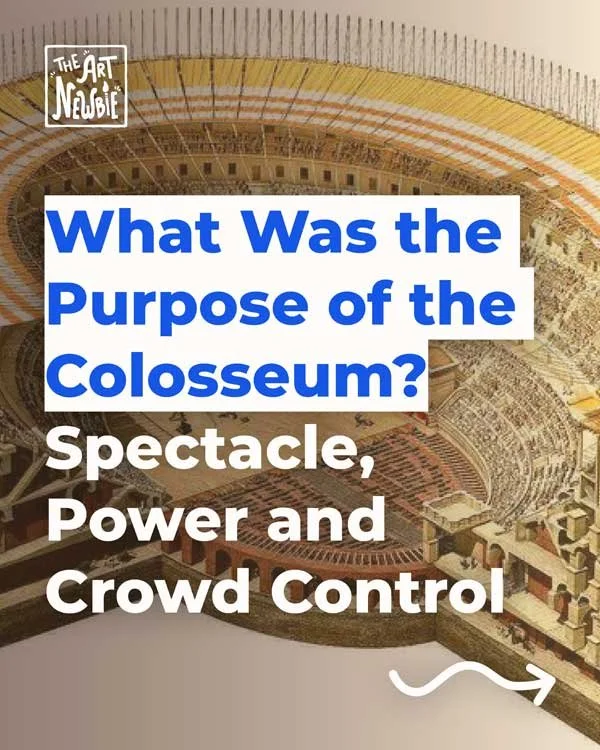
That is one reason the Colosseum became so iconic. It is the most famous Roman amphitheatre because it turns this building type into a maximum expression of itself. But before focusing only on that monument, it helps to understand the type first. Then later, texts like what was the purpose of the Colosseum, Roman Colosseum inside, Colosseum arena floor, and hypogeum Colosseum make much more sense.
How did amphitheatres manage crowds?
This is where the Roman amphitheatre becomes especially impressive. It was not only a place to watch. It was a machine for moving people.
A large amphitheatre had to admit thousands of spectators, direct them to the right seating zones, and empty again without total chaos. Roman builders solved that through a combination of stairways, corridors, radial passages, ring-shaped circulation routes, and numbered or organized entrances. The building was planned so that crowds could be divided and distributed efficiently.
This is one of the reasons Roman amphitheatres feel so modern. They are deeply concerned with circulation, meaning how bodies move through architecture. The question is not only “Can people see?” but also “Can people arrive, find their place, and leave?”
Social hierarchy mattered here too. Seating was not neutral. Different groups sat in different areas according to status, gender, and civic role. The amphitheatre therefore organized the crowd visually and socially as well as physically. It staged Roman society while it staged Roman spectacle.
That combination of crowd control and visibility is one of the type’s defining achievements. A Roman amphitheatre is not only an arena with seats added around it. It is a highly planned system for spectatorship.
Why did arches matter so much?
The Roman amphitheatre depended heavily on the Roman gift for structural repetition. Large amphitheatres often used arches, vaults, and stacked support systems to carry seating and circulation above one another.
This is why the type belongs so closely to Roman engineering. Earlier or smaller amphitheatres could partly rely on the natural slope of the land, but the most ambitious Roman examples became increasingly freestanding. Once that happened, the building needed a self-supporting structure. This is where the Roman mastery of arches and vaulted construction became decisive.
A repeated sequence of arches could hold corridors. Corridors could support seating. Seating could rise higher and absorb more people. In that sense, the amphitheatre is one of the clearest buildings in which structural logic becomes social architecture. You are not just seeing a wall or facade. You are seeing a structure designed to support mass gathering.
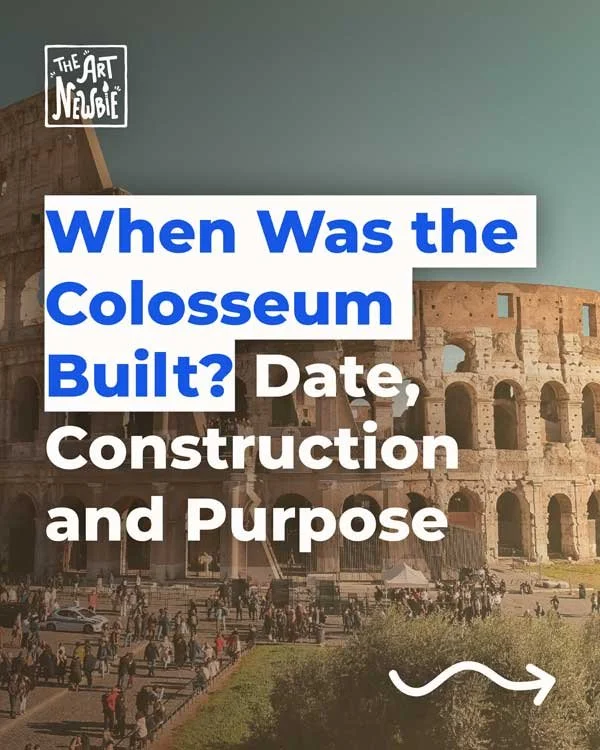
That is why the Colosseum is so important historically. It takes the amphitheatre type and gives it a monumental freestanding form of extraordinary complexity. If you want the chronology of that building itself, when was the Colosseum built is the next step.
What happened below the seats?
One of the most important things about a Roman amphitheatre is that much of its intelligence is hidden.
Under the seating were corridors, stairs, vaulted passageways, and service areas. In more advanced examples, especially the Colosseum, the arena floor itself could also conceal a complicated substructure. This underground system, later known as the hypogeum, housed cages, machinery, storage, and movement routes for performers, animals, and stage effects.
That hidden layer changes how we understand the building. The amphitheatre is not just an open bowl. It is a multi-level system with visible and invisible parts. Spectators see the arena, but beneath that visible surface lies another world of preparation, control, and logistics.
This is one of the reasons the Roman amphitheatre is such a remarkable building type. It combines open visibility above with intense technical organization below. In architectural terms, it is both simple and complex at once.
Why did Rome build so many?
Rome built amphitheatres because spectacle was not a minor side activity. It was deeply tied to public life, political display, civic prestige, and imperial identity. Amphitheatres gave cities a permanent place for those events.
They also spread because the building type worked very well. Once the Romans had a successful model, it could be adapted to different places across the empire. Some amphitheatres were relatively modest. Others were huge and monumental. But the underlying logic remained clear: central arena, surrounding seating, strong circulation, and a structure capable of handling large crowds.
This is why amphitheatres appear across the Roman world and not only in Rome itself. They became one of the most recognizable signs of Roman urban culture. A city with an amphitheatre had not just a place of entertainment, but a building that expressed Roman civic order and Roman spectacle culture.
Why does the type matter today?
The Roman amphitheatre still matters because it shows architecture working at the scale of mass spectatorship. It forces us to look beyond facades and ask how a building handles bodies, views, entrances, exits, hierarchy, and performance.
It also matters because it sits at a very revealing point between architecture and politics. An amphitheatre is never just a neutral container. It organizes how violence, performance, and public life are seen. It turns spectatorship into architecture.
For beginners, this building type is especially useful because it helps make Rome legible. The amphitheatre is not complicated in the abstract. Its purpose is immediately understandable. Yet the more closely you study it, the more you see how much Roman intelligence is packed into it: engineering, circulation, structure, social order, and spectacle all held together in one type.
That is why the Colosseum should be approached not only as a famous monument, but as the grandest version of a much larger Roman idea.

Conclusion
A Roman amphitheatre was built for more than entertainment. It was built to hold crowds, control movement, frame spectacle, and turn public viewing into a carefully engineered experience. The central arena was only one part of the story. Around it stood a whole architecture of seating, circulation, and structural support.
That is why the type matters so much. The Roman amphitheatre shows Rome building not only for image, but for mass experience at scale.
FAQ
What is a Roman amphitheatre?
A Roman amphitheatre is an open-air building with a central arena surrounded by tiered seating, designed for spectators to watch events from all around.
What is the difference between a Roman theatre and amphitheatre?
A Roman theatre is usually semicircular and faces a stage. A Roman amphitheatre is usually oval and surrounds a central arena.
What was the Roman amphitheatre used for?
It was used for gladiatorial combats, animal hunts, executions, and other public spectacles designed for large audiences.
Why is the Colosseum so important?
The Colosseum is the most famous Roman amphitheatre because it is the largest and most elaborate surviving example of the type.
What is the arena in an amphitheatre?
The arena is the central performance floor where the spectacles took place, usually covered in sand.
Did Roman amphitheatres have underground spaces?
Some did, especially more advanced examples like the Colosseum, where underground areas helped manage animals, performers, machinery, and stage effects.
Sources and Further Reading
You may also like