Where Is Venus de Milo? Museum, Discovery, and What Happened to It
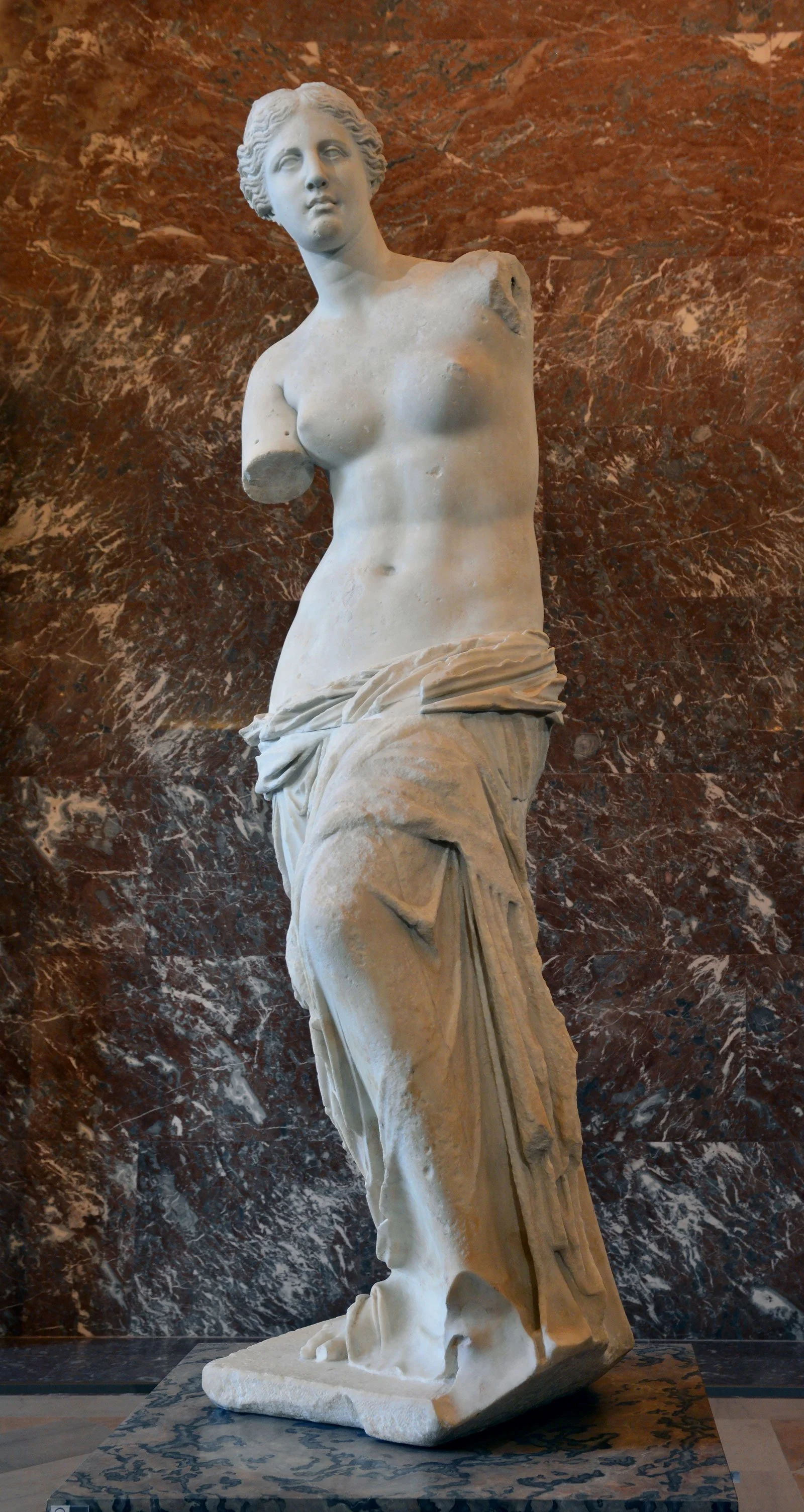
This front view keeps the answer simple: the Venus de Milo is now in the Louvre.
The short answer is simple: the Venus de Milo is in the Louvre Museum in Paris. That is where the statue is now, and it has been in the Louvre since 1821, shortly after it was found on the Greek island of Melos, now usually called Milos.
But the reason people keep asking where it is is not only about the museum. It is also because the statue’s story is easy to lose behind its fame. The Venus de Milo is one of those artworks that feels almost mythic, so the real journey can get blurred: where it was found, how it reached France, why it has no arms, and why even basic questions like “who sculpted it?” still come with some uncertainty.
So this guide gives the clean version. The Venus de Milo was discovered on Melos in 1820, brought to France soon after, and is now in the Louvre. It is usually identified as Aphrodite, it belongs to the Hellenistic world, and part of its mystery comes from the fact that it reached modern fame in an already damaged state.
The Venus de Milo is now in the Louvre, and that is the most direct answer
If you are asking where is Venus de Milo, the answer is: the Louvre Museum in Paris, France.
That is its current home, and it has been there for more than two centuries. The statue was presented to King Louis XVIII after its discovery and then entered the Louvre in 1821. Since then, it has become one of the museum’s most famous works, alongside other major icons of ancient and European art.
This matters because the statue’s fame can make it feel untethered, as if it belongs to the category of “masterpieces” more than to a real place. But it does have a very specific museum history. It is not still on the island where it was found, and it is not in Greece today. Its home is the Louvre.
That museum setting has shaped the way generations of people have understood the sculpture. The Venus de Milo is now part of the story of ancient art as it has been displayed, admired, and interpreted in modern Europe. In other words, where it is now is not just a location. It is part of why the statue became so globally famous.
It was found on Melos in 1820, and the island name explains its title
The “Milo” in Venus de Milo comes from Melos, the Greek island where the statue was discovered. Today the island is more commonly called Milos, and if you picture it on an ancient Greek map, you can see that it belongs to the Aegean island world rather than to mainland Greece.
The statue was found there in 1820, in pieces. That point matters. The Venus de Milo did not emerge from the ground as one complete, untouched masterpiece. It was already fragmented when it was discovered, and that condition has shaped almost every later question about it.
This is also why the statue feels both familiar and mysterious at the same time. We know where it was found. We know roughly when it was made. We know it became famous very quickly after entering the Louvre. But because it was already incomplete, key details about its original appearance remain uncertain.
So even the name “Venus de Milo” holds two layers at once. It tells you where the sculpture was found, but it also reminds you that the statue we know so well is not the fully intact original ancient viewers once saw.
The statue reached France very quickly, and that fast transfer changed its story
One reason the Venus de Milo became so famous so quickly is that its journey from discovery to museum was unusually fast.
After being found on Melos in 1820, the sculpture was acquired by the Marquis de Rivière, the French ambassador to Greece at the time. He then presented it to King Louis XVIII, who donated it to the Louvre in 1821. So in barely a year, the statue moved from an island find in the Aegean to one of Europe’s most powerful museums.
That speed matters historically. The early 19th century was a moment when museums, antiquities, and national prestige were tightly connected. The Louvre had recently lost important works in the aftermath of Napoleon’s fall, and the Venus de Milo arrived at a moment when a major ancient masterpiece was especially welcome.
In other words, what happened to it after discovery is not a quiet museum transfer story. It is part of the politics of collecting, prestige, and cultural competition in modern Europe.
That history also helps explain why the statue became such a symbol so fast. It was not only admired as a beautiful ancient work. It was also received as a major museum treasure at exactly the right moment for the Louvre to turn it into one of its defining masterpieces.
Its missing arms are one of the biggest reasons the statue feels mysterious
When people think about the Venus de Milo, they often think about the missing arms almost as much as the body itself. That is because the damage changes how we read the sculpture.
The statue’s arms were never restored in the final museum version, and that was a deliberate decision. Early on, there were proposals to reconstruct them, but these were abandoned. The concern was that adding new arms would change the work too much and force one interpretation onto a figure whose original pose remained uncertain.
That uncertainty is still part of the statue’s fascination.
A hand holding an apple was reportedly found near the sculpture, and that object helped support the identification of the figure as Aphrodite, since the apple is one of her attributes. But other reconstructions have suggested that the figure may once have held a shield or engaged in a different gesture altogether. Since the arms are gone, the pose remains partly hypothetical.
This is where the venus de milo description becomes more interesting than a simple visual summary. Yes, she is a marble goddess figure with a bare torso and drapery wrapped around the lower body. But she is also a damaged sculpture whose missing parts actively shape its meaning. We are always seeing both the statue and the loss.
That is part of why the work remains so compelling. The missing arms do not only remove information. They create a space for interpretation.
The statue is usually identified as Aphrodite, but even that was debated
Today the Venus de Milo is usually understood as Aphrodite, the Greek goddess of love and beauty, known to the Romans as Venus. That is why she is so often placed alongside the long history of female Greek statues.
But that identification was not always treated as automatic.
Because the arms are missing, the figure’s original attributes are missing too. And in Greek sculpture, those attributes often help identify the god or goddess being shown. Without them, certainty becomes harder. At one point, some people even suggested that the statue might represent Amphitrite, a sea goddess especially associated with Melos.
The balance of interpretation eventually tipped toward Aphrodite, partly because of the figure’s half-draped body and partly because of the apple found near the statue. But the key point is that the statue’s damage affected even its identity.
So when we ask what happened to the Venus de Milo, one answer is: it survived, but not completely. And that incompleteness changed the way later viewers understood it from the very start.
Who sculpted Venus de Milo? The usual answer exists, but it is not perfectly secure
The usual answer to who sculpted Venus de Milo is Alexandros of Antioch on the Maeander. That attribution comes from an inscription reportedly found near the statue.
But this is one of those cases where it helps to stay careful. The inscription is lost, and scholars have debated how securely it should be connected to the sculpture itself. So while Alexandros is the name most often given, it is more accurate to say the work is commonly attributed to him rather than absolutely proven.
That uncertainty also matters for dating. The Venus de Milo is usually placed around 150 BCE, which makes it a Hellenistic work rather than a Classical one. That can surprise beginners, because the sculpture often feels calmer than the most dramatic images people associate with the Hellenistic age. But stylistically that is part of what makes it so interesting. It combines a strong sense of ideal beauty with a more complex bodily twist and drapery treatment typical of later Greek art.
So the cleanest answer is this: the Venus de Milo is usually attributed to Alexandros of Antioch and generally dated to the mid-2nd century BCE, but some details of authorship and interpretation remain debated.

Conclusion
The Venus de Milo is now in the Louvre Museum in Paris. It was found on the island of Melos in 1820, transferred to France very soon after, and entered the Louvre in 1821. It became world-famous not only because of its beauty, but also because of its journey, its missing arms, and the uncertainty that still surrounds parts of its original appearance.
That is really what happened to it. It survived from the ancient Greek world into the modern museum world, but not intact. And the damage, the movement, and the mystery have all become part of the statue’s identity.
FAQ
Where is the Venus de Milo right now?
It is in the Louvre Museum in Paris, France.
Where was the Venus de Milo found?
It was found on the Greek island of Melos, now usually called Milos, in 1820.
Why is it called Venus de Milo?
“Venus” is the Roman name for Aphrodite, and “de Milo” refers to Melos or Milos, the island where the statue was discovered.
What happened to the Venus de Milo’s arms?
They were already missing when the statue was found. Their original position is still uncertain, and the Louvre chose not to restore them.
Who sculpted the Venus de Milo?
It is commonly attributed to Alexandros of Antioch on the Maeander, but the attribution is not completely secure.
Is the Venus de Milo Greek or Roman?
It is a Greek statue from the Hellenistic period, not a Roman work.
Sources and Further Reading
Musée du Louvre — “Ideal Greek Beauty: Venus de Milo and the Galerie des Antiques” (n.d.). (Le Louvre)
Musée du Louvre — “A welcome newcomer to the Louvre” (n.d.). (Le Louvre)
Musée du Louvre Collections — “Vénus de Milo” (n.d.). (Collezioni del Louvre)
Encyclopaedia Britannica — “Venus de Milo” (2026). (Encyclopedia Britannica)
Rachel Kousser — “Creating the Past: The Vénus de Milo and the Hellenistic Reception of Classical Greece” (2005). (gc.cuny.edu)
You may also like