When Was the Colosseum Built? Date, Construction and Purpose
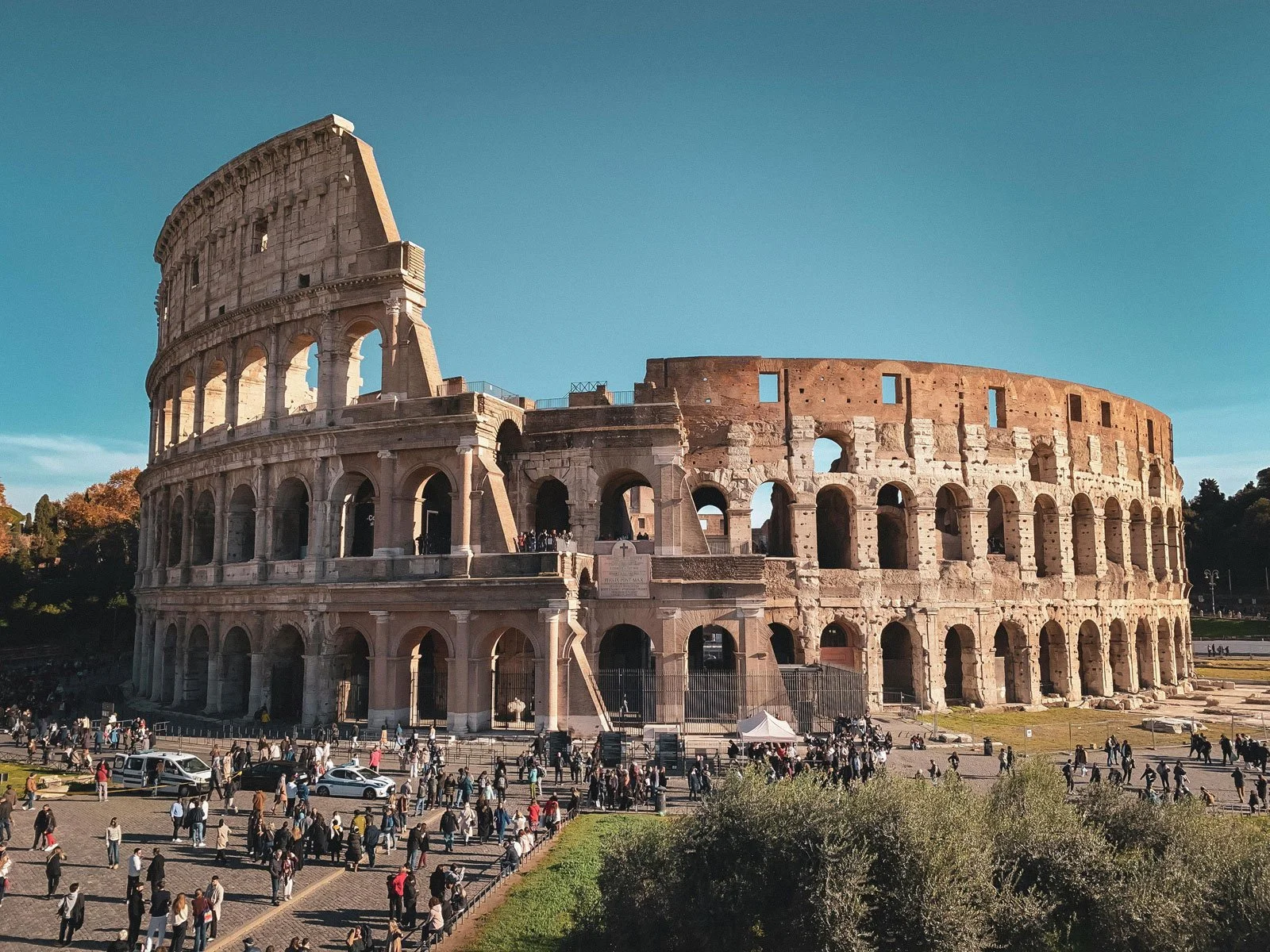
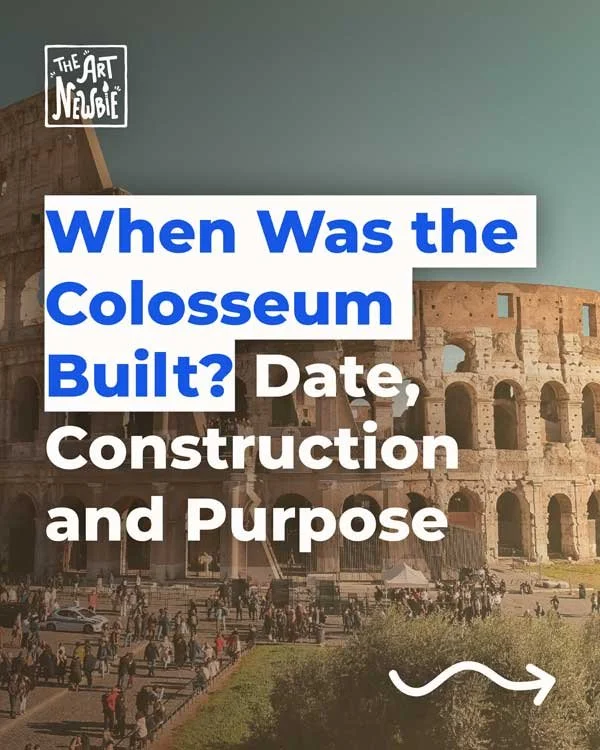
The Colosseum’s exterior already tells part of its story: huge, ordered, and built for mass spectacle from the start.
The Colosseum was built in the late 1st century CE. Construction began under Emperor Vespasian, probably around 70–72 CE, and the amphitheatre was opened in 80 CE under Titus. Later additions and modifications were made under Domitian. That is the essential answer.
But the more interesting point is why those dates matter. The Colosseum was not built at a random moment and it was not just another entertainment building. It belonged to the new Flavian dynasty, and its construction sent a strong political message. A huge public amphitheatre was raised on land that had been tied to Nero’s private palace complex. In other words, the building was both an arena and a statement: imperial power was being presented again as something public, visible, and shared.
That is why the Colosseum matters so much in the history of Roman architecture. It is not only famous because it is large. It is famous because it turns structure, crowd management, spectacle, and politics into one extraordinarily legible building.
Quick answer: The Colosseum was begun under Vespasian around 70–72 CE, inaugurated by Titus in 80 CE, and further modified under Domitian. It was built as a massive public amphitheatre for spectacles and as a political monument of Flavian Rome.
When was the Colosseum built?
The Colosseum was begun during the reign of Vespasian, the founder of the Flavian dynasty, after the political instability of 69 CE. Most standard accounts place the start of construction between 70 and 72 CE. The building was then dedicated or opened in 80 CE under his son Titus.
That opening date is especially famous because it marks the moment when the amphitheatre became a functioning public venue. Ancient accounts describe inauguration games of exceptional scale, which immediately established the building’s role as a place of mass spectacle.
The story does not end there, though. The Colosseum was not completed in one single frozen form. Domitian, Titus’s brother and successor, made further interventions soon after, continuing the building’s development. So the safest way to think about the Colosseum is this: the main structure belongs to Vespasian and Titus, but the monument we study historically is also shaped by later Flavian finishing and modification.
Why was it built then?
The timing mattered because the Colosseum belonged to a moment of political reset.
After Nero’s reign, Rome needed more than a new emperor. It needed a new public image of power. Nero’s Domus Aurea, or Golden House, had claimed a huge part of central Rome for imperial luxury, including an artificial lake in the valley where the Colosseum now stands. The Flavians reversed that message in a very visible way. They took a site associated with private imperial excess and turned it into a public building for the people.
That political shift is one of the most important things to understand about the Colosseum. It was not simply built because Rome enjoyed spectacles, though that is true. It was also built because architecture could make a political argument without words.
This is one reason the Colosseum has such symbolic force. Even before you enter it, the building already says something about Rome, dynasty, and public life.
Where was the Colosseum built?
The Colosseum was built in the valley between the Palatine, Esquiline, and Caelian hills, just east of the Roman Forum. That location is crucial.
Before the amphitheatre, this zone had been transformed by Nero’s palace complex. One of the most famous features of that complex was an artificial lake. Building the Colosseum there meant filling in that lake and reclaiming the space for a very different purpose.
This was a brilliant urban move. The new amphitheatre stood close to the civic core of Rome rather than on the distant edge of the city. It was not hidden away. It became part of a larger monumental landscape that visitors could still connect mentally with the Forum, later imperial buildings, and nearby routes of movement.
It also helps explain why the Colosseum feels so embedded in Rome’s identity. It was not just dropped into empty land. It was inserted into a highly charged urban site.
How was the Colosseum constructed?
The Colosseum was built as a huge freestanding amphitheatre, not as a seating bowl cut into a hillside. That fact alone tells you how ambitious it was. Roman builders had to create the entire structural system themselves: foundations, outer walls, arches, vaults, stairways, corridors, and seating support.
The building combines travertine, tufa, brick, and concrete in a layered Roman way. The visible exterior is famous for its repeated arcades and superimposed orders, but the real achievement lies just as much inside: a network of passages and support systems that could carry massive crowds and distribute them efficiently.
This is why the Colosseum makes the idea of the Roman amphitheatre so clear. The building is not only a shell around an arena. It is a machine for movement, viewing, and controlled access. The structure supports the seating. The passages sort the crowd. The stairs and corridors make scale manageable.
That combination of engineering and spectacle is one of the reasons the Colosseum still feels modern.
What was the Colosseum built for?
The Colosseum was built for public spectacles. These included gladiatorial combats, animal hunts, staged performances, and other events designed for large crowds. It was, in the most direct sense, a building for viewing violence and performance at mass scale.
But that is only part of the answer. The Colosseum was also built to stage imperial generosity and public order. Emperors could sponsor games, fill the building with spectators, and present themselves as providers of entertainment, stability, and civic magnificence.
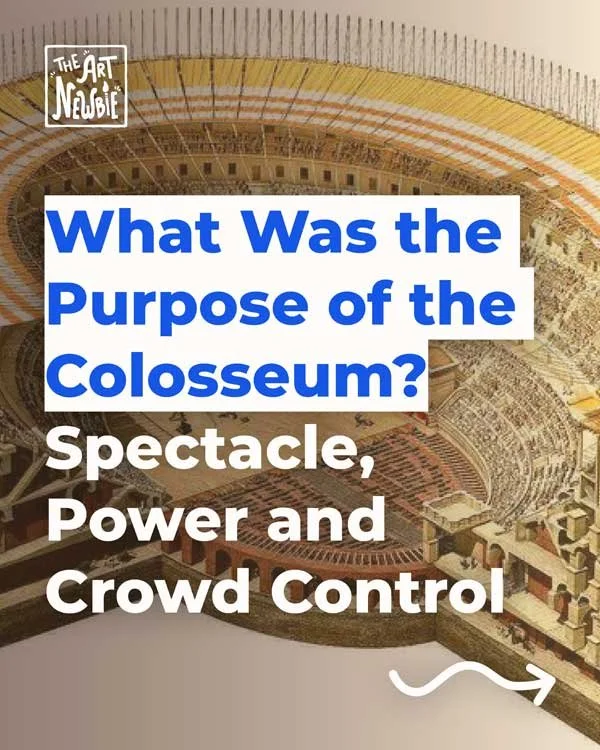
That is why the question what was the purpose of the Colosseum opens into something bigger than entertainment alone. The building’s purpose was social and political as well as practical. It gathered the people of Rome into one of the most tightly organized spectator environments the ancient world had ever seen.
What happened inside the building?
Inside the Colosseum, architecture and spectacle were tightly linked. The arena floor was the center of action, but everything around it was designed to support visibility, circulation, and event management.
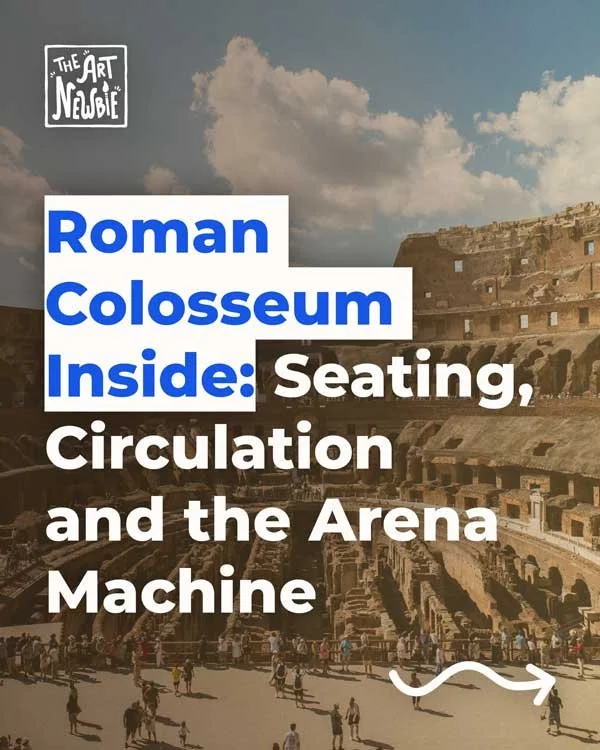
Spectators entered through a highly organized system of stairways and corridors. Seating was arranged by social rank. The building sorted people as effectively as it seated them. That makes the interior history especially important, which is why it helps to look further at Roman Colosseum inside.
The arena itself was not the whole story either. Beneath it, later phases created underground service areas and mechanisms that made the spectacles more complex. Those features are best followed in Colosseum arena floor and hypogeum Colosseum. Together, they show that the Colosseum was not just a place to watch events. It was an elaborate event-producing structure.
Why does the Colosseum look broken now?
The Colosseum looks broken because it is the result of centuries of damage, reuse, and loss. Earthquakes caused major collapses, especially on the outer ring. Later periods also treated the monument as a source of building material, removing stone and metal clamps.
That long afterlife matters because it changes how we see the building. Today, the Colosseum looks like a ruin, but originally it was a complete architectural system with cladding, seating, surfaces, and moving parts that are now mostly gone. The question why is the Colosseum broken is really a question about time, reuse, and the survival of monuments.
That ruined state also affects how we read nearby monuments. The Arch of Constantine, standing close by, belongs to a later phase of imperial Rome and now shares the same archaeological landscape. Together they remind us that central Rome is not one single moment. It is a layered field of changing monuments and meanings.
Why does its date still matter?
The date of the Colosseum matters because it places the building in a very precise historical moment: Flavian Rome after Nero. Once you know that, the monument stops being just a famous ruin and becomes easier to read.
Its date explains its politics. Its construction explains its architectural ambition. Its opening explains its role in Roman public life. And its later changes remind us that even the most iconic monuments are not static.
That is why the Colosseum also belongs to the larger story of Roman ruins. It is not only a preserved object from antiquity. It is a building with a biography: begun, opened, modified, damaged, reused, and reinterpreted over time.
Conclusion
The Colosseum was begun under Vespasian around 70–72 CE, opened by Titus in 80 CE, and further modified under Domitian. Those dates are the essential answer, but the building’s deeper meaning lies in what those dates represent: a new Flavian monument, built on a politically charged site, designed for mass spectacle and imperial display.
That is why the Colosseum remains so important. It is not just one of the most famous buildings of ancient Rome. It is one of the clearest examples of how architecture, politics, and public life could be fused into a single monumental type.
FAQ
When was the Colosseum built?
Construction began under Vespasian around 70–72 CE, and the building was inaugurated in 80 CE under Titus.
Who finished the Colosseum?
Titus opened the Colosseum in 80 CE, and Domitian later made additional modifications to the building.
Why was the Colosseum built?
It was built as a public amphitheatre for spectacles, but also as a political statement of the new Flavian dynasty.
Was the Colosseum built on Nero’s palace site?
Yes. It was built in the valley where Nero’s Domus Aurea had included an artificial lake.
What was the Colosseum used for?
It was used for gladiatorial games, animal hunts, and other large public spectacles.
Why is the Colosseum so important in architecture?
It is the most famous Roman amphitheatre and one of the clearest examples of Roman crowd engineering, structural ambition, and political monumentality.
Sources and Further Reading
You may also like