Roman Colosseum Inside: Seating, Circulation and the Arena Machine
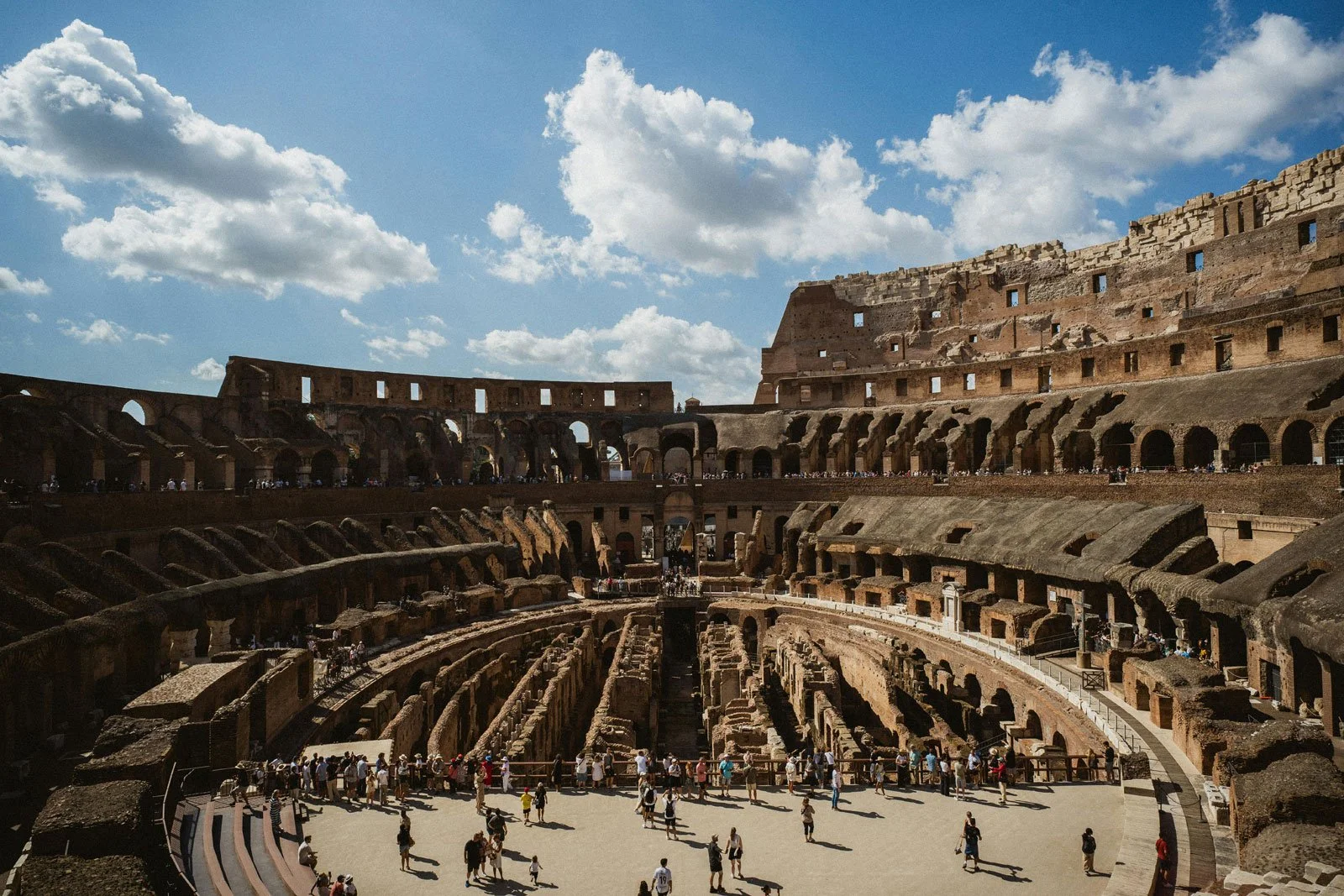
Looking inside the Colosseum makes the building legible: seating, circulation, service space, and the arena system all appear at once.
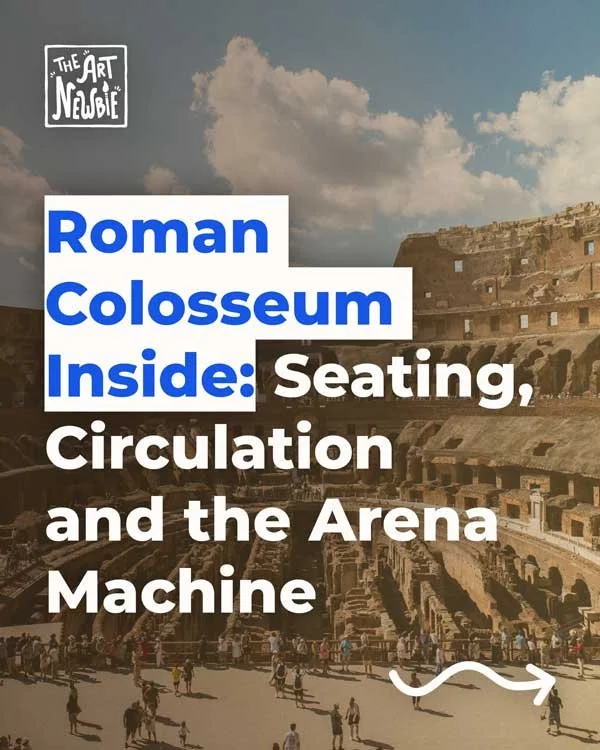
Looking inside the Colosseum is one of the best ways to understand why Roman architecture could be so effective. From the outside, the building is already monumental. But inside, it becomes legible as a carefully organized machine: seating tiers, ring corridors, stair systems, controlled entrances, service zones, and the arena at the center. The interior was not improvised around spectacle. It was designed for it.
That is why the Colosseum interior matters so much. It shows how Roman builders handled two things at once: very large crowds and very strict hierarchy. Tens of thousands of people could enter, find their places, watch the games, and leave again, all within a building that clearly separated ranks, routes, and functions. If you want the broader date and historical frame, start with when the Colosseum was built. If you want the big social question behind it, that connects directly to what was the purpose of the Colosseum.
What was inside the Colosseum?
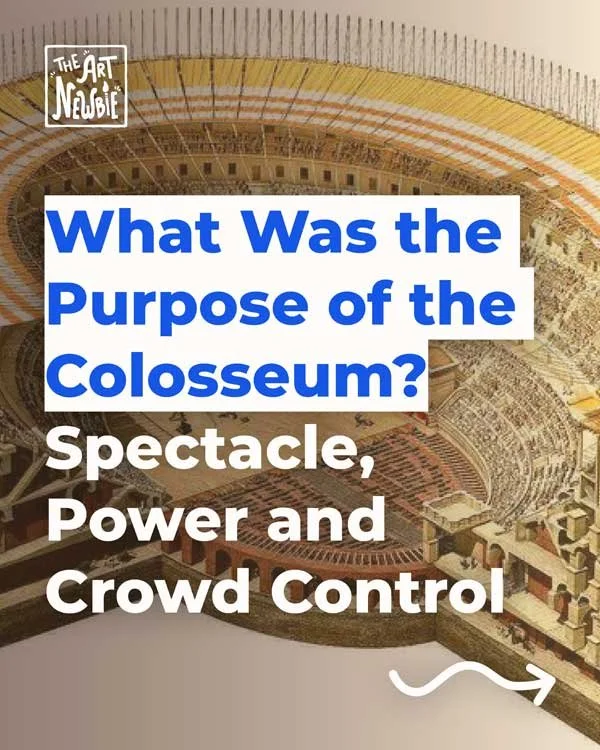
Inside, the Colosseum was organized around a simple but powerful structure. At the center was the arena, the performance space where hunts, executions, and gladiatorial combats took place. Around it ran the podium, the low zone closest to the action, reserved for the highest ranks. Above that rose the cavea, which simply means the seating area of an amphitheater. Wrapped around those seating tiers was a dense system of corridors, passageways, and stairs built into the thick outer shell.
Quick layout
The Colosseum interior worked in rings and layers: arena in the middle, elite seating close to it, higher seating further back, and circulation routes woven through the structure behind.
That layout matters because the building was not only about visibility. It was also about sorting people. The Colosseum was a Roman amphitheatre, a type designed for mass spectatorship all around a central performance space. Unlike a theater, which faces one direction, an amphitheater encloses the action. That meant the inside had to work as a full circular system, not just a frontal audience hall.
Today, when visitors look down into the exposed center, they often imagine that they are seeing the arena itself. In reality, the view is misleading. What is visible now is largely the stripped substructure beneath the vanished arena floor. The original interior would have looked much more complete, more enclosed, and more controlled than the ruin we see today.
How was the seating arranged?
The seating layout followed a clear social hierarchy. The closest seats belonged to the emperor, magistrates, priests, senators, and other elite spectators. The lower levels were the most prestigious because they offered the best view and the easiest access. As you moved upward, status fell. Higher tiers were assigned to broader social groups, and the uppermost places were the least desirable.
This is one of the most revealing parts of the parts of the Colosseum. The building did not simply hold a crowd. It displayed Roman society in architectural form. Rank was made visible in stone. Where you sat showed who you were.
The seating itself was divided into tiers and wedges. The wedge-shaped sections are often called cunei, meaning pie-slice blocks of seating separated by stairs. Those stairs helped people reach their places without forcing everyone through the same route. Broad horizontal landings also broke up the seating bands and helped circulation continue around the building.
The highest spectators were furthest from the arena, and the uppermost seating was lighter and less luxurious than the marble seats below. In other words, the interior was not a neutral bowl. It was a graded landscape of status.
This is also why the Colosseum feels so Roman. It combines efficiency with hierarchy. The crowd was large, but not socially mixed at random. The architecture kept order by translating social difference into levels, sectors, and access points.
How did circulation work so well?
One of the most impressive things about the Colosseum layout is its circulation system. The building could process an enormous number of spectators because its interior was planned through numbered entrances, concentric corridors, and radial stairs. From outside, a person entered through a designated arch, moved into the correct corridor, then climbed or crossed to the right seating sector.
This is where the interior becomes almost infrastructural. Roman builders used rings and spokes, like a wheel. Circular corridors ran around the building, while radial walls and passages cut inward toward the seats. That made movement both fast and legible.
A key term here is vomitoria. Despite the strange modern sound, the word simply refers to the passage openings that released spectators into the seating area. In other words, they were the exits from the corridors into the cavea. They were essential to the Colosseum’s efficiency. Spectators did not wander through one giant hall. They were distributed through a network.
This controlled circulation also reduced confusion. Tickets corresponded to entrances and sectors, so people were directed toward a specific route rather than just toward the building in general. The result was a remarkably sophisticated crowd-management system.
The Colosseum interior therefore tells us something bigger than “Romans liked spectacle.” It shows that they understood how architecture could organize bodies in motion. The building was not only a place to watch. It was a place to sort, guide, compress, release, and control.
What was beneath the arena floor?
Beneath the wooden arena floor lay one of the most fascinating zones in the whole building: the hypogeum, the underground service complex. If the seating tiers were the public face of the interior, the hypogeum was the hidden machine behind it.
The word hypogeum simply means an underground space. In the Colosseum, it referred to the network of passages, chambers, cages, lifts, and service routes below the arena. This is where animals could be held, stage machinery prepared, and performers or equipment brought into position before appearing above. For a closer look, see hypogeum Colosseum.
This hidden layer changes how we understand the building. The arena was not just an open sandy void. It was a platform over a service world. That means the spectacle above depended on architecture below. The visible event relied on invisible labor, storage, mechanics, and timing.
The arena floor itself was therefore crucial. It covered the underground works and turned them into a stage surface. Once that floor is lost, the building looks more ruined, but also more transparent. Visitors can now see the machine that was originally concealed. If you want to focus on that upper surface and how it once worked, it helps to read Colosseum arena floor.
This is also why the Colosseum interior should never be reduced to “seats around a ring.” It was really a layered system: spectators above, performance at center, machinery below.
Why does the interior look different today?
The interior we see now is not the interior ancient spectators saw. Much of what once made the building feel complete has disappeared: the arena floor, large portions of the seating, marble finishes, decorative elements, and many architectural details that softened the raw structure.
That matters because modern visitors often experience the Colosseum as an open ruin, almost skeletal. Ancient spectators experienced it as a finished venue. The exposed substructures, broken seating edges, and partial shell can make the building seem more abstract than it originally was.
The ruin condition is part of the Colosseum’s later history. Earthquakes, stone removal, reuse of materials, and centuries of damage transformed the monument. That is why the present interior tells two stories at once: one about Roman design, and one about survival, loss, and afterlife. If you want that second story more directly, see why is the Colosseum broken.
The setting matters too. The building did not stand alone in symbolic isolation. It was part of a larger monumental zone in Rome, and nearby monuments such as the Arch of Constantine shaped how later visitors approached and understood the site.
Why does the interior matter so much?
The inside of the Colosseum matters because it makes Roman architecture readable at a human level. It shows that the building was not only grand. It was precisely organized. Seating expressed hierarchy. Corridors managed flow. The arena concentrated attention. The underground spaces powered the spectacle.
In other words, the Colosseum interior turns architecture into a system of relationships: between crowd and control, rank and space, surface and machinery, visibility and concealment. That is why looking inside is often more revealing than looking at the facade alone.
Once you understand the interior, the Colosseum stops being just a famous ruin and becomes what it really was: a highly engineered environment for mass entertainment and imperial order.

Conclusion
Inside the Colosseum, Roman architecture becomes clear as a working system. The seating tiers were not just places to sit. They sorted society. The corridors and stairs were not just supports. They managed movement. The arena was not just an empty center. It was a stage laid over a hidden machine.
That is why the Roman Colosseum inside is so important. It makes the monument legible from within, not only as an icon of Rome, but as a brilliantly organized piece of architecture.
FAQ
What was inside the Colosseum?
Inside the Colosseum were the arena, the podium, the rising seating tiers of the cavea, ring corridors, stair systems, and underground service spaces beneath the floor.
What is the cavea in the Colosseum?
The cavea is the seating area of the amphitheater, arranged in rising tiers around the arena.
What were vomitoria in the Colosseum?
Vomitoria were the passage openings that led spectators from corridors into the seating sectors. They helped large crowds move efficiently.
What was under the Colosseum arena?
Under the arena was the hypogeum, an underground network of chambers, passages, cages, and lifting systems used for staging the games.
Was the Colosseum inside fully open like today?
No. Ancient spectators would have seen a much more complete interior, with the arena floor intact and far more of the seating and finishes in place.
Why were the best seats at the bottom?
The lower seats gave the clearest view and easiest access, so they were reserved for the emperor and the highest social ranks.
Sources and Further Reading
You may also like