How Were Sewers Built in Rome? Sanitation and Urban Infrastructure
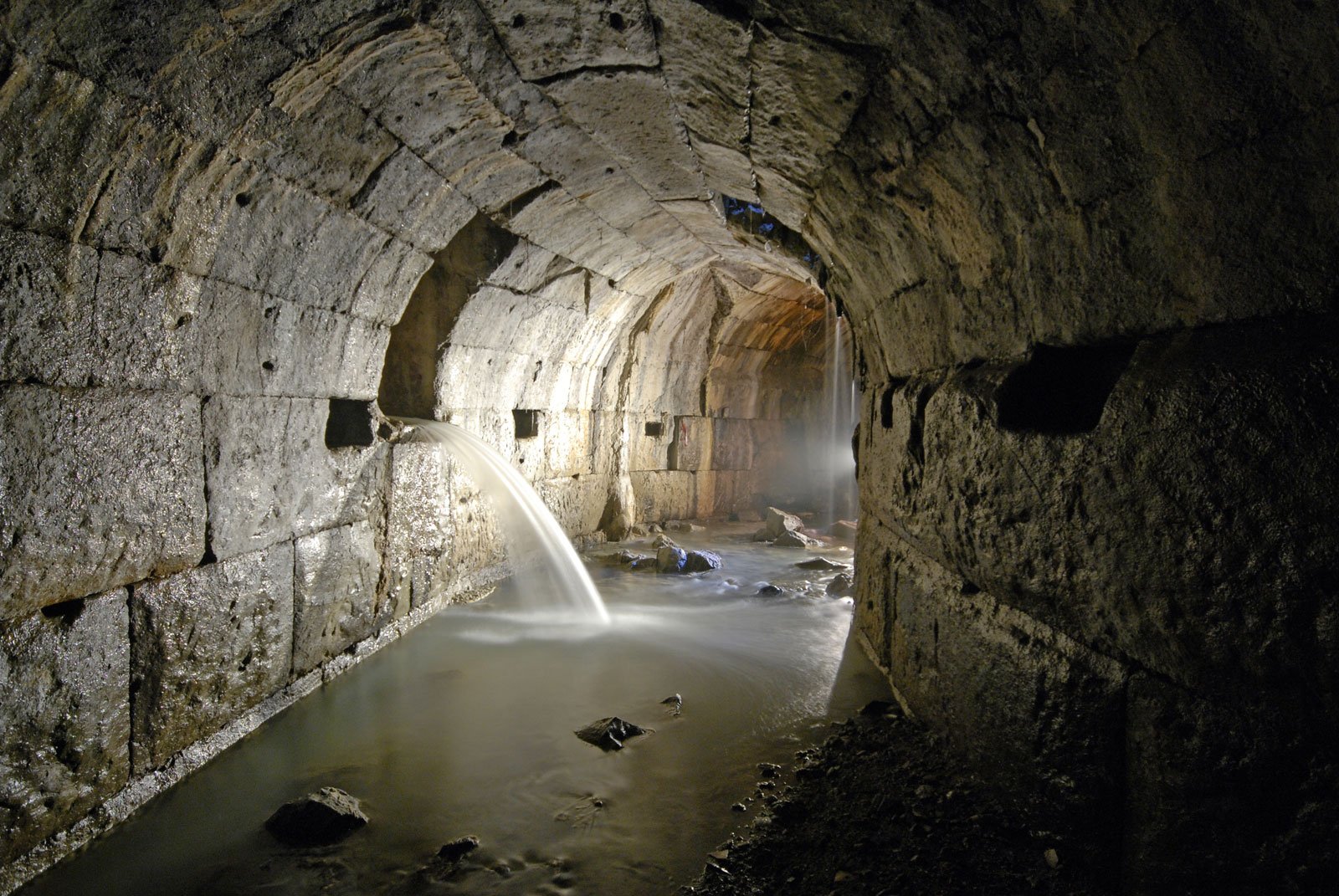
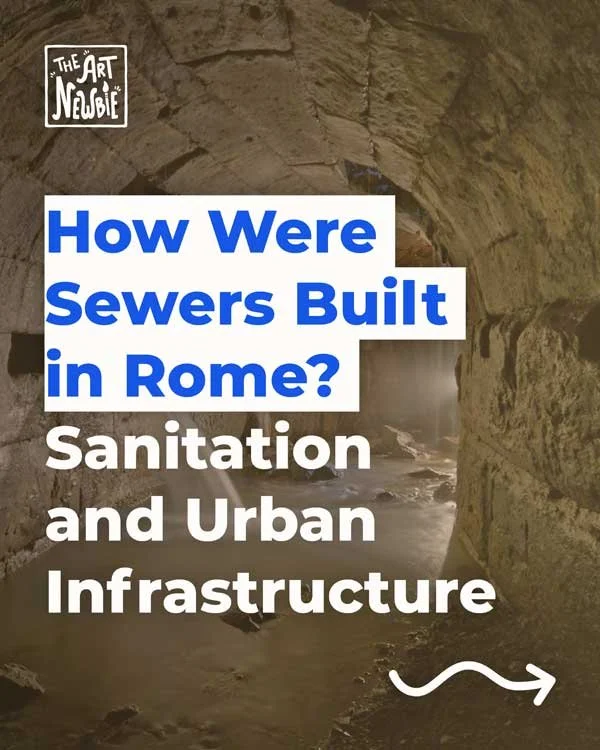
The Cloaca Maxima shows that Roman infrastructure was not only monumental above ground. It also worked through hidden engineered spaces below the city.
Roman sewers were built under the city as engineered channels for drainage and water management. That is the short answer. But the fuller story is more interesting, because ancient Rome did not build sewers in exactly the way many people imagine. They were not simply a modern-style underground network designed to carry all household waste away from every building. In Rome, sewers began above all as a way to drain low, flood-prone ground, control runoff, and make urban growth possible.
That is why they matter so much. Roman infrastructure was not only made of visible monuments. It also depended on hidden systems below the streets. Drains, channels, vaults, and collectors helped dry out important urban areas, carry away stormwater, and, over time, receive wastewater from baths, fountains, latrines, and some buildings. In other words, Rome’s sewers were part of the city’s deep practical machinery.
If you want to understand how Roman urbanism really worked, this is one of the best places to look.
Quick answer: Rome’s sewers were built as masonry drainage channels beneath the city, often beginning as open watercourses that were later lined, enlarged, and vaulted. Their first job was usually drainage, not full modern-style sanitation, but over time they became part of a broader urban water and waste system.
What were Roman sewers for?
Roman sewers were built to manage water first, and waste second.
That distinction matters because it helps clear up a very common misconception. Many people imagine ancient Roman sewers as if they were already modern sanitation networks. But the earliest major sewer in Rome, the Cloaca Maxima, seems to have begun as a drainage and land-reclamation work. Its role was to channel water away from low-lying, marshy areas and carry it toward the Tiber.
This was essential for the development of the city. The valleys between Rome’s hills were wet and vulnerable to flooding. If those areas remained waterlogged, urban growth would be much harder. By controlling drainage, the Romans made it possible for key civic zones, especially the future Roman Forum, to function more reliably.
Later, the picture became more complex. Sewers also received runoff from streets, wastewater from baths, and outflow from some latrines and other installations. So yes, Roman sewers were part of sanitation in ancient Rome, but they should not be reduced to that alone. They were part of a broader urban water-management system.
How were sewers built in Rome?
Roman sewers were usually built as masonry channels set below ground, often following the natural fall of the land. The earliest phases could begin as open drainage courses, especially where an existing stream or runoff line already crossed the city. Over time, these channels might be strengthened with stone lining, widened, and eventually covered or vaulted.
That gradual development is important. Rome did not produce one fully finished sewer system all at once. It seems to have grown through adaptation and enlargement. As the city became denser and more demanding, the drainage system had to become more durable and more complex.
The larger collectors were built from substantial masonry. In later and monumental phases, some channels were covered with barrel vaults, meaning continuous semicircular tunnel roofs that helped protect the watercourse below while allowing traffic and construction above. That is one reason Roman sewers belong so clearly to ancient Roman engineering. They are not rough ditches hidden underground. They are carefully built infrastructural works.
This construction logic also means that Roman sewers were not separate from the city. Streets, paving, foundations, and public spaces often had to relate directly to them. A sewer was not just a buried pipe. It was part of the urban structure.
What was the Cloaca Maxima?
The Cloaca Maxima was the great main sewer of Rome and one of the most famous ancient drainage works in the world. It is the natural place to start because it shows the Roman sewer system at its most historically important and most monumental.
Traditionally linked to Rome’s regal period, probably in the 6th century BCE, the Cloaca Maxima seems to have begun as a channel designed to drain the wet ground of the Forum valley and nearby areas. That origin matters because it confirms the broader point: Rome’s main sewer was first a tool of drainage and reclamation.
Over time, the Cloaca Maxima was transformed. Sections were enclosed, rebuilt, and monumentalized. Later vaulting turned parts of it into a proper subterranean conduit. It also became the major collector into which smaller drains could feed.
This is why the Cloaca Maxima is so revealing. It shows Roman urban infrastructure not as a fixed invention, but as a system that evolved with the city. What began as drainage became part of a much larger network of urban water management.
Were Roman sewers mainly for waste?
Not entirely, and this is probably the single most important nuance in the whole topic.
Roman sewers certainly dealt with dirty water and waste, especially in later phases when baths, latrines, and street drainage were connected into the urban system. But they were not equivalent to a fully modern sewage network carrying every kind of household wastewater from every dwelling.
A better way to think about them is this: Roman sewers were mixed-use urban drains. They removed stormwater, runoff, excess water from public facilities, and some waste outflow. They helped keep streets and low areas more usable. They helped move unwanted water away from the civic center. But they did not create modern hygienic separation in the way later systems try to do.
That is why it is worth being cautious with broad claims about Roman sanitation. Rome had impressive infrastructure, but it did not solve every problem of urban filth or disease. Some houses were not connected to sewers at all. Cesspits, local drains, manual disposal, and other practices remained part of everyday life.
So when we ask how ancient Roman sewers worked, the most accurate answer is not “they carried all sewage away like modern systems.” It is “they managed a mix of drainage and waste water within a larger urban framework.”
How did water keep them working?
Roman sewers worked best when there was enough flowing water to keep material moving. This is one reason they are so closely tied to the larger ancient Rome water system.
As Rome expanded its aqueduct network, the city had increasing access to fresh water. Works like Roman aqueducts, and more specific systems such as Aqua Claudia and Aqua Virgo, supported baths, fountains, and other water-using institutions. Some of that used water would then pass into drainage channels and sewers.
This relationship matters because Roman sewers were not isolated tunnels. They depended on a city-wide water cycle. Fresh water entered the city, served public and private uses, then runoff and wastewater moved onward through drains and collectors. Without abundant water flowing through the city, the sewer system would function much less effectively.
That is one reason baths are so important to the story. In Roman baths, huge quantities of water were used and then discharged. A city with baths on the Roman scale needed infrastructure below ground just as much as it needed monumental spaces above ground.
How were sewers tied to city planning?
Roman sewers make the most sense when placed inside Roman city planning. They were not just technical add-ons. They were part of how the city was made buildable and livable.
A low, wet, flood-prone area is hard to urbanize. Once it is drained, paved, and connected to a system of water removal, it can become civic space. This is one reason the Cloaca Maxima matters so much historically. It helped prepare the conditions under which Rome’s central public zones could develop.
The same logic applies more broadly. Streets need runoff control. Public spaces need drainage. Dense neighborhoods need ways to handle wastewater. Monumental buildings need foundations that are not constantly threatened by unmanaged water. The sewer network supported all of that.
This also reminds us that Roman infrastructure was deeply layered. The city above, streets, temples, basilicas, baths, markets, depended on systems below. Roman planning was never only about what could be seen. It was also about what had to work invisibly.
Did every building connect to sewers?
No. Roman urban life was more varied than that.
Some public buildings and some latrines were connected to drains or sewers. Certain urban houses or apartment blocks may also have had drainage links in some contexts. But not every building in Rome emptied neatly into a central sewer line. Local solutions remained important, including cesspits and smaller-scale disposal practices.
This point matters because it prevents the subject from becoming too neat. Rome had advanced infrastructure, but it was still an ancient city with uneven conditions, changing construction phases, and mixed solutions. The existence of a monumental collector like the Cloaca Maxima did not automatically mean universal connection for every resident.
So the sewer system should be understood as powerful, but not total. It shaped the city strongly without eliminating all local variation or all sanitary problems.
Why do Roman sewers matter?
Roman sewers matter because they reveal a side of Roman civilization that is easy to miss. They show that Roman achievement was not only about beautiful facades and famous monuments. It was also about hidden urban mechanics.
They matter historically because they helped make central Rome buildable. They matter architecturally because they were substantial engineered structures, not improvised trenches. And they matter intellectually because they remind us that cities depend on systems most people never see.
For beginners, they are especially valuable because they connect many parts of Roman culture at once: water supply, drainage, baths, forums, roads, topography, and civic growth. Once you understand the sewer system, the city above becomes easier to understand too.

Conclusion
Roman sewers were built as underground masonry drainage channels that gradually developed into a broader system for managing runoff and some wastewater across the city. Their earliest and most important role was often drainage and land reclamation, especially in low areas like the Forum valley, but over time they also became part of Rome’s wider sanitation infrastructure.
That is why they matter so much. Roman sewers show that the city was held together not only by monuments and streets, but by the hidden systems that made urban life possible.
FAQ
How were sewers built in Rome?
They were built as stone-lined or masonry channels below ground, often beginning as open drains and later being covered or vaulted as the city developed.
What was the Cloaca Maxima?
The Cloaca Maxima was Rome’s great main sewer, originally created to drain low, wet ground and later integrated into a wider urban drainage and wastewater system.
Were Roman sewers mainly for human waste?
Not at first. Their earliest main role was drainage and flood control, though later they also carried runoff, wastewater from baths, and outflow from some latrines.
Did all Roman houses connect to sewers?
No. Some buildings and public facilities connected to drains or sewers, but many relied on more local solutions such as cesspits.
How were sewers connected to aqueducts?
Aqueducts brought water into the city, and some of that used water later passed into drains and sewers, helping keep the system flowing.
Why did Roman sewers matter so much?
They helped dry out the city, support dense urban growth, and manage the hidden water systems that made public spaces and major buildings possible.
Sources and Further Reading
You may also like