Roman Brickwork: Why Brick-Faced Concrete Changed Roman Walls
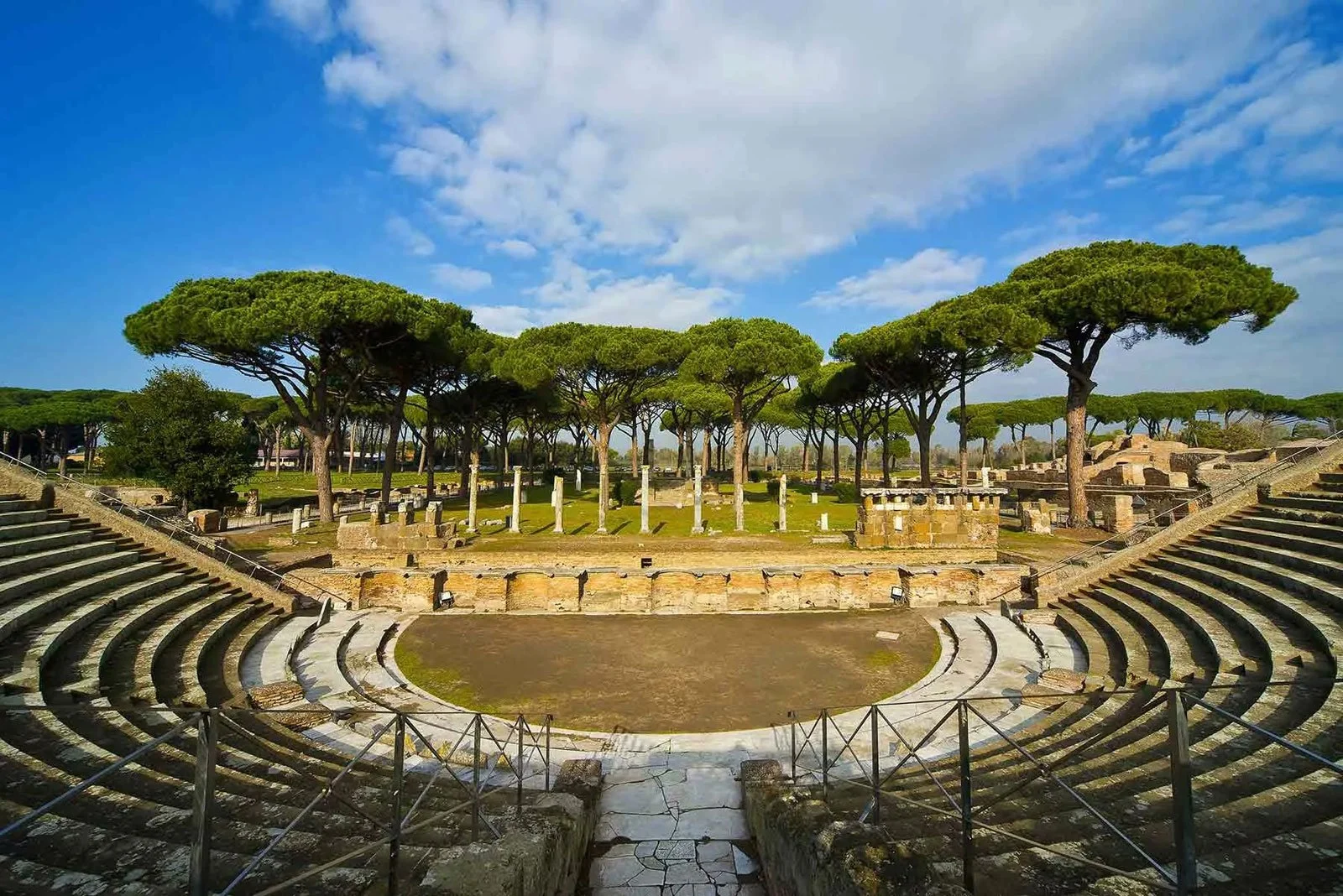
Ostia Antica is useful for Roman brickwork because the wall surface itself becomes readable as part of the construction system.
Roman brickwork matters because it helps correct a very common misunderstanding. When many people picture a Roman wall, they imagine something like a modern brick wall: rows of bricks stacked one on another, with the bricks themselves doing almost all the structural work. But many Roman walls were not built that way. In the Roman world, brick often worked together with concrete, not instead of it.
That changes the whole picture. Roman walls were often layered systems. A concrete core provided mass and strength, while brick facing gave the wall order, regularity, and a practical outer skin. This is why Roman brickwork is so important in architectural history. It shows that Roman construction was not only about solid thickness. It was about coordination between materials.
Once you see that, Roman walls start to look very different. They are no longer just heavy surfaces. They become carefully assembled structural systems, tied to the larger world of Roman architecture, Roman concrete, and changing building techniques across the empire.
Key idea: In many Roman walls, brick was the organized outer facing of a concrete mass, not the entire wall by itself.
What is Roman brickwork?
Roman brickwork is the use of fired clay brick or tile elements in Roman construction, especially in walls, vaults, and architectural facing. That sounds simple, but the important point is how the Romans used brick.
In some cases, bricks were used in more straightforward ways for particular structural or finishing purposes. But in many of the most characteristic imperial buildings, Roman brickwork appears as part of brick-faced concrete construction. That means the visible brick layer is not the whole wall. It is the outer surface of a deeper structural body.
This is why Roman brickwork should not be reduced to the image of a neat red wall. It belongs to a larger family of Roman building methods. The Romans were highly interested in combining materials according to what each one did best. Concrete could create thick, continuous masses. Brick could provide a more controlled and practical face.
That is also why Roman brickwork belongs in the wider story of Roman building materials. Roman construction was rarely about one pure substance used alone. It was about systems, layers, and strategic combinations.
Was it really brick or concrete?
The honest answer is often both. That is exactly what makes Roman brickwork so interesting.
Many Roman imperial walls were built with a concrete core and a brick facing. The core, usually made of Roman concrete, did much of the heavy structural work. The brick outer layer gave the wall a more regular surface and helped organize construction. So if you look at the face of the wall, you may think you are seeing a brick wall. In reality, you are often looking at the skin of a concrete structure.
This matters because it changes how we read Roman architecture. The wall is not a thin boundary made only of stacked bricks. It is a massive body with an outer order. That combination helps explain why Roman walls could support such ambitious spaces, especially in vaulted and domed construction.
It also explains why Roman building can feel so different from Greek architecture or earlier masonry traditions. Roman builders were less tied to the idea that architecture had to be a neat assembly of cut stone blocks alone. They were much more comfortable with thick structural masses hidden behind more finished surfaces.
So when someone asks whether Roman brickwork is “really brick,” the best answer is that Roman brick often works as facing within a composite wall rather than as a completely independent masonry wall.
What is opus testaceum?
One of the key terms here is opus testaceum. This is the Latin name commonly used for brick-faced concrete. You may also see the related term opus latericium used in scholarship, but for a beginner the main point is simple: it refers to a wall system in which fired brick or tile facing is applied to a concrete core.
This is one of the most characteristic Roman wall techniques of the imperial period. Instead of building the whole wall out of large rectangular bricks in the modern sense, Roman builders often used triangular brick or tile pieces set into the concrete mass, with their broad cut faces showing on the outside. The visible result looks like regular brick courses, but structurally the system is more complex than that.
This is why Roman opus types matter so much. Roman wall construction changed over time, and the visible facing can tell us something about chronology, technique, and regional habits. Opus testaceum is not the whole history of Roman walls, but it is one of the most important chapters in that history.
For beginners, it helps to remember one thing: opus testaceum is not just a decorative pattern. It is part of a construction logic.
How were Roman brick walls built?
In many cases, Roman brick-faced walls were built by creating two outer faces and filling the space between them with concrete. The brick or tile facing helped contain and shape the wall while the concrete set and hardened.
That process gave Roman builders a lot of freedom. A wall could be thick, strong, and relatively fast to construct compared with some more labor-intensive cut-stone methods. At the same time, the brick facing produced a cleaner and more regular surface. That surface could remain visible, or it could be covered with stucco, paint, marble revetment, or other finishes.
This is why Roman wall construction is such an important subject in its own right. The real story of the wall is not just the exposed face. It is the relationship between facing, core, finishing, and structural role.
Brick was also useful in arches and vaults, especially because smaller regular units are easier to organize in curved forms than large blocks of stone. Roman builders could use brick to shape the geometry of construction more precisely. That is one reason brick and concrete worked so well together. Brick provided control. Concrete provided mass.
So Roman brick walls were not simply stacked. They were assembled as layered construction systems.
Why did brick facing matter?
Brick facing mattered because it solved several problems at once.
First, it gave Roman builders a regular building surface. Concrete cores can be rough and irregular. Brick facing made it easier to control the wall’s outer plane and prepare it for further finishing. Second, it helped organize construction. The facing acted as a clear boundary for the concrete mass. Third, brick was modular. Small repeated units are easier to handle and arrange than huge carved blocks.
There was also a visual effect. Even when the brick face was later covered, the technique produced a wall that could be built with greater consistency. And when it remained visible, it gave Roman architecture a distinctly different character from earlier stone-dominated traditions.
This is where Roman brickwork becomes more than a technical footnote. It reveals a Roman preference for composite construction, where different materials perform different jobs inside the same wall. That preference is one of the things that made Roman architecture so adaptable.
In other words, brick facing mattered not because brick looked modern, but because it made Roman construction more workable, scalable, and controllable.
Did Romans build like we do?
Not exactly, and this is an important distinction.
Modern brick walls are often understood as either load-bearing masonry walls or as veneers attached to modern structural systems. Roman brickwork belongs to a different world. In many Roman cases, the brick face was not simply a thin decorative veneer in the modern sense, but neither was it the whole structural mass. It was part of a unified masonry-concrete wall system.
The difference matters because Roman construction does not fit neatly into modern categories. Their walls could be thicker, heavier, and more continuous. Their concrete was also not modern Portland cement concrete. The Roman system belongs to a different material culture and a different structural imagination.
That is why direct comparisons can mislead. A Roman brick-faced wall may look familiar at first glance, but it is doing something quite different. It belongs to a world where architecture, engineering, and wall construction are tightly fused.
So Roman brickwork is best understood on its own terms, not as an early version of our building habits.
Where can you see it clearly?
Roman brickwork is especially visible in many imperial Roman buildings, where brick-faced concrete became a dominant walling method.
The Domus Aurea, Nero’s vast palace complex, is one of the most revealing examples because it belongs to a moment when Roman concrete and spatial ambition were being pushed in bold new directions. In a project like the Domus Aurea, brick-faced concrete helps make possible a more experimental architectural world of halls, corridors, vaults, and unusual spatial effects.
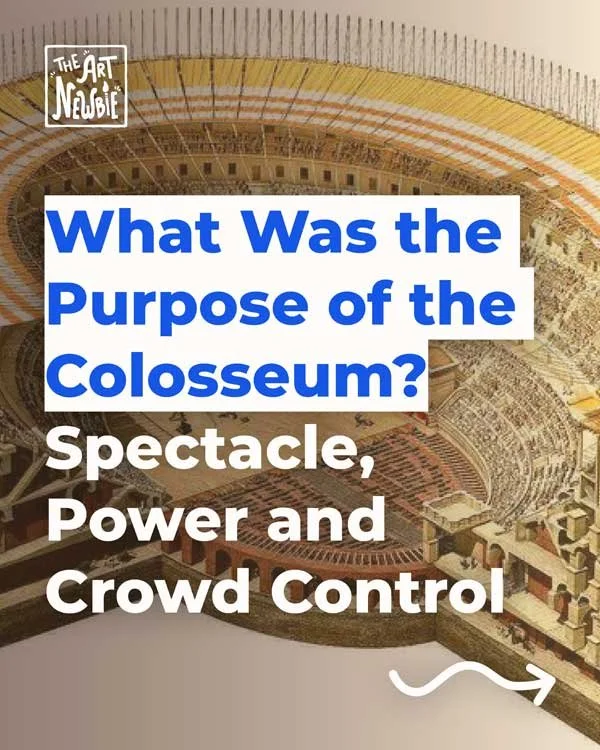
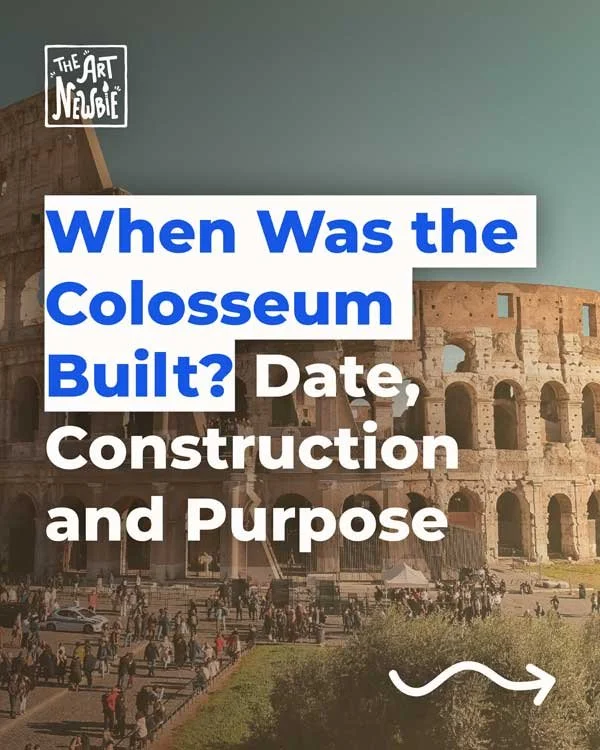
The Colosseum also helps clarify the story, though in a slightly different way. The building is not simply “a brick monument.” Its structural system is mixed and layered, with travertine, tufa, and concrete all playing important roles. That makes it useful because it reminds us that Roman building was rarely mono-material. If you look at when was the Colosseum built, you are already entering a world where brick, concrete, and stone work together rather than separately.
The Pantheon is another famous example of brick-faced concrete construction, even though people usually focus more on its dome than on its wall surfaces. That is understandable, but it also hides an important lesson: some of the most impressive Roman spaces depend on wall systems that are technically sophisticated even when they are not visually celebrated.
This is why Roman brickwork matters so much. It is often there in the background, quietly making the architecture possible.
Why does Roman brickwork matter?
Roman brickwork matters because it teaches us how Roman walls really worked. It helps move us away from the misleading idea that Roman architecture was simply made of beautiful stone facades or solid concrete masses. In reality, many Roman walls were hybrid constructions.
That hybrid quality matters historically. It helps explain how Roman builders could scale up construction, organize complex projects, and create the kinds of spaces that define imperial architecture. It also matters visually, because the shift from rough stone techniques to more regular brick-faced systems changes the whole appearance of Roman building.
For beginners, Roman brickwork is especially valuable because it turns the wall into an object of thought again. We often look past walls and pay attention only to columns, domes, or famous monuments. But Roman brickwork reminds us that walls are where much of Roman intelligence actually lives.
Once you understand that brick often worked with concrete rather than replacing it, Roman architecture begins to look less like a collection of surfaces and more like a carefully coordinated construction culture.

Conclusion
Roman brickwork changed Roman walls because it helped turn them into layered structural systems rather than simple stacked masses. In many imperial buildings, brick was the organized facing of concrete, giving walls greater regularity, greater constructability, and a more flexible architectural future.
That is why Roman brickwork matters so much. It is not just a surface detail. It is one of the clearest signs that Roman construction was deeply interested in how materials cooperate inside a building.
FAQ
What is Roman brickwork?
Roman brickwork is the use of fired brick or tile elements in Roman construction, especially in brick-faced concrete walls, vaults, and architectural surfaces.
Were Roman walls made only of brick?
Often no. Many Roman walls had a concrete core with a brick facing, so the visible brick surface was only part of the wall.
What is opus testaceum?
Opus testaceum is a Roman wall technique in which a concrete core is faced with fired brick or tile elements.
Did Romans build brick walls like modern builders?
Not usually. Roman brickwork often belonged to a composite system where brick and concrete worked together rather than a simple modern-style brick wall.
Why was brick important in Roman architecture?
Brick helped give Roman walls regularity, improved construction control, and worked especially well with concrete in large-scale imperial building.
Where can I see Roman brickwork clearly?
You can see important examples in imperial Roman architecture such as the Domus Aurea, the Pantheon, and parts of the Colosseum’s internal structural system.
Sources and Further Reading
You may also like