Iktinos and Kallikrates: Their Exact Roles on the Parthenon
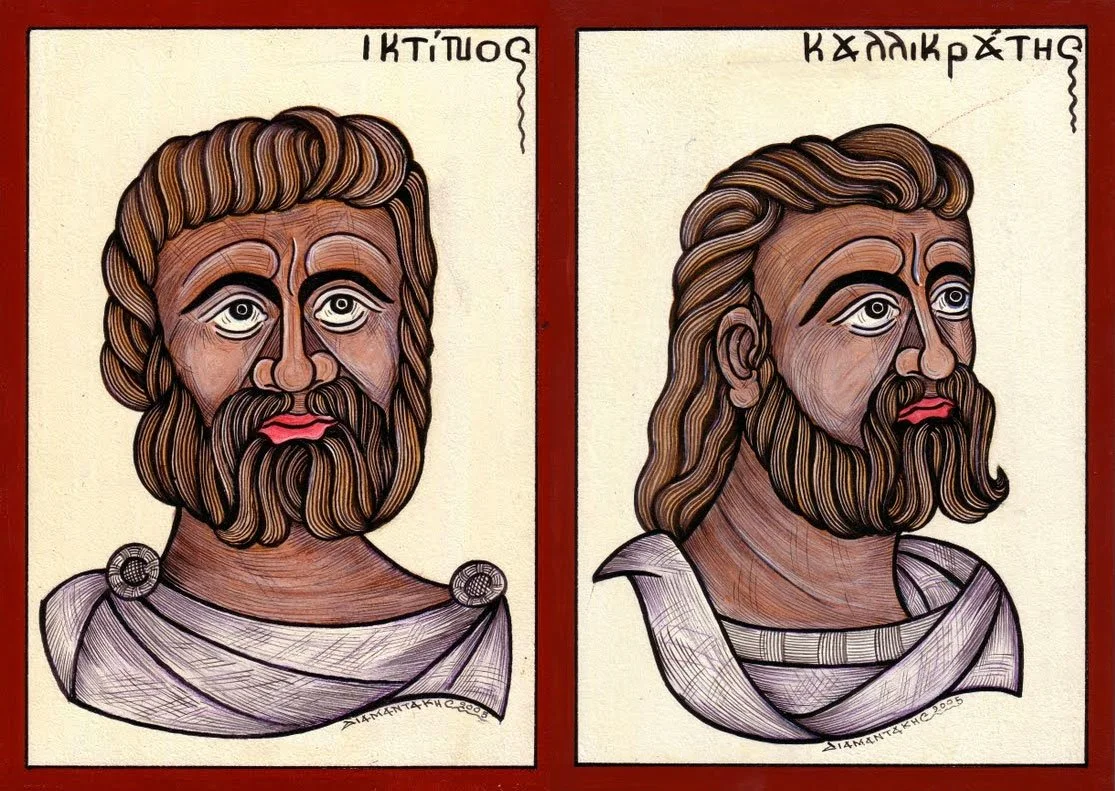
Iktinos and Kallikrates are the two architects most closely associated with the Parthenon.
If you’ve ever heard “the Parthenon was built by Iktinos and Kallikrates,” and thought: Okay… but what did each of them actually do?, you’re asking the right question. Because ancient building credits are not modern job titles. We don’t get neat org charts. We get names, a timeline, and a monument so precise it forces us to imagine an entire system of decisions behind it.
So this article is a careful, evidence-forward answer to a surprisingly human question: what were Iktinos and Kallikrates responsible for, and how can we tell? We’ll separate what we know, what we can reasonably infer, and what we should keep as “best guess,” not certainty.
And we’ll keep the Parthenon in context as a state project inside Classical Athens, because roles make more sense once we remember this building wasn’t a hobby. It was a civic statement.
We can name the architects, but the “exact split” is partly lost to time
Yes, we know their names. No, we don’t have their job descriptions.
Iktinos and Kallikrates are consistently credited in ancient and modern reference traditions as the Parthenon’s architects. That credit is real. But the precise division of labor between them is not preserved like a modern contract.
Here’s the simplest way to hold it: the Parthenon was not a one-person artwork. It was a coordinated public project with architecture, sculpture, finances, logistics, and craftsmanship moving at the same time. The people we name are the visible tip of a much larger workforce.
This is also why the timeline matters. The Parthenon is built fast, but not in one single “done” moment. If you want the clean phase structure, keep Parthenon build timeline in your head: started 447 BCE, building essentially functional by 438 BCE, finishing work continuing to about 432 BCE. Different teams can reach different finish lines.
Definition: An architektōn is a master builder who leads a public work.
That Greek word matters because it’s closer to “chief builder” than “architect” in the modern sense. The architektōn is responsible for design decisions, yes, but also for coordination, budgeting promises, and execution standards. So when we ask “exact roles,” we’re really asking: who led design logic, who managed implementation, and how did those responsibilities overlap?
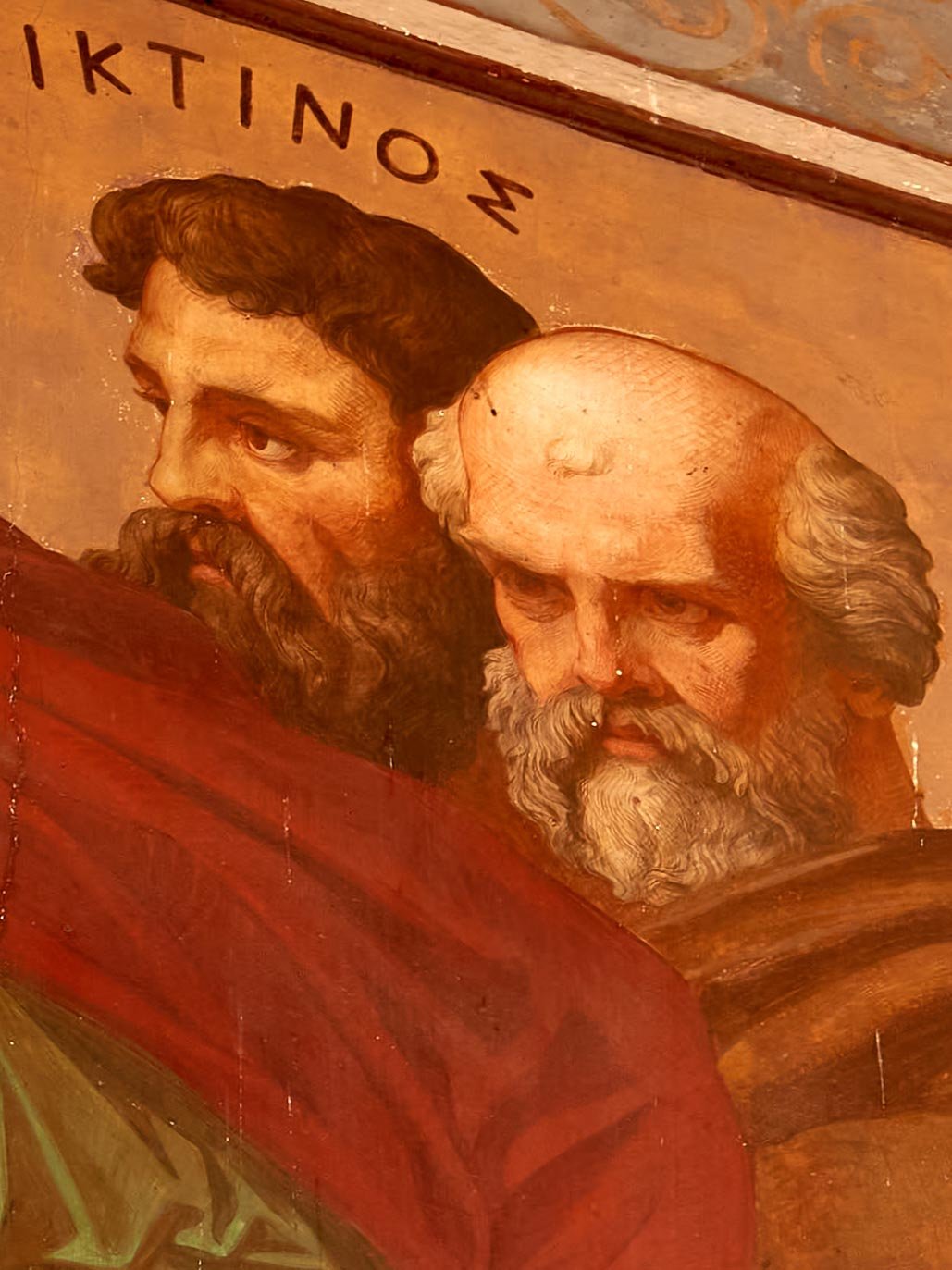
Later depictions like this show how strongly their names stayed linked to the Parthenon.
Iktinos is usually treated as the primary design mind, but we should say that carefully
The reason Iktinos often gets singled out is not because Kallikrates was minor. It’s because Iktinos shows up as a “big-project” architect in other contexts, and later tradition tends to associate him with ambitious design thinking.
In plain language: when later sources connect someone to multiple complex monuments, modern scholars often treat that person as the “conceptual lead.” That’s a reasonable inference, not a guaranteed fact. Some sources even hint that the relationship between the two architects may not have been a simple partnership. The safest sentence is: Iktinos is strongly associated with the Parthenon’s design, alongside Kallikrates, but the internal dynamics are debated.
What helps us think clearly is the building itself. The Parthenon is not just a correct Doric temple. It’s a refined Doric temple with unusual choices that feel like deliberate design signatures: integration of Doric and Ionic elements, careful proportional planning, and a whole set of subtle visual corrections.
To understand why those choices matter, it’s useful to have a baseline of Greek architecture basics. “Doric vs Ionic” isn’t trivia here. It’s how we see design intent. The Parthenon is a building that follows rules and also knows exactly when to bend them.
And it’s hard to bend rules without someone steering the concept.
So if we’re trying to picture Iktinos’s likely role, the best-guess version is: he helped shape the Parthenon’s overall design logic and the intellectual “why” behind its architectural decisions.
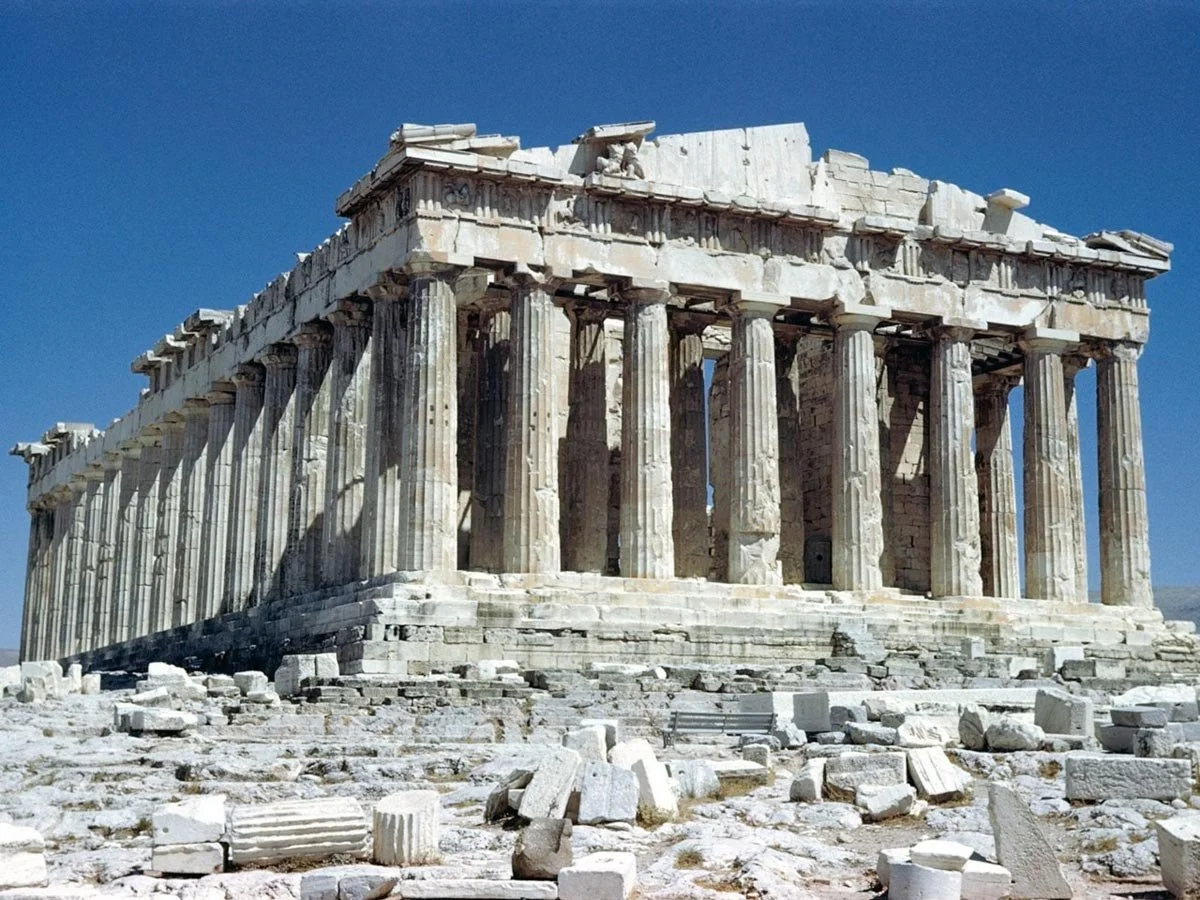
The Parthenon itself is the clearest evidence of the architects’ skill and planning.
Kallikrates is often linked to the project’s delivery and build leadership, not just drawing plans
If Iktinos is commonly framed as the concept-heavy architect, Kallikrates is often framed as the architect with strong ties to execution, commissioning, and practical building responsibility.
We have evidence that Kallikrates is commissioned for other temple work in Athens, which suggests he operated inside official building systems and public commissions. That doesn’t prove he was “the contractor,” but it supports a picture of someone who could deliver a project within the realities of civic administration.
And that’s the thing about the Parthenon: it’s not only beautiful, it’s massively organized. Huge quantities of marble. Skilled quarrying. Transport up the Acropolis. Lifting systems. Finishing. Labor coordination. Quality control. A schedule that has to align with political and religious life.
So when we ask what Kallikrates did “exactly,” the most defensible answer is: he was one of the named architects responsible for the Parthenon’s realization, and some scholarship leans toward him having significant responsibility for build coordination and implementation, while Iktinos is more often emphasized in design attribution.
But we should still resist the oversimplified story: “Iktinos designed; Kallikrates built.” That’s a modern division. Ancient projects didn’t always split that cleanly. They likely overlapped heavily, especially on decisions that affect structure, tolerances, and how the building reads from the ground.
This overlap becomes easier to imagine when we remember what the Parthenon was for. It wasn’t a private temple built quietly. It was part of a public statement about Athens. The building is designed to communicate authority, order, and legitimacy. That’s why discussing what the Parthenon meant is not a separate topic from “roles.” Meaning is built into design choices, and design choices must be executed precisely for the meaning to land.
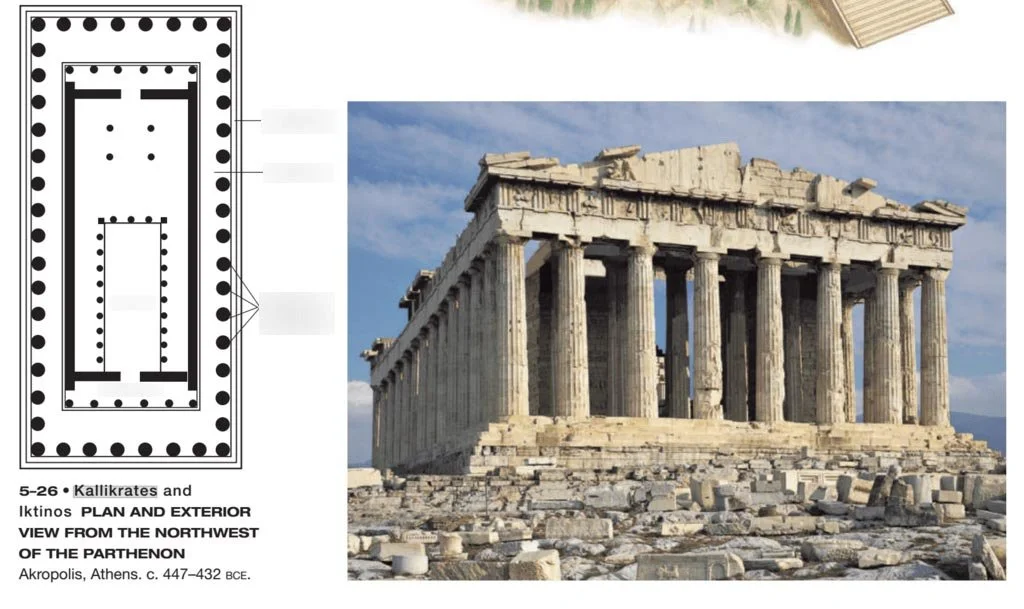
Plan and exterior together show how carefully the Parthenon was designed from layout to elevation.
The refinements and illusions are where their architectural fingerprints show up
Want the most concrete place to “feel” the architects at work? Look at the Parthenon’s refinements.
The Parthenon looks straight and perfectly regular. But it’s famous because it isn’t literally straight in all the ways we assume. It includes small corrections that make the building appear more perfect to human vision.
This is the core idea behind refinements and illusions: slight curvature of the stylobate (the top platform step), subtle swelling of columns (entasis), adjusted corner columns, and spacing tweaks that prevent the eye from reading the building as sagging or uneven.
These “invisible” decisions are design decisions. They require a plan, a rationale, and a precise implementation. They also require craftspeople who can execute small deviations intentionally across a huge structure.
So when we talk about Iktinos and Kallikrates, this is where “architect” becomes more than “person who drew a nice façade.” The Parthenon is engineering guided by perception. Someone decided that human eyesight should be corrected for. Someone decided the building should look perfect even if perfect requires subtle distortion.
And the corrections aren’t abstract. They tie into measurable reality. If you like the concrete side of architecture, the temple’s measurements help you understand the scale of the task. Minor curvature across a long platform is not “a small tweak” when you have to execute it across the full footprint with consistent logic.
This is why the Parthenon’s perfection feels so confident. It’s not only aesthetic taste. It’s a high-level commitment to controlled perception, and that commitment had to be led.
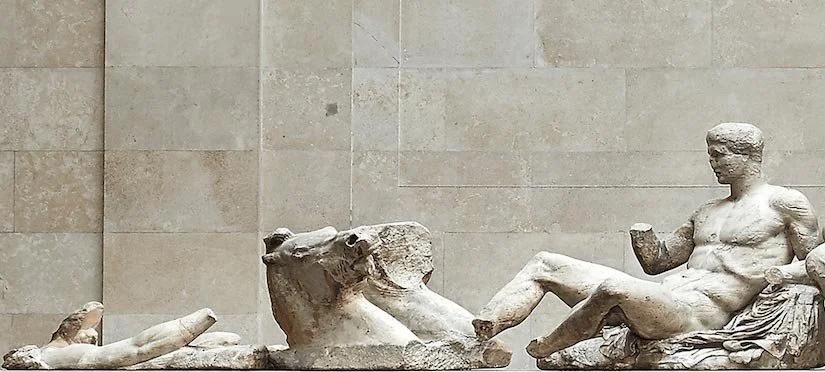
The Parthenon was designed as both a building and a sculptural program.
Their “roles” also include what we don’t see: coordination with sculpture and the program
One trap in modern thinking is separating architecture from sculpture as if they’re different projects. On the Parthenon, they’re inseparable.
The temple’s sculptural elements are not generic decoration added at the end. They’re part of the building’s identity and public message. Reading that integrated system is exactly what we do in the Parthenon sculpture articles, and even if we don’t go deep here, it’s still relevant to roles because it changes what the architects are coordinating.
The architects had to design a building that could carry sculpture, frame it, and make it legible. Where a frieze sits, how a pediment is shaped, how a metope field reads in sunlight, how viewers move around the temple: those are architectural decisions that shape a sculptural program’s impact.
So if we’re asking “what did Iktinos and Kallikrates do,” a realistic answer includes something like: they shaped the architectural container that made the Parthenon’s art program possible, including the areas where sculpture and architecture meet.
Myth vs Fact
Myth: One person “built the Parthenon,” and everyone else followed orders.
Fact: It was a coordinated system, with named architects guiding design and execution.

Conclusion
Iktinos and Kallikrates are credited as the Parthenon’s architects, but the exact internal division of labor between them isn’t preserved like a modern project breakdown. What we can say with confidence is that they were responsible for the building’s plans and delivery within a huge civic program. What we can infer, with reasonable caution, is that later tradition tends to emphasize Iktinos as the key design mind, while Kallikrates is often associated with official commissions and the practical realities of building.
The deeper takeaway is the most satisfying one: the Parthenon’s “perfection” isn’t a mystery. It’s the product of leadership, planning, refinement, and execution at an extreme level. When we talk about these two architects, we’re really talking about the human intelligence behind a monument that still controls our eyes.
FAQ
Who were Iktinos and Kallikrates? They were the architects traditionally credited with designing and building the Parthenon in 5th-century BCE Athens.
Did Iktinos and Kallikrates do different jobs? Probably, but the exact split isn’t fully documented. Many accounts emphasize Iktinos in design attribution and connect Kallikrates to official commissions and delivery.
Was Pheidias the architect of the Parthenon? No. Pheidias is usually described as overseeing the broader artistic program, especially sculpture, while Iktinos and Kallikrates are credited as architects.
How do optical refinements relate to the architects’ roles? Refinements like subtle curvature and column adjustments require deliberate planning and precise execution, which points directly to architectural leadership.
Where do the dates fit into their responsibilities? Their work spans the main build and finishing phases laid out in the Parthenon construction timeline, from start to completion.
Sources and Further Reading
Acropolis Museum —“The Parthenon Gallery” (n.d.)
Encyclopaedia Britannica —“Ictinus” (2026)
Encyclopaedia Britannica —“Callicrates” (2026)
Encyclopaedia Britannica —“Parthenon” (2026)
American School of Classical Studies at Athens —“The Setting of the Periclean Parthenon” (1940)
UNESCO World Heritage Centre —“Acropolis, Athens” (n.d.)
You may also like