Hellenistic Meaning: What “Hellenistic” Actually Means
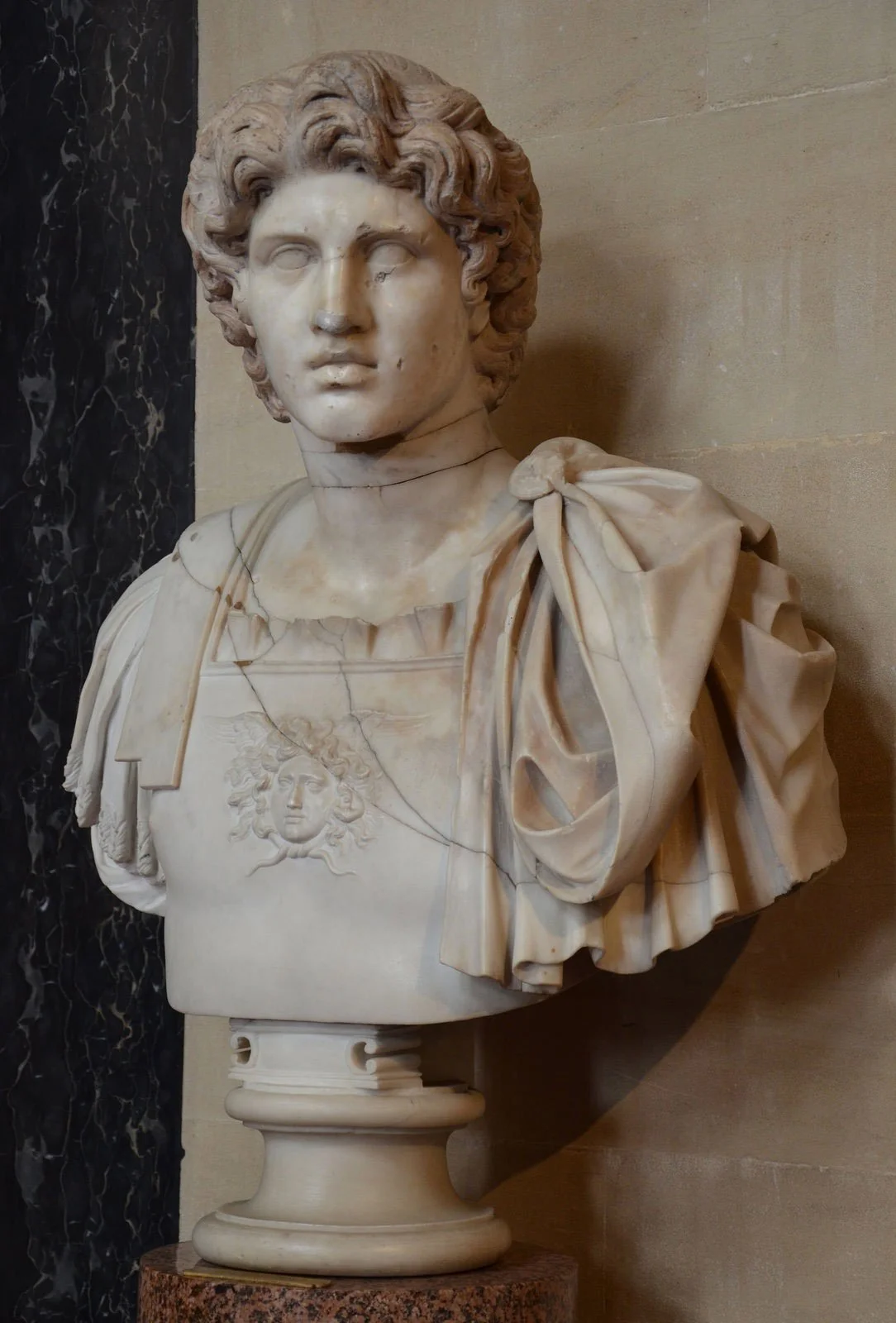
Alexander matters here because the Hellenistic world is the Greek-shaped world that expanded after him.
The word Hellenistic sounds simple, but it carries a surprisingly large idea inside it. In the shortest possible version, it means Greek-shaped. More specifically, it refers to the world after Alexander the Great, when Greek language, culture, and artistic forms spread across a much larger and more mixed region than old Greece alone.
That is why the term matters. It does not just name a date range. It names a whole historical condition: a world in which Greek influence becomes wider, more urban, more international, and more entangled with other cultures. So when people ask for the Hellenistic meaning, the best answer is not just a dictionary one. It is historical. “Hellenistic” means the Greek-influenced world that develops after Alexander, especially from 323 to 31 BCE, and art historians use the word because the old categories of Classical Greece are no longer enough.
In other words, the word tells us that we are no longer looking at a small map of city-states alone. We are looking at a much bigger and more connected world.
“Hellenistic” comes from “Hellenic,” but it does not mean exactly the same thing
The root of the term is Hellenic, meaning Greek. “Hellas” is the Greek name for Greece, and “Hellenes” means Greeks. So at first glance, “Hellenistic” might look like it simply means “Greek.”
But that is where the confusion begins.
“Hellenic” usually points more directly to Greece and Greek identity itself. “Hellenistic,” by contrast, usually means Greek-influenced or Greek-shaped, especially in the period after Alexander’s conquests. That small difference matters a lot. It tells us that the Hellenistic world is not simply Greece repeated on a larger scale. It is a broader world in which Greek language, education, political habits, and artistic models circulate widely, often alongside older local traditions that do not disappear.
So if someone asks, “What does the word Hellenistic mean?”, the clearest answer is this: it refers to a world shaped by Greek culture, but not limited to ethnic Greeks or the old Greek homeland alone.
That is why the term feels larger than a simple national label. It describes a cultural condition, not just a people.
The word usually points to the period after Alexander the Great
In art history and ancient history, “Hellenistic” is most often used for the period between 323 BCE, the year Alexander the Great died, and 31 BCE, the year of the Battle of Actium. Some books round the ending to 30 BCE, when Roman control over Egypt becomes final. Both dates point to the same broad transition: the Hellenistic world gives way to Roman domination.
This is important because the term is not random. It is tied to a specific historical change.
Before Alexander, the Greek world was strongly defined by the world of the polis, or city-state, meaning a self-governing city and its territory. That older landscape is easier to understand through the history of ancient Greek city-states. After Alexander, the scale changes dramatically. His conquests connect Greece, Egypt, Anatolia, the Near East, and regions farther east into one huge political and cultural field. That field does not stay united for long, but it does stay connected.
So the word “Hellenistic” is useful because it tells us we are in a different world from the one we usually associate with the Golden Age of Greece. The old Classical model still matters, but it no longer describes everything.
Hellenistic does not mean “purely Greek”; it means Greek influence spreading through a mixed world
This is the part that makes the term worth learning properly.
A lot of people hear “Hellenistic” and assume it means the world simply became Greek. That is too simple. What actually happened was more mixed and much more interesting. Greek language and culture spread widely, but they did so in regions that already had long, rich histories of their own. Egypt was not blank before the Greeks arrived. Neither were Syria, Mesopotamia, Anatolia, or the eastern Mediterranean more broadly.
That is why “Hellenistic” is a better word than just “Greek” for this period. It captures a world of overlap.
Greek became an important shared language in many places. Greek-style cities expanded. Greek art and education became influential. But local identities, religions, languages, and customs continued too. The result was not cultural replacement in a simple sense. It was a world of exchange, adaptation, hierarchy, and mixture.
This is also why the term matters so much in ancient Greek art. Once we enter the Hellenistic world, art starts reflecting a broader and more varied environment. The scale is larger, the patronage changes, cities become more ambitious, and visual culture often becomes more dramatic, diverse, and cosmopolitan.
So “Hellenistic” names a world that is Greek-shaped, but not narrowly Greek in the older sense.
The map behind the word is much bigger than old Greece
One of the easiest ways to understand the Hellenistic meaning is to picture the map.
If you imagine only mainland Greece, the word will never fully make sense. The Hellenistic world includes Greece, of course, but it also stretches across Egypt, Anatolia, the Levant, Mesopotamia, and beyond. It is a much wider world than the one people usually imagine when they first think of ancient Greece.
That is why a good ancient Greek map becomes even more useful here. It helps you see the old Greek centers, but it also helps you understand how far the Greek-speaking world eventually reached.
This expanded map changes the meaning of the word itself. “Hellenistic” implies movement, spread, and connection. It tells us that Greek culture is now operating across great distances and inside a much more complex political landscape.
So when historians use the word, they are not only naming a style or a date range. They are naming a widened world.
Art historians use “Hellenistic” because the art feels different too
The term is historical, but it also becomes a style word.
In art history, “Hellenistic” often signals works that feel more dramatic, emotional, varied, and spatially active than earlier Classical Greek art. That does not mean every Hellenistic work is loud or theatrical. It means the range expands. Figures can move more sharply, react more openly, and explore a wider emotional world.
This is one reason the term survives so strongly in art history. It helps scholars and students talk about a real shift in mood and form, not just in politics.
The old Classical world often values balance, restraint, and ideal calm. The Hellenistic world often opens toward intensity, movement, pathos, luxury, and a more expansive visual language. So when art historians say “Hellenistic,” they are often pointing to both a historical era and a recognizable change in artistic behavior.
That double meaning is important. The word is not only about chronology. It is also about a cultural atmosphere.
The best beginner definition is simple: Greek-shaped, post-Alexander, and wider than Greece
If all of this feels like a lot for one word, that is normal. “Hellenistic” is one of those terms that looks easy until you actually open it up.
So here is the cleanest beginner-friendly version:
Hellenistic means the Greek-influenced world after Alexander the Great, especially from 323 to 31 BCE, when Greek culture spread across a much larger and more mixed region than old Greece alone.
That is the version worth keeping in your head. It is more accurate than “Greek,” more useful than a dry dictionary line, and clear enough to help you read art, history, and geography more confidently.
Because once you understand the term, a lot of other things begin to click. Greek art after Alexander looks different for a reason. Greek cities matter in a different way. The map gets wider. The cultural world gets denser. And the word “Hellenistic” is the label that helps hold all of that together.

Conclusion
“Hellenistic” does not just mean “Greek.” It means the wider Greek-shaped world that develops after Alexander the Great, when Greek language, culture, and artistic models spread across a much larger and more mixed landscape. That is why historians and art historians use the term. It captures both a period and a condition: post-Alexander, interconnected, culturally blended, and no longer limited to old Greece alone.
Once you understand that, the word stops sounding vague. It starts doing real work. It tells you that you have entered a different kind of ancient world.
FAQ
What does Hellenistic mean in simple terms?
It means Greek-influenced, especially in the wider world that developed after Alexander the Great.
What does the word Hellenistic mean literally?
It comes from words related to “Greek” or “Greek-speaking,” but in history it usually means more than simply “Greek.”
When is the Hellenistic period?
It usually runs from 323 BCE to 31 BCE, though some sources use 30 BCE as the endpoint.
Is Hellenistic the same as Hellenic?
No. “Hellenic” usually refers more directly to Greek identity itself, while “Hellenistic” usually refers to a Greek-shaped world beyond old Greece alone.
Why do art historians use the word Hellenistic?
Because it helps describe both a historical era and a recognizable shift in art after Alexander, especially toward a broader, more varied, and often more dramatic visual culture.
Does Hellenistic mean everything became purely Greek?
No. It means Greek influence spread widely, but always within a mixed world that kept many local traditions alive.
Sources and Further Reading
Encyclopaedia Britannica — “Hellenistic age” (2026) (Encyclopedia Britannica)
The Metropolitan Museum of Art — “Art of the Hellenistic Age and the Hellenistic Tradition” (2007) (The Metropolitan Museum of Art)
Smarthistory — “Empire and Art in the Hellenistic world (c. 350–31 B.C.E.)” (n.d.) (Smarthistory)
The Metropolitan Museum of Art — “Art of the Hellenistic Kingdoms: From Pergamon to Rome” (2021) (The Metropolitan Museum of Art)
The Cambridge Companion to the Hellenistic World — “Introduction” (2007) (cambridge.org)
You may also like