Aqua Claudia: The Monumental Aqueduct of Rome
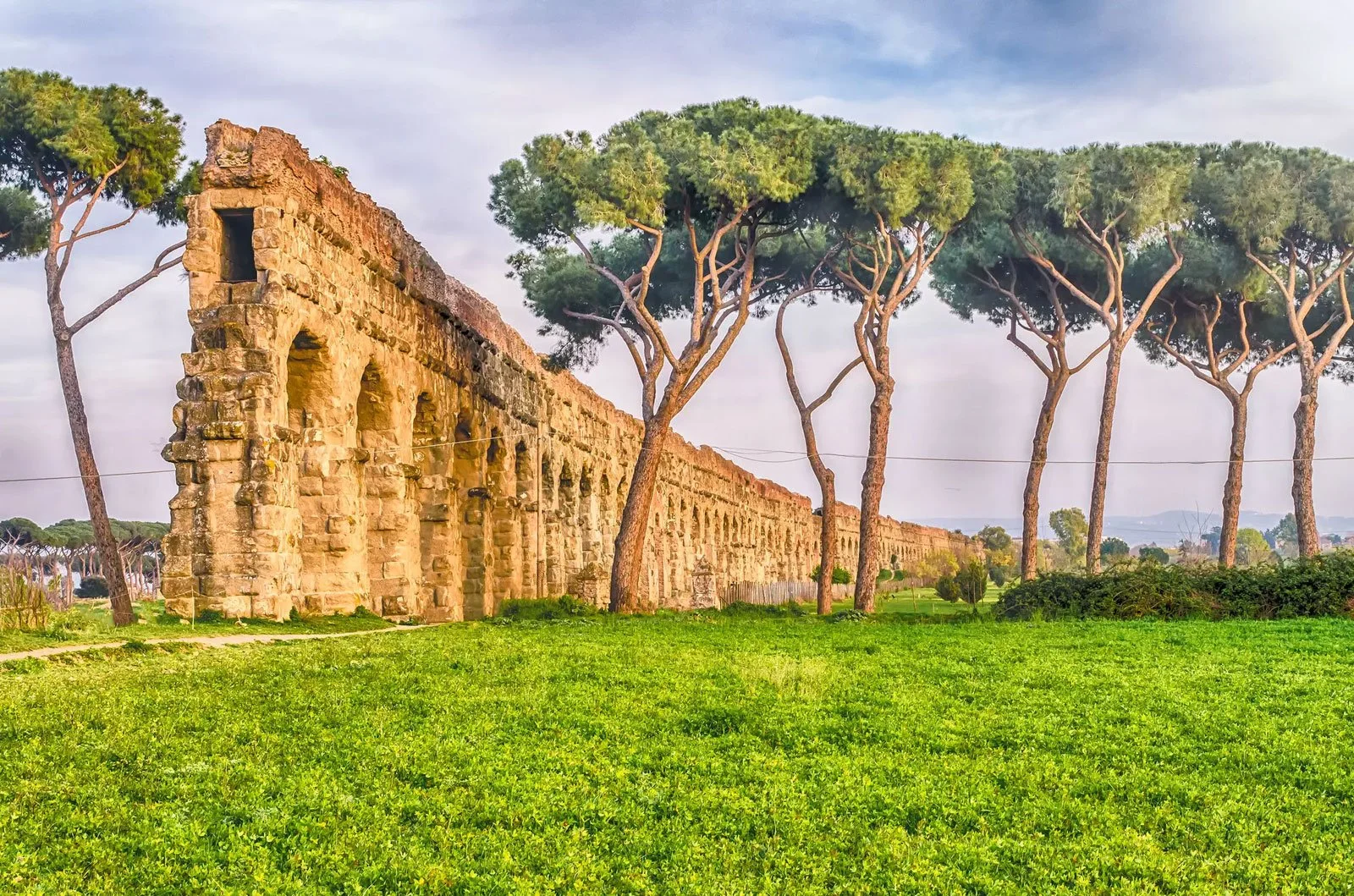
Aqua Claudia shows how Roman water infrastructure could become visible architecture on a monumental scale.
Aqua Claudia is one of the clearest examples of how Roman infrastructure could become visible architecture. It was a water supply system, but it was also a powerful landscape structure: long, elevated, and monumental enough to leave a strong image of Rome in the countryside before the city even began. That is what makes it so important. Aqua Claudia was not just functional. It showed how Roman engineering could also shape space, territory, and urban identity.
For beginners, it is a very useful case study because it brings together several parts of Roman civilization at once. It belongs to the history of Roman aqueducts, of course, but also to ancient Roman engineering and to the practical life of the city itself. Water infrastructure is easy to underestimate until you realize how many Roman institutions depended on it. Baths, fountains, households, workshops, and public buildings all needed reliable water.
Aqua Claudia makes that dependence visible. It turns the abstract idea of “urban supply” into stone, arches, and route.
What was Aqua Claudia?
Aqua Claudia was one of the major aqueducts that supplied ancient Rome with fresh water. In simple terms, it was a long engineered system designed to bring water from springs outside the city into Rome through a carefully controlled gradient.
What makes it stand out is not only that it supplied water, but that it did so on a monumental scale. Many Roman aqueducts were partly underground, and Aqua Claudia was too for much of its route. But the visible elevated sections, especially the great arcades that survive in and around the Parco degli Acquedotti, made it one of the most striking water structures of the Roman world.
This is why Aqua Claudia is often remembered so strongly. It is both technical and visual at once. It belongs to the same practical world as channels, settling tanks, and distribution points, yet it also creates one of the most recognizable infrastructural landscapes around Rome.
When was Aqua Claudia built?
Aqua Claudia was begun under the emperor Caligula in 38 CE and completed under Claudius in 52 CE, from whom it takes its name. That dating matters because it places the aqueduct in the early imperial period, when Rome was expanding its urban systems and projecting imperial power through major public works.
Its construction also happened alongside that of the Anio Novus, another major aqueduct. The two are often linked because, in some stretches, their structures were closely associated and even overlapped. This pairing helps explain why Aqua Claudia can feel so technically ambitious. It was part of a broader moment of hydraulic expansion rather than an isolated project.
The fact that it was completed under Claudius also helps explain its monumental character. Imperial Rome was deeply invested in public works that were both useful and visibly impressive. Aqua Claudia fits that pattern perfectly. It was infrastructure, but it was also a statement.
Where did its water come from?
The water of Aqua Claudia came from springs in the upper Anio valley, east of Rome, in the area between Marano Equo and Arsoli. Ancient sources also identify important spring sources by name, especially the Caeruleus and Curtius springs.
That origin matters because Roman aqueducts depended on good source selection. A city as large as Rome needed not just water, but water of reliable quality. Aqua Claudia was especially valued in antiquity for the excellence of its supply. In that sense, it can be usefully compared with other major Roman aqueducts such as Aqua Marcia, another system long admired for the quality of its water.
Like other Roman aqueducts, Aqua Claudia did not use pumps in the modern sense. It relied on gravity. Water moved from a higher source toward the city along a controlled slope. That meant the route had to be surveyed with great care. The challenge was not just to find water, but to preserve the right gradient over a very long distance.
How did Aqua Claudia work?
Aqua Claudia worked like other Roman aqueducts in principle, but on a particularly grand scale. The water traveled along a channel, most of it through underground or near-ground sections, while elevated structures were used where the landscape dropped and the channel had to be kept at the right level.
The whole route was about 69 kilometers long. Much of that was hidden from view, which is a good reminder that an aqueduct is not only its arches. The spectacular arcades are the most famous part, but they are only the visible fraction of a much larger engineered system.
One especially important feature is that, from about the seventh mile of the Via Latina onward, Aqua Claudia ran on a major elevated structure that became one of the most dramatic aqueduct landscapes around Rome. In some stretches, the Anio Novus was carried above it on the same supporting system. This superimposed arrangement makes the structure even more impressive because it turns the aqueduct into a layered piece of engineering rather than a single channel on arches.
That is why Aqua Claudia is such a good example of Roman infrastructure thinking. It is not just a conduit. It is a carefully adapted territorial machine.
Why was it so monumental?
Aqua Claudia was monumental because Roman engineers did not hide all infrastructure. Sometimes they made it structurally legible and visually powerful.
The great surviving arcades of Aqua Claudia are built in large tufa blocks and, in some stretches, rise to impressive heights. These are not accidental remains. They are the result of a technical choice: if the water channel had to maintain level while crossing uneven terrain, the support below had to grow accordingly. Engineering necessity created a monumental image.
But image still matters. Roman builders understood that repeated arches across open land could become part of the visual identity of the city. Aqua Claudia did not merely bring water toward Rome. It announced Rome’s capacity to command distance, labor, and material. That is one reason the aqueduct has fascinated artists, travelers, and historians for centuries.
This visible grandeur also helps explain why Aqua Claudia is such a strong bridge topic between infrastructure and architecture. It is one of those Roman works where practicality does not cancel monumentality. The two intensify each other.
How did it enter Rome?
As Aqua Claudia approached the city, it became part of a dense urban hydraulic system. One of its most famous visible moments is at Porta Maggiore, where the aqueduct structure later became incorporated into the city’s defensive walls.
That later history is important. It shows how Roman infrastructure could be reused and absorbed into new urban layers. What began as an aqueduct crossing became, in later antiquity, part of Rome’s fortification system. The structure did not lose relevance once it had delivered water. It remained architecturally and strategically significant.
From there, branches of the system helped supply important parts of the city, including areas such as the Caelian and the Palatine. This is where Aqua Claudia connects directly to Roman city planning. An aqueduct mattered not only because it arrived in Rome, but because its water could then be distributed through the city’s built fabric.
That broader hydraulic network also connects aqueducts to urban drainage and waste systems. Fresh water and sewage are different systems, but in Roman urbanism they belong to the same practical logic of making dense city life possible. That relationship becomes clearer if you also look at how sewers were built in Rome.
Why did Aqua Claudia matter?
Aqua Claudia mattered because it helped sustain imperial Rome at scale. A large city needed large water systems, and Aqua Claudia was one of the great works that made that possible.
It also mattered because it reveals how Roman public works operated on several levels at once. It was a technical system. It was a territorial intervention. It was part of the urban supply network. And it was a monumental object in the landscape. Few structures show the Roman ability to combine all those layers so clearly.
Seen alongside Aqua Appia, Aqua Virgo, and Aqua Marcia, Aqua Claudia also helps explain the larger development of Rome’s water infrastructure. It was not the first aqueduct, but it was one of the most ambitious and visually commanding.
That is why Aqua Claudia still matters today. It reminds us that Roman greatness was not only built in temples and amphitheaters. It was also built in water channels, gradients, arcades, and the quiet technical systems that allowed the city to function.

Conclusion
Aqua Claudia was one of Rome’s great aqueducts because it united engineering performance and monumental presence. Begun under Caligula and completed under Claudius, it carried high-quality water from distant springs toward the city through a long and carefully controlled route.
What makes it especially memorable is that it did not disappear into pure utility. In its surviving arcades, Aqua Claudia shows how Roman infrastructure could become visible architecture, strong enough to shape the landscape and important enough to shape the city.
FAQ
What was Aqua Claudia?
Aqua Claudia was one of the major aqueducts of ancient Rome, built to carry fresh water from springs east of the city into Rome.
When was Aqua Claudia built?
It was begun in 38 CE under Caligula and completed in 52 CE under Claudius.
Where did Aqua Claudia get its water?
Its water came from springs in the upper Anio valley, in the area between Marano Equo and Arsoli.
How long was Aqua Claudia?
Its route was roughly 69 kilometers long, much of it underground or near ground level.
Why is Aqua Claudia famous?
It is famous for its scale, its impressive surviving arcades, and its importance within Rome’s water supply system.
Is Aqua Claudia still visible today?
Yes. Important remains survive, especially in the Parco degli Acquedotti and near Porta Maggiore in Rome.
Sources and Further Reading
You may also like