Keystone Arch: The Small Stone That Makes Roman Arches Work
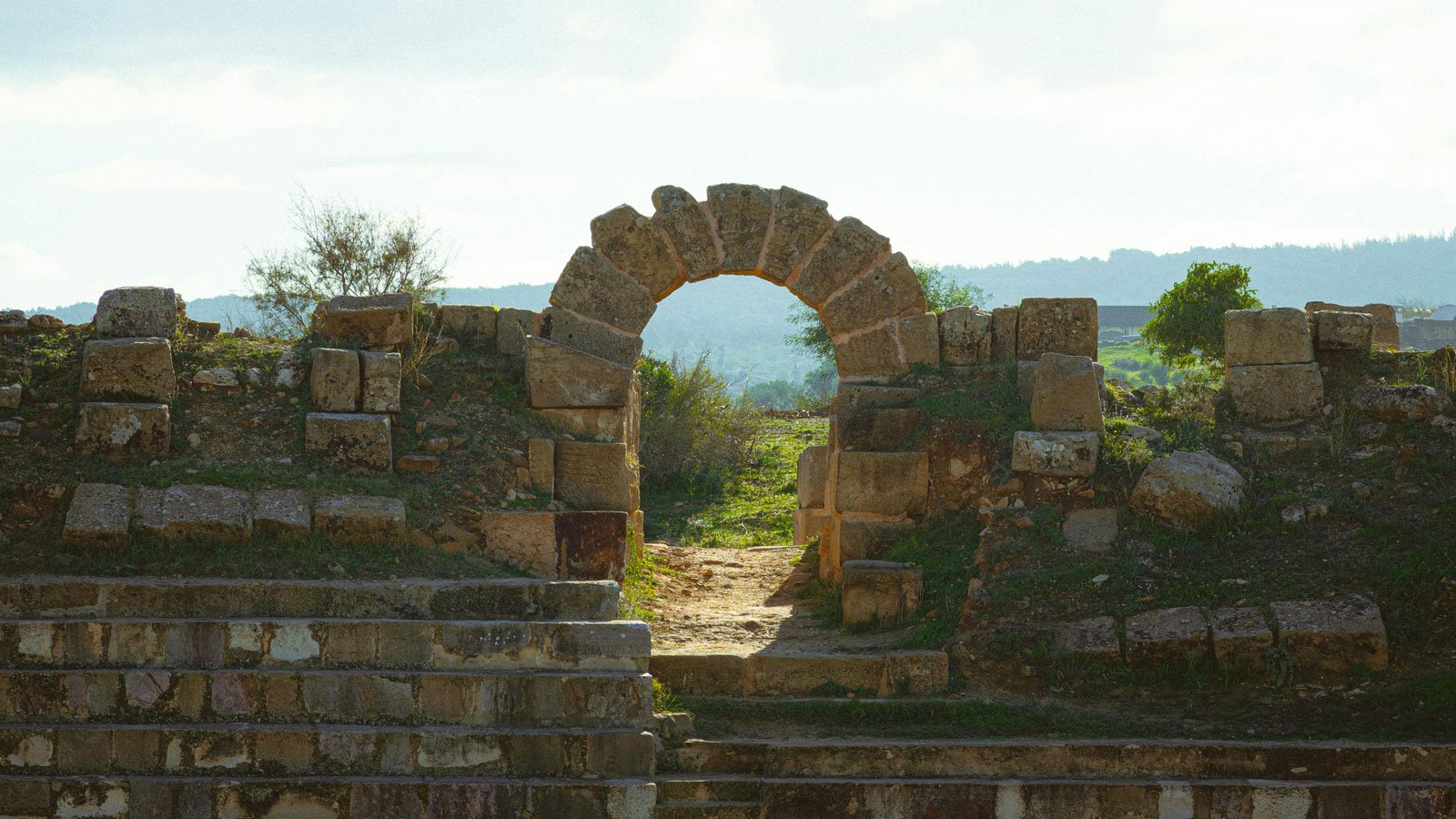
This kind of surviving arch helps explain the keystone clearly, because the whole opening depends on shaped stones locking together at the top.
A keystone is a small part of an arch, but it plays a big role in how the structure comes together. If you have ever looked at a Roman arch and noticed the central stone at the very top, that is the keystone. It is often treated like the star of the whole system, and for good reason: it helps complete the arch and lock its wedge-shaped pieces into place.
But this is also where many people get slightly confused. The keystone matters, yet it does not work alone. A Roman arch stands because all its stones push against one another in compression, meaning they are held together by squeezing force, while the side supports resist the arch’s outward thrust. The keystone is decisive, but it is part of a larger structural conversation.
That is exactly why it is such a useful detail to study. If you understand the keystone, you understand much more about how Roman arches actually work, and why Rome used them so widely in bridges, aqueducts, monuments, and public architecture.
Quick answer
A keystone is the central wedge-shaped stone at the crown of an arch. It helps complete the arch, but the structure works through the pressure of all the arch stones together and the strength of the side supports.
What is a keystone?
In architecture, a keystone is the central stone at the top of an arch. It sits at the crown, meaning the highest point of the curve. In a traditional masonry arch, it is usually wedge-shaped like the other stones in the arch, which are called voussoirs.
The reason this stone is special is simple. It is the final piece that completes the curved sequence. Before the keystone is inserted, the arch is still being supported by temporary centering, usually a wooden framework that holds the stones in place during construction. Once the keystone is fitted, the arch can begin to act as a single compressive structure.
That is why the keystone is so often singled out in explanations of the Roman arch. It marks the moment when a set of separate stones becomes a working arch.
It also helps to keep the term precise. People sometimes use “keystone” more loosely to describe any central decorative block above an opening, but in strict architectural terms, a keystone belongs to an arch. It is not just an ornament. It is part of the arch ring itself, at least in true masonry construction.
How does a keystone actually work?
The keystone works by helping the arch become a locked compressive form. That phrase may sound technical, but the idea is straightforward. Each wedge-shaped stone presses into the next. Because of the curve, the load above is redirected along the arch and then outward into the supports at each side.
The keystone sits at the top where those forces meet. When placed correctly, it helps complete the chain of pressure across the arch. Instead of the stones falling inward, they press against one another. Instead of a straight beam sagging under weight, the arch transfers load in a curved path.
This is why the shape matters. If the stones were simple rectangles, they would not form the same stable pressure network. The wedge shape is essential. The keystone is the most visible example of that wedge logic, but it is not the only one. Every voussoir contributes to the arch’s stability.
This is also why the arch needs strong side supports. A keystone does not magically hold everything up by itself. The arch creates outward thrust, meaning it pushes sideways as well as downward. If the supports are too weak, the arch can spread and fail. So the keystone matters, but only inside a complete structural system.
Does the keystone hold the arch alone?
Not really, and this is the most important misconception to clear up.
People often speak as if the keystone is the one piece that “holds the whole arch together.” That is understandable, because it is the last piece inserted and it sits in the most prominent position. But a working arch depends on all the voussoirs, the geometry of the curve, and the strength of the supports.
A better way to put it is this: the keystone is the final locking element, but the arch stands through the combined pressure of the whole system. If you removed side support, the keystone would not save the arch. If the stones were badly cut, the keystone would not fix the problem. If the arch had no proper centering during construction, the keystone alone could not make it stable.
So the keystone is crucial, but not magical. It matters because it completes the arch, not because it replaces the rest of the structure.
This distinction is useful when looking at Roman building, because Roman architecture is full of systems rather than isolated tricks. The same logic appears in bridges, aqueducts, and monumental arches. Roman builders were not relying on one heroic stone. They were relying on precise geometry, material knowledge, and structural mass.
Why did the keystone matter to Rome?
The keystone mattered because the arch mattered, and the arch mattered because Rome used it everywhere. Once Roman builders embraced the arch as one of their most practical structural tools, the keystone became one of the clearest visible signs of how that system worked.
Rome needed structures that could span openings, carry loads, repeat across long sequences, and work in many building types. Arches were ideal for that. They could be used in gates, corridors, arcades, bridges, and aqueducts. They were strong, adaptable, and well suited to stone, brick, and concrete-based construction.
That is why the keystone appears in so many Roman contexts. It is not important because Romans were obsessed with one stone. It is important because it belongs to the structural form they used so effectively.
There is also a historical layer here. Roman builders did not invent the arch from nothing. Earlier Italic traditions, especially those of the Etruscans, were important to the story. If you want to trace that background, it helps to look at the Etruscan arch. Roman building often develops by refining and expanding forms already present in the wider Italian world.
So the keystone matters to Rome for two reasons at once. Structurally, it helps complete the arch. Historically, it belongs to one of the building forms that Rome adopted and spread with unusual consistency.
Where can you see keystones clearly?
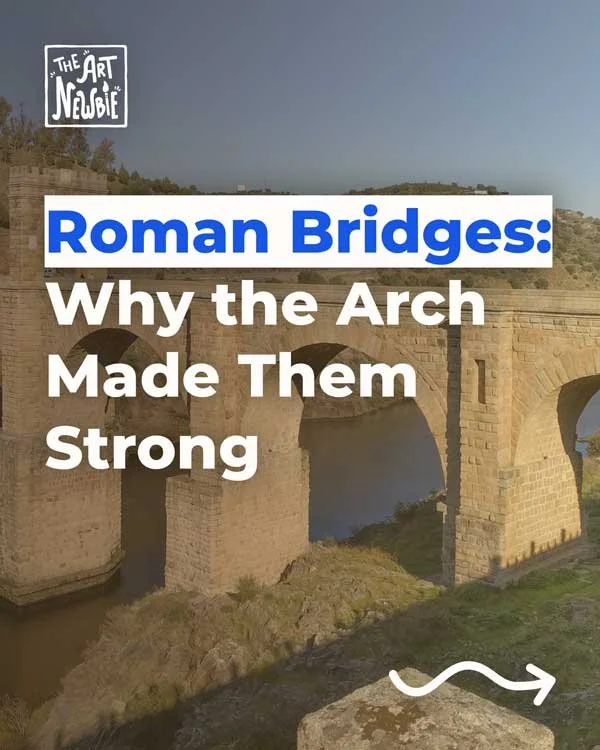
Keystones are easiest to spot in arches where the masonry units are clearly visible and the central stone is emphasized. Roman bridges are a good place to start, because the arch is there in its most practical form. In Roman bridges, the arch carries the roadway while allowing water to pass below. The central top stone often becomes visually legible even from a distance.
Aqueducts are another excellent case. The repeated arches of structures such as the Pont du Gard and the Segovia Aqueduct show how the same structural logic can be multiplied across a long sequence. In these examples, the arch is not just a single event. It becomes a module repeated again and again, and each arch depends on its own crown area and central stone logic.
Monumental arches make the keystone even more visible. In a triumphal arch, the arch form is not only structural. It is also symbolic. The central part of the arch often gains visual emphasis, and the keystone can become more pronounced or even sculpturally treated. A later monument such as the Arch of Constantine shows how the arch could become both engineering and political image at once.
These examples help because they show the keystone in different settings: practical, infrastructural, and ceremonial. The stone stays small, but the consequences of the form around it become larger and larger.
Is the keystone always visible?
Not always, and this is another helpful nuance.
In some masonry arches, the keystone is clearly marked and easy to identify. It may be slightly larger, more carefully cut, or visually emphasized. In other cases, it is present but less theatrical. It still exists as the central voussoir, but it does not call attention to itself.
There are also cases in Roman construction where the idea of the keystone becomes less straightforward, especially when arches are built within systems of brick facing and concrete mass. In those situations, the visible face may not present one dramatically highlighted stone at the crown, even though the arch logic is still there. That is one reason beginners sometimes imagine that every Roman arch must have one giant central block. Real buildings are often subtler than that.
Later architecture complicates the story even further, because the keystone can become highly decorative. It may be enlarged, carved, or turned into a sculptural feature. At that point, the keystone is doing two jobs at once: it still refers to the structural crown of the arch, but it also becomes part of the building’s visual language.
So yes, the keystone is a real architectural element. But no, it does not always appear in the same way. Sometimes it is a quiet structural fact. Sometimes it becomes a visual accent.
Why is the keystone such a useful lesson?
The keystone is useful because it turns a complicated structural idea into something you can actually see. Many people find architecture easier once they stop thinking only about facades and start noticing how buildings stand. The keystone helps make that shift possible.
It teaches three important things at once. First, buildings are often held together by geometry as much as by material. Second, small parts can matter a lot when they belong to the right system. Third, Roman architecture is full of forms that are both practical and meaningful.
This is why the keystone is such a good beginner topic. It gives you a direct way into Roman engineering without requiring advanced math or technical training. Once you understand why that central stone matters, you begin to understand arches more broadly. And once you understand arches, much of Roman building starts to look clearer.
You can begin to read a bridge differently. You can look at an aqueduct and see repeated structural logic rather than only picturesque ruins. You can look at a triumphal monument and realize that its symbolic power is built on a real structural form. A tiny detail opens up an entire architecture.
Why does the keystone still matter today?
The keystone still matters because it remains one of the clearest symbols of how masonry arches work. Even people with no architectural training often recognize it instinctively. It has become a broader metaphor for the crucial piece in a larger system, and that metaphor comes directly from architecture.
But it matters historically too. The keystone helps us remember that Roman architecture was not impressive only because it was large. It was impressive because it combined precision and scale. Roman builders understood how a small shaped block could contribute to a bridge, an aqueduct, or a monument that lasted for centuries.
That is why the keystone remains worth studying. It is not a trivial detail. It is a compact lesson in Roman thinking: practical, structural, and deeply aware that architecture works best when every part plays its role inside a larger whole.

Conclusion
A keystone is a small stone at the top of an arch, but it carries a big architectural lesson. It helps complete the arch, lock its wedge-shaped pieces into place, and make the curved structure work as a compressive system.
What matters most, though, is the broader idea behind it. The keystone reminds us that Roman arches do not stand because of one heroic part alone. They stand because every piece, and every support, is working together. That is exactly what makes the keystone such a clear and useful way to understand Roman building.
FAQ
What is a keystone in architecture?
A keystone is the central stone at the crown of an arch. In a true masonry arch, it helps complete and lock the curved sequence of wedge-shaped stones.
Does the keystone hold the whole arch up by itself?
No. The arch stands because all the stones work together in compression and because the side supports resist the outward thrust.
Why is the keystone important in Roman architecture?
It is important because it belongs to the arch, and the arch was one of Rome’s most widely used structural forms in bridges, aqueducts, and monuments.
Is every Roman arch built around a visible keystone?
Not always. Some keystones are easy to spot, while others are less emphasized, especially in more complex brick and concrete construction.
What is the difference between a keystone and a voussoir?
A voussoir is any wedge-shaped stone in an arch. The keystone is the central voussoir at the top.
Why do people call something “the keystone” of a system?
The metaphor comes from architecture. It suggests the crucial element that helps complete or stabilize a larger whole.
Sources and Further Reading
You may also like