Art Lover’s Rome Travel Guide: What I’d See and Skip After Multiple Visits
Rome is one of the easiest cities in Europe to overdo.
Not because it is hard to find things to see. The problem is the opposite: everything sounds important. Ancient ruins, papal basilicas, Renaissance frescoes, Baroque churches, Caravaggio paintings, Bernini sculptures, archaeological sites, fountains, piazzas, palaces — after a while, it all starts to blur.
This guide is not about seeing everything.
It is about choosing what is actually worth your time if you are going to Rome for art, architecture, churches, ruins, and the feeling of history layered on top of itself in real space.
The mistake is treating Rome like a checklist. You can walk past five famous churches and still not really look at one painting properly. You can “do” the Vatican Museums and remember mostly the crowds. You can book the Colosseum, Forum, and another major site on the same day and turn one of the world’s best art cities into an endurance test.
So this is the version I would use now: slower, sharper, and more honest about energy.
On earlier visits, I gave too much time to things just because they were famous, then rushed the places that actually stayed with me afterward. I would not do that now. I would rather see fewer sites and remember them clearly than leave Rome with a camera roll full of façades I barely looked at.
If you are planning the wider trip, start with the main Rome art travel guide, then use this article to decide what deserves your first real attention.
In this guide
Quick answer: what I’d prioritize in Rome
For a first art-focused trip to Rome, I would prioritize:
Pantheon for ancient Roman architecture at its clearest.
San Luigi dei Francesi for Caravaggio without needing a huge museum day.
Vatican Museums and Sistine Chapel for the major Renaissance and papal collection experience.
St Peter’s Basilica for scale, Michelangelo, Bernini, and sacred-space drama.
Borghese Gallery for sculpture, painting, and a more controlled museum visit.
Colosseum and Roman Forum if Ancient Rome genuinely matters to you.
San Clemente or Santa Maria Maggiore for Christian Rome beyond the obvious Vatican route.
Baroque Rome around Bernini, Piazza Navona, and the churches that make the city feel theatrical.
That does not mean you should see all of this in two days.
It means these are the stops I would build around first, before adding secondary museums, minor churches, archaeological extras, or every famous piazza you see on a Rome list.
This list is also what changed for me after seeing Rome more than once. I used to think the answer was “add more.” More ruins, more churches, more piazzas, more museums. Now I think the better answer is choose the right anchors first.
For a broader shortlist, the 31 things to see in Rome guide is useful. This article is more selective: what I would actually prioritize when time, attention, and walking fatigue are real.
Small warning 🙂: Rome looks compact on a map until you add heat, crowds, cobblestones, church opening hours, timed tickets, and the emotional weight of seeing too many masterpieces before lunch.
Why Rome is worth it for art lovers
Rome is worth it because it is not one art city.
It is several art cities stacked on top of each other.
You get Ancient Rome, where architecture is about engineering, power, concrete, columns, domes, arches, and urban control. You get Early Christian Rome, where basilicas, mosaics, relics, saints, and underground layers start changing the meaning of the city. You get Renaissance Rome, where popes, artists, and architects use classical ideas to rebuild authority. Then you get Baroque Rome, where everything becomes movement, theatre, persuasion, light, marble, and emotion.
That layering is the main reason Rome feels different from Florence or Venice.
Florence often lets you follow a cleaner Renaissance story. Venice gives you its own glittering, watery world. Rome is messier. A single day can move from a pagan temple to a Caravaggio chapel to a papal basilica to a Bernini fountain. That is exciting, but it is also why you need a plan.
The city makes more sense when you stop asking, “What are the famous things?” and start asking, “Which layer am I looking at right now?”
Ancient Rome
Ancient Rome is the base layer.
You see it in the Pantheon, the Forum, the Colosseum, fragments of walls, reused columns, and even in later buildings trying to borrow Roman authority.
You do not need to understand every emperor to enjoy it. But you do need to notice the physical ideas: arches, vaults, domes, concrete, scale, procession, public space.
This is why the Pantheon works better than almost any textbook explanation. You walk in, look up, and understand very quickly that Roman architecture was not delicate. It was spatial, technical, and intimidating in the best way.
For the visual basics, the guide to Roman architecture is useful before or after the trip.
Early Christian Rome
Early Christian Rome is the layer many first-time visitors underestimate.
People often go straight to the Vatican and think they have “done” Christian Rome. I get why. St Peter’s is massive, famous, and hard to ignore. But the older basilicas and layered churches often explain the city better.
This is where Rome becomes less about monuments and more about continuity. Pagan spaces are reused. Saints’ stories shape neighborhoods. Underground levels sit below medieval churches. Ancient columns appear inside Christian interiors.
The city does not erase itself. It absorbs itself.
That is why a church like San Clemente or Santa Maria Maggiore can be more useful than adding another museum just because it has a famous name.
Renaissance Rome
Renaissance Rome is harder to see casually because so much of it is inside major sites: the Vatican Museums, the Sistine Chapel, the Raphael Rooms, churches, palaces, and papal projects.
The Renaissance here is not only about beauty. It is about rebuilding Rome as a center of power after centuries of change. Classical antiquity becomes a language artists and patrons use again.
This is where the Vatican matters. Even if you find it crowded and tiring, it contains works that are central to how many people imagine Renaissance art: Michelangelo’s Sistine ceiling, the Last Judgment, Raphael’s School of Athens, and the classical sculptures that shaped artists’ ideas of the body.
I would not treat the Vatican Museums as a casual “pop in” museum. They are a full mental and physical event.
Baroque Rome
Baroque Rome is the layer that makes the city click for many art lovers.
It is not subtle. It wants you to feel something quickly. Bernini sculptures twist. Churches glow. Chapels become little theatres. Piazzas turn into staged urban rooms. Fountains are not just decoration; they control how you experience a square.
Once you notice this, Rome becomes easier to read. The city is not only old. It is performative.
This is also why I would not rush through every piazza as if each one needs equal attention. Some are useful connectors. Some are genuinely important art stops. Piazza Navona matters because it helps you understand Baroque urban drama. Other squares may simply be where you stop for coffee and let your feet recover.
What I’d see first
If I were helping someone plan their first art-focused Rome trip, I would not start with the longest list.
I would start with a few places that teach you how Rome works.
These are the stops I would build around first.
Pantheon
The Pantheon is where I would begin if you want Rome to make visual sense quickly.
It is ancient, central, famous, and now ticketed, but it still earns its place. The reason is simple: you understand Roman architecture physically when you stand inside it.
The outside is useful because it shows the temple front: columns, pediment, inscription, authority. But the real moment is inside, when the space becomes one huge volume under the dome.
Look up at the oculus. Notice that the light is not just “pretty.” It controls the whole room. The building feels calm because the geometry is doing so much work: circle, dome, height, opening, weight.
This is one of the few places in Rome where I would slow down even if the visit itself is short. Do not just walk in, take the ceiling photo, and leave.
The Pantheon is one of the places I appreciated more after returning to Rome. The first time, I treated it like a famous stop. Later, I understood that it is one of the clearest keys to the whole city: Roman engineering, later Christian reuse, tourist pressure, and architectural calm all sitting in the same room.
Stand near the center for a minute. Then move to the side and see how the dome changes as your body moves.
The Pantheon also helps later sites make more sense. Once you have seen this kind of Roman spatial confidence, you start recognizing why Renaissance and Baroque architects kept looking back to antiquity.
My advice: go early or at a calmer time if you can, check the current entry rules before fixing your route, and do not treat it as just another stop between coffee and Piazza Navona.
Read next: Pantheon guide.
San Luigi dei Francesi
San Luigi dei Francesi is one of the best value art stops in Rome.
It is a working church near the historic center, and inside the Contarelli Chapel are Caravaggio’s paintings of Saint Matthew. This is exactly the kind of Rome stop that feels small on paper and huge in person.
You do not need a giant museum day. You do not need to cross the city. You walk into a church, find the chapel, and suddenly you are in front of one of the most important painting cycles in Rome.
The painting most people come for is The Calling of Saint Matthew. It is famous for a reason. The drama is not just in the religious subject; it is in the way ordinary people, dirty feet, shadow, gesture, and light make the sacred feel like it has entered a real room.
This is Caravaggio at his most useful for travelers because you can understand him without a lecture. Look at where the light comes from. Look at Christ’s hand. Look at Matthew’s uncertainty. The scene feels like a decision happening in real time, not a polished religious illustration.
The practical downside is that churches are not museums. Hours can shift, services happen, chapels can be crowded, and sometimes you wait behind a cluster of people all trying to see the same dark corner.
Still, I would prioritize it.
This is also the kind of place I learned not to “save for later” if I am nearby. I have made the mistake of thinking a church stop would be easy to fit in at the end of the day, then arriving tired, rushed, or at the wrong moment. Caravaggio needs a bit of patience.
My advice: pair San Luigi dei Francesi with the Pantheon area rather than making it a separate mission. Give it enough time to wait, look, and adjust your eyes. Dark Caravaggio paintings do not reward rushing.
For the church visit, use the guide to San Luigi dei Francesi. For the painting itself, read the deeper guide to The Calling of Saint Matthew.
Vatican Museums
The Vatican Museums are essential, but I would not describe them as easy.
They are one of the great art collections in the world, and they are also crowded, long, visually dense, and physically tiring. This is the stop where many people accidentally turn their Rome trip into homework.
The mistake is trying to “do the Vatican Museums” as if completion is the goal.
It is not.
I have changed my mind about the Vatican over time. I used to think the best visit was the most complete one. Now I think the best visit is the one where you leave with three or four things still sharp in your head instead of fifty rooms half-remembered.
The goal is to move through the museum with enough attention left for the things that matter most: classical sculpture, the Raphael Rooms, the Sistine Chapel, and whatever route your ticket or tour allows you to see properly.
The Sistine Chapel is the obvious headline, and yes, it is worth seeing. But the room can feel confusing if you arrive already exhausted. People expect a quiet spiritual moment. In reality, it can feel crowded, controlled, and intense. You are looking up, trying to orient yourself, while everyone else is doing the same thing.
That does not make it less important. It just means you should plan for the reality, not the fantasy.
The ceiling is not just “Michelangelo painted some Bible scenes.” It is a huge painted architecture of bodies, prophets, sibyls, ancestors, and creation scenes. The Last Judgment, on the altar wall, is a different emotional world: heavier, more muscular, more anxious.
The Raphael Rooms are also worth real attention, especially the School of Athens. This is where Renaissance Rome becomes very clear: ancient philosophy, papal ambition, architecture, perspective, and intellectual order all folded into one image.
My advice: book ahead through the official route where possible, dress properly for Vatican spaces, and do not combine the Vatican Museums with the Colosseum and Forum on the same day unless you enjoy turning great art into a survival exercise.
This is not the day to be heroic 😅. I would give the Vatican its own half day at minimum. Add St Peter’s if your timing and energy allow, but do not pretend it is a light add-on. St Peter’s is another major experience, not a quick exit.
Read next: Vatican Museums guide.
Borghese Gallery
The Borghese Gallery is the museum I would protect in the schedule.
By that I mean: do not squeeze it between two huge things. Do not arrive already tired. Do not treat it as “the other museum” after the Vatican. It is smaller, timed, and easier to understand, but the art inside needs attention.
The main reason I like it is that it gives you Rome’s drama in a controlled space. You get Bernini sculptures, Caravaggio paintings, Titian, Raphael, and a villa setting that still feels connected to power, taste, collecting, and display.
Bernini is the real reason I would prioritize it. Apollo and Daphne is one of those works that makes more sense in person than in reproduction. In photos, you see the twist. In person, you see the change: fingers turning into leaves, skin becoming bark, marble pretending to be something it should not be able to become.
That is the Borghese at its best. It does not just show you famous art. It shows you why Baroque sculpture feels physical, theatrical, and slightly impossible.
The only downside is that the visit is timed. That is annoying if you like wandering freely, but it also helps. You cannot drift through the Borghese for half a day and lose focus. You have a window, and that forces you to choose.
This is one I would not leave to chance anymore. Earlier, I treated the Borghese like a museum I could just fit in somewhere. Now I would build around it, because arriving calm makes a real difference to how much you get from the sculpture.
My advice: book ahead, arrive early enough that you are not flustered at the entrance, and give yourself breathing room afterward in Villa Borghese. The museum is intense, but the park makes the visit feel less punishing.
Read next: Borghese Gallery guide.
Colosseum and Roman Forum
The Colosseum and Roman Forum are worth doing if Ancient Rome matters to you.
That sounds obvious, but I would still put the “if” in there. Some travelers love ruins. Some people respect them but do not enjoy decoding broken columns, fragments, foundations, and half-readable spaces in the sun.
There is no shame in that.
The Colosseum is easier to grasp quickly. You understand its scale, its engineering, and its public violence almost immediately. Even if you know very little about Roman history, the building tells you what kind of spectacle it was made for.
The Forum is different. It asks more from you.
This is one of the places I overrated and underrated at different times. I overrated it when I expected every ruin to feel instantly powerful. I underrated it when I did not give myself enough context. The Forum becomes much better when you stop asking it to look complete.
At first, the Forum can look like a field of important rubble. It gets better once you stop expecting complete buildings and start reading it as the political, religious, and ceremonial center of the city.
That shift matters. The Forum is not one monument. It is a landscape of power.
You are looking at temples, basilicas, arches, roads, and public spaces where Roman life was staged and negotiated. The problem is that the site does not explain itself instantly. Without some preparation, a guide, or a clear route, it can feel tiring before it feels meaningful.
This is also why I would not combine the Colosseum, Roman Forum, and Vatican Museums on the same day. Technically, people do it. Practically, I think it turns Rome into an endurance test.
My advice: do the Colosseum and Forum when you have enough energy for heat, walking, uneven ground, timed entry, and mental reconstruction. If you only care mildly about Ancient Rome, prioritize the Pantheon first and decide from there.
Read next: Ancient Rome itinerary.
What I’d skip, or not rush toward
Skipping in Rome does not mean something is bad.
It usually means it is not the right thing for your first trip, your available time, or your attention span that day.
This is the biggest thing multiple visits taught me. A place can be important and still not belong in your first version of Rome. That was hard for me at first because Rome makes skipping feel almost irresponsible.
Rome has too many worthy places. The only way to have a good art trip is to accept that some worthy places can wait.
Trying to see every ancient ruin
I would not try to see every ancient ruin on a first visit.
The Colosseum, Forum, Pantheon, and a few visible fragments around the city are enough for many travelers. After that, the returns depend on how much you enjoy archaeology.
Ancient Rome gets better when you give it context. It gets worse when you keep adding sites because they sound historically important.
If you are not careful, you spend the day moving from ruin to ruin, nodding respectfully, but not really seeing anything.
Better approach: choose one strong Ancient Rome route and do it properly.
Vatican Museums and Colosseum/Forum on the same day
I would avoid this combination unless your schedule is genuinely brutal.
The Vatican Museums are long, crowded, and visually dense. The Colosseum and Forum are physically exposed, route-based, and often tiring. Both ask for attention in different ways.
Together, they make a bad art day.
I know it can look efficient on paper: one major papal/Renaissance site, one major ancient site, both checked off. But Rome is not a spreadsheet. By the end, you may technically have seen both and remembered neither well.
This is one of those “possible but not good” Rome plans. I understand why people do it, especially on a short trip. But if you have any flexibility, split them. Your brain will work better. Your feet will too 😅
Better approach: give the Vatican its own main slot and put Ancient Rome on a separate morning.
Treating every piazza as a major art stop
Rome’s piazzas are wonderful, but not every square needs to become a study session.
Some are major art and urban-design stops. Piazza Navona matters. Piazza del Popolo can matter, especially if you are connecting it with Santa Maria del Popolo. St Peter’s Square matters because Bernini is shaping your movement before you even enter the basilica.
Others are better treated as atmosphere, rest, or orientation.
This is where I would be selective. If you turn every fountain, façade, and square into a “must-understand” moment, the city becomes exhausting.
Better approach: choose a few Baroque or historic-center spaces to look at properly, then let the rest be part of the walk.
Chasing every church on a first trip
Rome’s churches are dangerous for art lovers because so many of them are genuinely worth entering.
A free church with a Caravaggio? Yes. A basilica with mosaics? Yes. A small chapel with Bernini? Also yes. A layered medieval site built over older remains? Yes again.
But if you chase every church, your day starts to collapse. Churches have split hours, services, closures, restoration work, dark chapels, and sometimes very little signage. You can spend a surprising amount of energy trying to enter places that are not open when you arrive.
Churches are some of the best art stops in Rome, but they are also the least predictable ones. Always have a backup nearby 🙂
I would prioritize a few: San Luigi dei Francesi, Santa Maria del Popolo, Santa Maria Maggiore, San Clemente, and Santa Maria della Vittoria. The rest can be added depending on neighborhood and time.
Better approach: plan churches in clusters, and always have a nearby backup.
Visiting secondary museums before choosing your priorities
Rome has excellent secondary museums, but I would not start there.
Doria Pamphilj, Palazzo Barberini, Palazzo Massimo, and the Capitoline Museums can all be rewarding. But they make most sense after you know what kind of Rome trip you want.
Are you here for ancient sculpture and archaeology? Then Palazzo Massimo and the Capitoline Museums matter more.
Are you here for painting and palaces? Doria Pamphilj or Palazzo Barberini may be better.
Are you here for Bernini, Caravaggio, and the major first-timer art hits? Then Vatican, Borghese, and key churches probably come first.
This is something I would handle differently now. On an early trip, I would have added another museum just because it sounded serious. Now I would ask whether it actually supports the trip I am taking.
Better approach: choose the spine of your trip before adding museums around it.
How many days to spend in Rome
You can see important art in Rome in one day.
You cannot understand Rome in one day.
That distinction matters. A short visit can still be excellent if you keep it focused. A longer visit can still be bad if you overpack it.
1 day in Rome
With one day, I would stay in the historic center and avoid pretending you can do everything.
A strong art-focused day could include the Pantheon, San Luigi dei Francesi, Piazza Navona, a few nearby churches or fountains, and maybe one larger booked site if you are very disciplined.
I would not try to add the Vatican Museums and Ancient Rome unless this is your only chance in life and you accept that the day will feel rushed.
Best for: a focused taste of Rome’s ancient, Baroque, and Caravaggio layers.
Read next: Rome in 1 day.
3 days in Rome
Three days is the best first art-focused visit for most people.
It gives you enough time to separate the big experiences: one Vatican/St Peter’s day, one Ancient Rome or Borghese day, and one historic-center/churches/Baroque day.
This is where Rome starts to breathe. You still have to choose, but you are not forcing every masterpiece into the same afternoon.
If someone asked me for the most realistic first trip, I would say three full days, not counting arrival and departure if possible.
Best for: a first visit that covers the essentials without destroying your attention.
Read next: Rome in 3 days.
5 days in Rome
Five days is better if you want to understand the layers properly.
This gives you room for the Vatican, Borghese, Ancient Rome, major churches, Baroque Rome, and at least one secondary museum without making every day feel like a test.
It also gives you space to return to a neighborhood at a calmer time. That matters in Rome. Some places feel completely different early, late, crowded, empty, hot, or after you finally understand what you are looking at.
With five days, you can also build in recovery: a lighter morning after the Vatican, a slower church day, or a museum visit that is not competing with three other major stops.
Best for: art lovers who want Rome to feel layered instead of rushed.
Read next: Rome in 5 days.
7+ days in Rome
A week or more is when Rome becomes less about “what should I see?” and more about “what kind of Rome do I want to follow today?”
This is when I would add slower churches, secondary museums, repeat visits, more archaeological sites, modern and contemporary stops, and possible day trips.
It is also when you can stop treating famous places as one-time obligations. You can return to the Pantheon at a different hour. You can revisit a Caravaggio church when it is quieter. You can spend more time in the Forum without feeling like it has stolen half your trip.
Best for: travelers who want depth, slower looking, and fewer compromises.
Main museums to prioritize
Rome has enough museums to fill a whole trip, but I would not build the first visit around museum-hopping.
The city itself is already demanding. Churches, ruins, basilicas, piazzas, fountains, staircases, chapels, and long walks all compete for the same attention. So the museum question is not “which museums are good?” It is “which museums actually help this trip make sense?”
Vatican Museums
The Vatican Museums matter because they gather so many versions of Rome into one route: classical sculpture, papal collecting, Renaissance frescoes, decorative rooms, maps, tapestries, ancient bodies, Christian power, and the Sistine Chapel at the end.
The problem is that they are also the easiest museum in Rome to experience badly.
If you arrive tired, underprepared, or expecting a calm gallery visit, the Vatican can feel like a conveyor belt. I would go in with a short list of priorities rather than trying to admire every corridor equally.
For most art lovers, that means classical sculpture, the Raphael Rooms, and the Sistine Chapel. Everything else depends on your energy and route.
Worth it? Yes, but plan it like a major event.
Borghese Gallery
The Borghese Gallery is the museum I would recommend to people who want a more focused art experience.
It is not easy in the sense that you can just wander in whenever you want. You usually need to book ahead, and the visit is timed. But once you are inside, it is much more manageable than the Vatican.
The collection also feels very Roman: rich, theatrical, sensual, ambitious, and slightly excessive in the best way.
Bernini is the headline, but do not treat the paintings as filler. The Borghese works because sculpture, painting, architecture, and collecting culture all sit together in one villa.
Worth it? Yes, especially if you care about Bernini, Caravaggio, and Baroque drama.
Capitoline Museums
The Capitoline Museums are a strong choice if you want Ancient Rome to feel less abstract.
I would not put them above the Vatican or Borghese for every first-time visitor, but they are extremely useful if you care about Roman history, sculpture, civic identity, and how Rome presents its own past.
They also have one big advantage: they connect beautifully with the physical city. You are near the Forum, the Campidoglio, and some of the most historically loaded ground in Rome.
The Capitoline Museums help you slow down and see ancient sculpture as public memory, not just “old statues.”
Worth it? Yes, if Ancient Rome is one of your main interests.
Palazzo Massimo
Palazzo Massimo is the museum I would choose if you want ancient Roman art beyond broken monuments.
It is especially good for frescoes, mosaics, portraits, and objects that make Roman life feel more visual and intimate. The ruins show you scale and power. Palazzo Massimo helps you see interiors, decoration, faces, and taste.
This is not the museum I would force into a rushed two-day trip. But on a five-day or second visit, it can be one of the most rewarding stops in Rome.
Worth it? Yes, if you want Ancient Rome to feel more human and less like stone fragments.
Doria Pamphilj and Palazzo Barberini
Doria Pamphilj and Palazzo Barberini are second-visit options for most travelers.
That is not an insult. Both can be excellent. But if you only have a few days, I would choose them after deciding whether your trip is leaning more toward churches, ancient sites, Renaissance/Baroque painting, or sculpture.
Doria Pamphilj gives you the private-palace feeling: dense rooms, paintings, family power, and the sense of art as possession.
Palazzo Barberini is better if you want major Baroque painting and palace architecture without the Vatican-scale pressure.
Worth it? Yes, but usually after the first priorities are settled.
Main monuments and buildings to prioritize
Rome’s best buildings are not just “things to see.”
They teach you how the city thinks: empire, church, spectacle, power, movement, and display.
Pantheon
The Pantheon is still the building I would use as the first architectural anchor.
It explains Ancient Rome quickly and physically. You do not need to know much before entering. You need to look at the dome, the oculus, the thickness, the calmness, and the way a huge technical achievement becomes a religious and civic space.
It is famous, busy, and now ticketed, but I would still prioritize it.
Worth it? Absolutely. It is one of the clearest buildings in Rome.
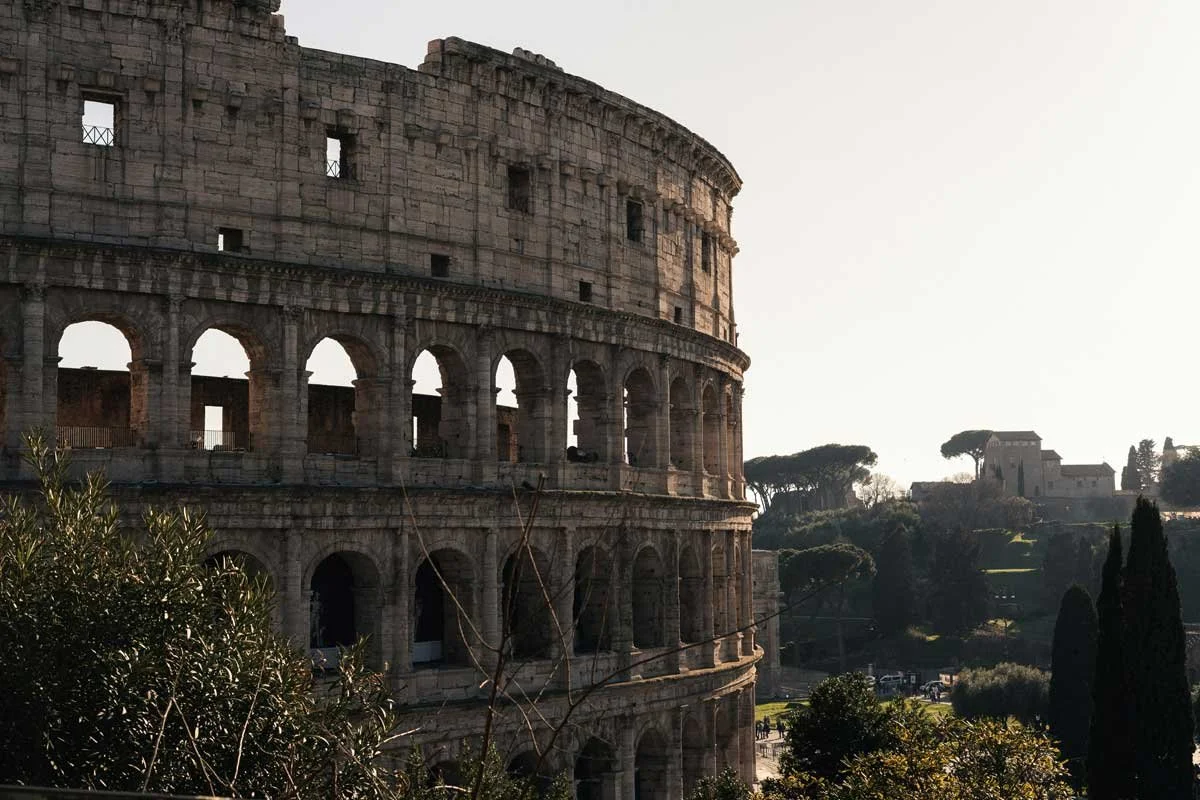
Colosseum
The Colosseum is worth seeing because it is one of the few monuments where scale does a lot of the explaining.
You understand the crowd, the spectacle, the violence, and the Roman ability to organize public experience almost immediately.
That said, I would not treat the Colosseum as the whole Ancient Rome experience. It is the most recognizable piece, but the Forum gives you the political and civic landscape around it.
Worth it? Yes, especially with the Forum, but book and time it carefully.
Roman Forum
The Forum is more difficult than the Colosseum, but it may be more important if you want to understand Rome.
It is not a single photogenic object. It is a broken urban system. That is why some people love it and some people leave frustrated.
Go in expecting fragments, not completeness. Look for roads, arches, temple remains, basilica spaces, and the way the whole area sits below the later city.
Worth it? Yes, if you prepare a little. Otherwise it can feel like expensive rubble.
St Peter’s Basilica
St Peter’s Basilica is one of the hardest places in Rome to judge calmly because it is so huge.
Even if you are not religious, it is worth seeing for Michelangelo’s Pietà, Bernini’s Baldacchino, the scale of the nave, the controlled movement of the space, and the way Catholic power becomes architecture.
The mistake is treating it as a quick add-on after the Vatican Museums. Sometimes that works. Often, it does not. By the time you finish the museums, your eyes may already be full.
Worth it? Yes, but give it real attention or save it for a separate slot.
Castel Sant’Angelo
Castel Sant’Angelo is not a first-priority art stop for everyone.
I like it more as a layered Rome building: imperial mausoleum, fortress, papal refuge, museum, viewpoint. It helps you understand how Roman buildings keep changing jobs across centuries.
If you have limited time, I would not put it above the Pantheon, St Peter’s, Borghese, or the major churches. But if you are near the Vatican and want a site that connects ancient, medieval, and papal Rome, it can work well.
Worth it? Yes, if you have time. Not essential on a tight first visit.
Churches to prioritize
Rome’s churches are where the city can surprise you most.
A church that looks ordinary from the street may hold a Caravaggio, a Bernini chapel, a medieval mosaic, ancient columns, or layers of archaeology under the floor. The trick is choosing carefully.
Also, remember the practical rule: churches are not museums. They can close for Mass, split the day into awkward visiting hours, or have chapels that are dark until someone turns on the light.
San Luigi dei Francesi
San Luigi dei Francesi is one of the easiest church recommendations in Rome.
It is central, free, and gives you three major Caravaggio paintings in the Contarelli Chapel. If someone only has time for one Caravaggio church, this is where I would usually send them first.
The main thing to notice is not just the darkness. It is how Caravaggio makes the sacred event feel as if it enters a believable room.
Prioritize it for: Caravaggio, painting, and a high-impact church visit.
Santa Maria del Popolo
Santa Maria del Popolo is worth prioritizing if you are already near Piazza del Popolo or building a Caravaggio/Bernini route.
It has Caravaggio paintings, the Chigi Chapel connected with Raphael and Bernini, and the feeling of a church where several different art histories collide.
I would not run across Rome just to squeeze it into an already full day. But placed correctly, it is a very strong stop.
Prioritize it for: Caravaggio, chapel design, and a good northern historic-center route.
Santa Maria Maggiore
Santa Maria Maggiore is one of the major basilicas I would not overlook.
It helps you see Christian Rome beyond St Peter’s. The scale, mosaics, nave, chapels, and basilica structure make it useful if you want to understand how Rome’s sacred spaces developed.
It also feels different from the Baroque churches. The experience is less about theatrical shock and more about continuity, ritual, and accumulated history.
Prioritize it for: early Christian atmosphere, mosaics, and basilica space.
San Clemente
San Clemente is one of the best churches in Rome for understanding layers.
That is the whole point of the visit. You are not only seeing a church; you are moving through different historical levels. This is Rome made literal: one city underneath another.
I would recommend it especially to people who feel confused by Rome’s timeline. San Clemente helps the idea become physical.
Prioritize it for: underground layers, early Christian Rome, and historical clarity.
Santa Maria della Vittoria
Santa Maria della Vittoria is where you go for Bernini’s Ecstasy of Saint Teresa.
The church itself is not as central to most routes as San Luigi or Santa Maria del Popolo, but the Cornaro Chapel is one of the great Baroque art experiences in Rome.
This is Baroque art doing exactly what it wants to do: direct your gaze, stage emotion, use light, mix sculpture and architecture, and make a spiritual event feel theatrical.
Prioritize it for: Bernini and Baroque sculpture.
Masterpieces worth knowing before visiting
You do not need to study Rome like an exam.
But knowing a handful of works before you go makes the trip much better. These are the pieces I would at least recognize by name, because they help you look more confidently when you arrive.
Sistine Chapel Ceiling
Michelangelo’s Sistine Chapel Ceiling is one of the hardest masterpieces to see well because the room is crowded and the ceiling is high.
Know the basic idea before you enter: creation scenes, prophets, sibyls, bodies, architecture, and a huge painted system overhead.
Do not expect to understand everything in the room. Choose a few things to look for, especially the Creation of Adam and the overall structure.
Last Judgment
The Last Judgment is also by Michelangelo, but it feels very different from the ceiling.
It is darker, more anxious, more muscular, and more overwhelming. It sits on the altar wall of the Sistine Chapel and changes the emotional temperature of the room.
Look for movement, bodies, fear, judgment, and the sense that the whole wall is turning.
School of Athens
Raphael’s School of Athens is one of the key Renaissance works in the Vatican.
It is useful because it makes Renaissance order visible: perspective, architecture, classical philosophy, calm arrangement, and intellectual ambition.
Even if you do not identify every philosopher, you can still understand the main point. The painting makes knowledge look architectural.
The Calling of Saint Matthew
The Calling of Saint Matthew is one of the best paintings to know before seeing Rome.
It is in San Luigi dei Francesi, and it helps you understand why Caravaggio changed painting. The sacred event happens in a dark, ordinary room. The drama comes through light, gesture, hesitation, and realism.
This is not polished holiness. It is a moment of interruption.
Ecstasy of Saint Teresa
Bernini’s Ecstasy of Saint Teresa is not just a sculpture.
It is a chapel experience. Sculpture, architecture, light, theatre, and viewer position all work together. That is why it is so important for understanding Baroque Rome.
Do not only look at Teresa and the angel. Look at the whole setup.
Apollo and Daphne
Apollo and Daphne is the Bernini sculpture I would want every art lover to see in person if they can.
The subject is transformation, and Bernini makes the marble perform that transformation: fingers into leaves, skin into bark, movement frozen at the exact point of change.
It is one of the best arguments for visiting the Borghese Gallery.
Laocoön
The Laocoön is one of the most important ancient sculptures in the Vatican collection.
It mattered hugely to Renaissance artists because of its drama, anatomy, suffering, and twisting bodies. When you see it, do not treat it as just another ancient statue. It is one of the bridges between antiquity and Renaissance ambition.
Michelangelo’s Pietà
Michelangelo’s Pietà in St Peter’s Basilica is easy to underestimate because the basilica itself is so enormous.
But it deserves a pause. It is early Michelangelo, polished, controlled, and emotionally restrained compared with some of his later work.
The useful thing to notice is the contrast: Mary’s calm, Christ’s body, the smoothness of the marble, and the strange quietness of the group inside one of the loudest architectural spaces in Rome.
Styles readers will see in Rome
Rome gets easier when you can recognize the main visual languages.
You do not need to become an art historian before the trip. But you do need a few labels in your head so the city does not feel like one long blur of columns, domes, saints, ruins, chapels, and marble.
Ancient Roman architecture
Ancient Roman architecture is about space, structure, and power.
Look for arches, vaults, domes, thick walls, concrete, columns, inscriptions, and buildings that control how people move. The Pantheon teaches this quickly. The Colosseum teaches it through crowd management and spectacle. The Forum teaches it through civic space, even if you have to work harder to read it.
The useful question is: “What is this building making people do?”
Gather, watch, worship, process, obey, remember, admire — Roman architecture usually has an answer.
Early Christian basilicas
Early Christian basilicas can look quieter than the Baroque churches, but they are essential for understanding Rome.
Look for long naves, columns reused from ancient buildings, mosaics, side aisles, apses, relics, and the feeling of a sacred space built for procession and ritual rather than theatrical shock.
This is where Rome’s continuity becomes visible. Ancient materials move into Christian buildings. Old forms get new meanings. The city does not restart; it adapts.
Renaissance art
Renaissance Rome is about order, bodies, classical references, perspective, and papal ambition.
You see it most clearly in the Vatican: Michelangelo, Raphael, antique sculpture, and rooms that make power look intelligent and divinely backed.
The main thing to notice is control. Renaissance art often wants to organize the world: space, anatomy, theology, philosophy, and authority. Even when the subject is dramatic, the structure usually matters.
Baroque architecture and sculpture
Baroque Rome is more emotional and more direct.
It wants movement, light, persuasion, drama, and impact. Bernini is the key name, but the style is bigger than one artist. You see it in churches, fountains, chapels, piazzas, staircases, and the way architecture starts behaving like theatre.
Look for twisting bodies, broken calm, theatrical lighting, rich materials, and spaces that seem designed to make you react before you fully understand them.
If this is the Rome you care about most, use the Baroque Rome itinerary rather than trying to pick random churches from a list.
Best Rome itineraries for art lovers
The best itinerary depends on what kind of Rome you want.
That sounds obvious, but it is where many trips go wrong. A Vatican-heavy trip, an Ancient Rome trip, a church-and-Caravaggio trip, and a Baroque Rome trip should not all have the same route.
If you have 1 day
Keep it central and focused.
I would choose a historic-center route with the Pantheon, San Luigi dei Francesi, Piazza Navona, and nearby churches or Baroque stops. This gives you ancient architecture, Caravaggio, and Baroque Rome without wasting the day crossing the city.
Use the Rome in 1 day route if you want the day to feel sharp rather than frantic.
If you have 3 days
Three days is the best first version of Rome.
Split the trip into big blocks: Vatican/St Peter’s, Ancient Rome or Borghese, and historic-center churches/Baroque Rome. This keeps the major experiences from fighting each other.
Use the Rome in 3 days itinerary if you want the first trip to cover the essentials without pretending your feet are made of stone 😅.
If you have 5 days
Five days lets Rome become layered.
You can still see the big sites, but you also have room for slower churches, a secondary museum, a better Ancient Rome route, and one lighter day after something intense.
Use theRome in 5 days itinerary if you want the trip to feel less like collecting famous names and more like understanding the city.
If Ancient Rome is the priority
Do not just book the Colosseum and assume the rest will explain itself.
Build the day around the Colosseum, Forum, Palatine area, Pantheon, and maybe the Capitoline Museums or Palazzo Massimo depending on your time. Ancient Rome needs context, otherwise it becomes a lot of stone in hot sun.
The Ancient Rome itinerary is the better next step.
If Caravaggio is the priority
Rome is one of the best cities in the world for seeing Caravaggio in context.
The important thing is that many works are in churches, not only museums. That means you need to plan around opening hours, Mass, dark chapels, and walking routes.
Start with San Luigi dei Francesi, then build outward. Use the Caravaggio in Rome guide if you want the paintings to feel connected rather than scattered.
If Bernini is the priority
Bernini’s Rome is not only sculpture.
It is also chapels, fountains, piazzas, basilica space, urban movement, and emotional staging. The Borghese Gallery matters, but so do St Peter’s, Santa Maria della Vittoria, Piazza Navona, and other Baroque spaces.
Use the Bernini in Rome guide if you want to follow the city through one artist’s imagination.
Tours, tickets, books, and resources
For Rome, I would use resources when they solve a real problem.
Do not book a tour just because the site is famous. Book one if the place is hard to decode, crowded, or logistically stressful.
A good Vatican tour can help because the museum is huge and easy to experience badly. A good Ancient Rome tour can help because the Forum especially needs explanation. A specialist art tour can be useful for Caravaggio, Bernini, or churches if you want depth without doing all the preparation yourself.
Tickets matter most for the Vatican Museums, Borghese Gallery, Colosseum/Forum, and the Pantheon. These are the places where current access rules, timed entry, booking windows, official portals, and practical details can change. Before fixing your day, check the latest rules instead of relying on an old blog post. Boring advice, but very Rome-useful 🙂
For general planning mistakes, the things I wish I knew guide is useful because Rome is not difficult only because of tickets. It is difficult because of pacing.
Books are worth using if they help you recognize what you are seeing. I would not over-study. One good Rome history/art book, one map-based guide, or one focused book on Ancient Rome, Caravaggio, or Bernini is better than trying to read five things and remembering none.
My honest Rome advice for art lovers
The best Rome trip is not the one with the longest list.
It is the one where you remember what you saw.
I would rather spend ten proper minutes with Caravaggio in San Luigi dei Francesi than rush through five churches and remember only that they were dark. I would rather do the Vatican Museums with a short priority list than leave exhausted and vaguely guilty that I missed half the rooms. I would rather skip a secondary museum on a first trip than add it just because it is “important.”
If I could correct my earlier Rome trips, I would remove a few “just in case” stops. Those were the ones that made the days heavier without making the trip better. The places I remember most are the ones where I had enough time to actually look.
Rome does not need help being impressive.
What it needs is editing.
Choose your anchors first: Pantheon, Vatican, St Peter’s, Borghese, Ancient Rome, Caravaggio, Bernini, or Christian Rome. Then build the trip around those choices.
If you try to see everything, Rome becomes noise. If you choose well, it becomes one of the best art cities in the world.
Before you go
If you want a simple version to keep beside you while planning, use the Rome Art Lover’s Checklist.
If you want the trip organized into a clearer starting system, use the Rome Art Lover’s Starter Pack.
Start there, choose your priorities, and leave space in the trip for Rome to actually land. Your feet will thank you. Your eyes will too 🙂.
👋🏼

Hi, I’m Riccardo!
I study architecture and I’m especially interested in the things people often walk past too quickly: church interiors, museum rooms, old city streets, strange façades, quiet chapels, tombs, monuments, and small details that suddenly make a place click.
I write The Art Newbie, a blog for curious art lovers and travellers who want to understand art, architecture, museums, churches, and historic cities without turning the trip into homework.
On the site, I share practical guides on what to see, what to skip, what to book, and what to notice when you’re actually there — so cultural travel feels less confusing, less rushed, and much more rewarding.